mirror of
https://github.com/go-gost/gost.git
synced 2026-10-08 03:55:45 +00:00
Compare commits
359
Commits
| Author | SHA1 | Date | |
|---|---|---|---|
 ginuerzh ginuerzh
|
11220b15bb | ||
|
ginuerzh
|
d7656ef3de | ||
 iBug iBug
|
e9fab95872 | ||
|
ginuerzh
|
97bb57230c | ||
|
ginuerzh
|
bb45b12809 | ||
|
ginuerzh
|
c4e789e2df | ||
|
iBug
|
2a6ba4df85 | ||
|
ginuerzh
|
ece7770ad7 | ||
|
ginuerzh
|
eb66804ec8 | ||
|
ginuerzh
|
a20999046b | ||
 Igor Kuzmenkov Igor Kuzmenkov
|
fe0982b2e4 | ||
|
ginuerzh
|
36cc266257 | ||
|
ginuerzh
|
074af1b175 | ||
|
ginuerzh
|
ee61f28688 | ||
|
ginuerzh
|
27ac16439e | ||
|
ginuerzh
|
d778c031eb | ||
|
ginuerzh
|
cb76f63754 | ||
|
ginuerzh
|
76467efc59 | ||
|
ginuerzh
|
35f7cd912c | ||
 ginuerzhandClaude ginuerzhandClaude
|
5e40415ac9 | ||
|
ginuerzh
|
ecf14b8459 | ||
|
ginuerzh
|
1f14e72e3c | ||
|
ginuerzh
|
aa1565c8b2 | ||
|
ginuerzh
|
f7b27a2c8b | ||
|
ginuerzh
|
c7d793c619 | ||
|
ginuerzh
|
f25148f2e0 | ||
|
ginuerzh
|
960f081e53 | ||
|
ginuerzh
|
55bb214a94 | ||
|
ginuerzh
|
555dacd244 | ||
|
ginuerzh
|
f63b212434 | ||
|
ginuerzh
|
64017bf195 | ||
|
ginuerzh
|
5a1a799848 | ||
|
ginuerzh
|
5204d6285e | ||
|
ginuerzh
|
81108ee0a4 | ||
|
ginuerzh
|
122dde8385 | ||
|
ginuerzh
|
9ccb007589 | ||
|
ginuerzh
|
5a01aa4fd2 | ||
|
ginuerzh
|
4cdc5588ff | ||
|
ginuerzh
|
89f9ea124a | ||
|
ginuerzh
|
e9cf3b4d3f | ||
|
ginuerzh
|
bef00dffef | ||
|
ginuerzh
|
1c6fadcb1e | ||
|
ginuerzh
|
20f1e4a0b9 | ||
|
ginuerzh
|
1fd69ac704 | ||
|
ginuerzh
|
9355607ba7 | ||
|
ginuerzh
|
6746f556b7 | ||
|
ginuerzh
|
3119cb43f2 | ||
|
ginuerzh
|
c7ea19ec66 | ||
|
ginuerzh
|
b60c87e47f | ||
|
ginuerzh
|
632282436b | ||
|
ginuerzh
|
fa815bf4a0 | ||
|
ginuerzhandClaude
|
a8bd4a5f16 | ||
|
iBug
|
94dcc9c045 | ||
|
ginuerzh
|
7643e16cca | ||
 ginuerzh ginuerzh
|
64b71bd8a6 | ||
|
ginuerzh
|
ccf2989bc0 | ||
|
ginuerzh
|
d54a896a81 | ||
|
ginuerzh
|
6b7dbf08fa | ||
|
ginuerzh
|
dd56308b2e | ||
|
ginuerzh
|
eb9dbb1807 | ||
|
ginuerzh
|
02dc900686 | ||
|
ginuerzh
|
bb912edecc | ||
|
ginuerzh
|
ffb61cc19f | ||
|
ginuerzh
|
a864cbcfe5 | ||
|
ginuerzh
|
b139ed5968 | ||
|
ginuerzhandClaude
|
43724a5c40 | ||
|
ginuerzh
|
0bb9109c71 | ||
|
ginuerzh
|
a0427be086 | ||
|
ginuerzh
|
590c6f48bd | ||
|
ginuerzh
|
69b561f944 | ||
|
ginuerzh
|
3c87a8b96e | ||
|
ginuerzh
|
c9cfc440ad | ||
|
ginuerzh
|
c305f93703 | ||
|
ginuerzh
|
f638d8081f | ||
|
ginuerzh
|
286c1615fd | ||
|
ginuerzh
|
b985e5138c | ||
|
ginuerzh
|
b628475871 | ||
|
ginuerzh
|
43dd0a6958 | ||
|
ginuerzh
|
9d00ad8c8f | ||
|
ginuerzh
|
1bebce0ed7 | ||
|
ginuerzh
|
1178c4757f | ||
|
ginuerzh
|
73069f50e3 | ||
|
ginuerzh
|
06ec0097f9 | ||
|
ginuerzh
|
396b0977bd | ||
 Yuan Tong Yuan Tong
|
604dccc7b0 | ||
|
ginuerzh
|
6d80e06ab3 | ||
|
ginuerzh
|
e2447ce578 | ||
|
ginuerzh
|
811420e923 | ||
|
ginuerzh
|
374b46dfe1 | ||
|
ginuerzh
|
22edb92084 | ||
|
ginuerzh
|
78a0a8c734 | ||
 ZHAO Jin-Xiang ZHAO Jin-Xiang
|
41e1878ebc | ||
|
ginuerzh
|
5639c90e98 | ||
|
ginuerzh
|
36abf9bcd9 | ||
|
ginuerzh
|
d584b7ac61 | ||
|
ginuerzh
|
56e2a1c496 | ||
|
ginuerzh
|
b0bea19275 | ||
|
ginuerzh
|
cd64f2edd3 | ||
|
ginuerzh
|
5f04c84e32 | ||
|
ginuerzh
|
600a64e611 | ||
|
ginuerzh
|
3d6b16686b | ||
|
ginuerzh
|
44684d40c3 | ||
|
ginuerzh
|
2be36abe75 | ||
|
ginuerzh
|
8db62785fa | ||
 RMT RMT
|
8740e6f258 | ||
|
ginuerzh
|
d4c9ef5056 | ||
|
RMT
|
c06eb0d331 | ||
|
RMT
|
c8b48dc248 | ||
 azoway azoway
|
45d94cf391 | ||
 nivesh nivesh
|
bc96fe3918 | ||
|
nivesh
|
646d3f906c | ||
|
nivesh
|
4c69940f1e | ||
 David Manouchehri David Manouchehri
|
3d1f6fcbbb | ||
|
ginuerzh
|
e388426ec6 | ||
|
ginuerzh
|
340ba32ef0 | ||
|
ginuerzh
|
96551d5fa5 | ||
|
ginuerzh
|
8d05a6ed93 | ||
|
ginuerzh
|
0348a16aa9 | ||
|
ginuerzh
|
50934e0978 | ||
|
ginuerzh
|
c2ed9c6f07 | ||
|
ginuerzh
|
3b9da4e260 | ||
|
ginuerzh
|
f0a67a1108 | ||
|
ginuerzh
|
59c9638ce6 | ||
|
ginuerzh
|
49fa28882f | ||
|
ginuerzh
|
08c617b54e | ||
|
ginuerzh
|
d03b0e2360 | ||
|
ginuerzh
|
245d610baf | ||
|
ginuerzh
|
f01f0c9215 | ||
|
ginuerzh
|
9b6e9d9cae | ||
|
ginuerzh
|
1a0e2b06ac | ||
|
ginuerzh
|
de8bb498db | ||
|
ginuerzh
|
1f735d0649 | ||
|
ginuerzh
|
d173d167da | ||
|
ginuerzh
|
b593fdb952 | ||
|
ginuerzh
|
d448628fea | ||
|
ginuerzh
|
0bfc7f10cd | ||
|
ginuerzh
|
a24b29c8c2 | ||
|
ginuerzh
|
87af3da1b6 | ||
|
ginuerzh
|
dc6fe595e0 | ||
|
ginuerzh
|
db4a0a9259 | ||
 Meng Zhuo Meng Zhuo
|
62a097c5e4 | ||
|
ginuerzh
|
b51cecbbfd | ||
|
ginuerzh
|
66a260abd1 | ||
|
ginuerzh
|
1d3603f9ed | ||
 ravitheg ravitheg
|
952c61c1a2 | ||
|
ravitheg
|
6d61ab82db | ||
|
ginuerzh
|
f61bb2fd72 | ||
|
ginuerzh
|
4c2835db04 | ||
|
ginuerzh
|
d662b1fd46 | ||
|
ginuerzh
|
015923fa5d | ||
|
ginuerzh
|
f66fce9d49 | ||
|
ginuerzh
|
982a93eee4 | ||
|
ginuerzh
|
758251d3f9 | ||
|
ginuerzh
|
a1e48e164b | ||
|
ginuerzh
|
581dd74bbb | ||
|
ginuerzh
|
3c7a984aa3 | ||
|
ginuerzh
|
2a9b7e7d9b | ||
|
ginuerzh
|
ab2b9714ee | ||
|
ginuerzh
|
6d38c24d88 | ||
|
ginuerzh
|
f376db2000 | ||
|
ginuerzh
|
161d96f582 | ||
|
ginuerzh
|
128c0c3117 | ||
|
ginuerzh
|
66ce980c36 | ||
|
ginuerzh
|
829148d3f8 | ||
|
ginuerzh
|
c45f148a88 | ||
|
ginuerzh
|
fdc88af4ac | ||
|
ginuerzh
|
c41c5bf79a | ||
|
ginuerzh
|
b3eeb338fb | ||
|
ginuerzh
|
72f185bbf6 | ||
|
ginuerzh
|
a7599990a8 | ||
|
ginuerzh
|
17ca5600d3 | ||
|
ginuerzh
|
32ccfe483c | ||
|
ginuerzh
|
1d0eb06938 | ||
|
ginuerzh
|
1fa5067d14 | ||
|
ginuerzh
|
7ddfef85a5 | ||
|
ginuerzh
|
fa98777ab1 | ||
|
ginuerzh
|
e53486efe0 | ||
|
ginuerzh
|
881ebfad5b | ||
|
ginuerzh
|
d5bb691b38 | ||
|
ginuerzh
|
24c13b861a | ||
|
ginuerzh
|
d6daa8bf56 | ||
|
ginuerzh
|
d18539ef66 | ||
|
ginuerzh
|
48b0a690c5 | ||
|
ginuerzh
|
a7037a27bf | ||
|
ginuerzh
|
ac9960de6d | ||
|
ginuerzh
|
404e099907 | ||
|
ginuerzh
|
94cd590142 | ||
|
ginuerzh
|
d3809ec634 | ||
|
ginuerzh
|
efb4da6fa6 | ||
|
ginuerzh
|
2ec8584e96 | ||
|
ginuerzh
|
f05f5cf862 | ||
|
ginuerzh
|
bf3018b5b1 | ||
|
ginuerzh
|
073af6163e | ||
|
ginuerzh
|
ef07551e01 | ||
|
ginuerzh
|
8077c039f3 | ||
|
ginuerzh
|
33c8f3595a | ||
|
ginuerzh
|
87bff8cac6 | ||
|
ginuerzh
|
d52fcccf06 | ||
|
ginuerzh
|
18610d4608 | ||
|
ginuerzh
|
c1de9e4e72 | ||
|
ginuerzh
|
1f7c080043 | ||
|
ginuerzh
|
b091f72900 | ||
|
ginuerzh
|
8e50e9c085 | ||
|
ginuerzh
|
7a35d25c5c | ||
|
ginuerzh
|
8e311e7891 | ||
|
ginuerzh
|
17fc806c2d | ||
|
ginuerzh
|
b21fd4a22b | ||
|
ginuerzh
|
3e8a025c45 | ||
|
ginuerzh
|
0d7a6f8091 | ||
|
ginuerzh
|
4a2a2a00de | ||
|
ginuerzh
|
c71e128fec | ||
|
ginuerzh
|
1400b5ff5d | ||
|
ginuerzh
|
cd4fad8c08 | ||
|
ginuerzh
|
56a68ae06f | ||
|
ginuerzh
|
5d7100f749 | ||
|
ginuerzh
|
12871a4ff3 | ||
|
ginuerzh
|
6130bbc075 | ||
|
ginuerzh
|
85d4fcaf7d | ||
|
ginuerzh
|
7904e571c1 | ||
|
ginuerzh
|
8253c41de6 | ||
|
ginuerzh
|
2148d10def | ||
 Christian Groschupp Christian Groschupp
|
8846c69c05 | ||
|
ginuerzh
|
2161b97064 | ||
|
ginuerzh
|
e245526b33 | ||
|
ginuerzh
|
60389894c0 | ||
 dependabot[bot] dependabot[bot]
|
9ab142ac99 | ||
|
ginuerzh
|
be1b0627d1 | ||
|
dependabot[bot]
|
f4115b867d | ||
 kLiHz kLiHz
|
a513417d7e | ||
|
kLiHz
|
58bd3d062b | ||
|
kLiHz
|
d2b79c13a6 | ||
|
kLiHz
|
fedd7a7b07 | ||
|
kLiHz
|
27f4b6abeb | ||
|
kLiHz
|
d4aadbbc14 | ||
|
kLiHz
|
4508747635 | ||
|
dependabot[bot]
|
50844821f8 | ||
 Jalal Saberi Jalal Saberi
|
29ec7c94ad | ||
|
Jalal Saberi
|
53d6706b5d | ||
|
ginuerzh
|
594418db53 | ||
|
ginuerzh
|
72cd708dfe | ||
|
ginuerzh
|
b576bb5645 | ||
|
ginuerzh
|
8c529e3595 | ||
|
ginuerzh
|
b75e133719 | ||
|
dependabot[bot]
|
abfbf23842 | ||
|
ginuerzh
|
42d62550bf | ||
|
ginuerzh
|
69ba5864ad | ||
|
ginuerzh
|
fdd3eb61c3 | ||
|
ginuerzh
|
f68bfdb149 | ||
|
ginuerzh
|
9e4bca84f1 | ||
|
ginuerzh
|
925ff89b78 | ||
|
ginuerzh
|
ca077d418a | ||
|
ginuerzh
|
7264fca4f8 | ||
|
ginuerzh
|
bc37fac037 | ||
|
ginuerzh
|
dc48c4a3b2 | ||
|
ginuerzh
|
310614663a | ||
|
ginuerzh
|
8f094d86b0 | ||
|
ginuerzh
|
638c780acd | ||
|
ginuerzh
|
1f20f199c0 | ||
|
ginuerzh
|
8dc6146f79 | ||
|
ginuerzh
|
ed29b34c68 | ||
|
ginuerzh
|
b41aea03da | ||
|
ginuerzh
|
2c17e4417d | ||
|
ginuerzh
|
ea8ff5f77a | ||
|
ginuerzh
|
6762957c65 | ||
|
ginuerzh
|
4c934cd737 | ||
|
ginuerzh
|
0d494f5ef2 | ||
|
ginuerzh
|
bf1bab7d84 | ||
|
ginuerzh
|
b8383b1076 | ||
|
ginuerzh
|
345da28f01 | ||
|
ginuerzh
|
907420d18b | ||
|
ginuerzh
|
c1437794f8 | ||
|
ginuerzh
|
c2df5650fb | ||
|
ginuerzh
|
23506579e7 | ||
|
ginuerzh
|
969db8691b | ||
|
ginuerzh
|
3b0a2f1bae | ||
|
ginuerzh
|
b2ed4ae9fd | ||
|
ginuerzh
|
b2784011d0 | ||
|
ginuerzh
|
d4e00683c3 | ||
|
ginuerzh
|
471513896d | ||
|
ginuerzh
|
6967278600 | ||
|
ginuerzh
|
2898732c20 | ||
|
dependabot[bot]
|
bb0c0450e8 | ||
|
ginuerzh
|
6bb7dfea8f | ||
|
ginuerzh
|
e27d2bc593 | ||
|
ginuerzh
|
3144d61ecd | ||
|
ginuerzh
|
e4b68d385a | ||
|
ginuerzh
|
a91300d078 | ||
|
ginuerzh
|
b8785eb71e | ||
|
ginuerzh
|
67fcd929be | ||
|
ginuerzh
|
48c262bf71 | ||
|
ginuerzh
|
05c35005e9 | ||
|
ginuerzh
|
f6112773a1 | ||
|
ginuerzh
|
61002b7c9c | ||
|
ginuerzh
|
f8a19e0829 | ||
|
ginuerzh
|
b1ace73943 | ||
|
ginuerzh
|
3d0e993498 | ||
|
ginuerzh
|
9cbc875965 | ||
|
dependabot[bot]
|
139b934fc6 | ||
|
ginuerzh
|
c1d9228eee | ||
|
ginuerzh
|
2ea7dc250a | ||
|
ginuerzh
|
be33046c16 | ||
|
ginuerzh
|
d85b8d487b | ||
|
ginuerzh
|
ab8d77bb5e | ||
|
ginuerzh
|
8640596064 | ||
|
ginuerzh
|
8a699e1906 | ||
|
ginuerzh
|
0d41f5edc8 | ||
|
ginuerzh
|
87364d2494 | ||
|
ginuerzh
|
6982b8af63 | ||
|
ginuerzh
|
0b1540b23a | ||
|
ginuerzh
|
1bbeeb7e66 | ||
|
ginuerzh
|
5d4db6e377 | ||
|
ginuerzh
|
05d06a2718 | ||
|
ginuerzh
|
420b36b2f8 | ||
|
ginuerzh
|
3883a4493a | ||
|
ginuerzh
|
355aaa7690 | ||
|
ginuerzh
|
c73c98974c | ||
 Sam Sesh Sam Sesh
|
98c9cc2821 | ||
|
127.0.0.1:443
|
b48d2c0dbc | ||
|
127.0.0.1:443
|
b7266f4660 | ||
|
Sam Sesh
|
6883c32157 | ||
|
Sam Sesh
|
f1c5f7598c | ||
|
Sam Sesh
|
c31242efbb | ||
|
dependabot[bot]
|
6ee632cee2 | ||
|
ginuerzh
|
8e2060582e | ||
|
dependabot[bot]
|
410b4ddf53 | ||
|
ginuerzh
|
0b6474d836 | ||
|
ginuerzh
|
4b6d6e7e7c | ||
|
ginuerzh
|
b2434dd05b | ||
|
ginuerzh
|
3d15dedab2 | ||
|
ginuerzh
|
436864ca92 | ||
|
ginuerzh
|
4847f9ee9f | ||
|
ginuerzh
|
a88b44d01d | ||
|
ginuerzh
|
45f1cc2efc | ||
|
ginuerzh
|
bfa1530ef6 | ||
|
ginuerzh
|
f02c9810f2 | ||
|
ginuerzh
|
fda6214c12 | ||
|
dependabot[bot]
|
acb8c5bd53 | ||
|
ginuerzh
|
3f53858c83 | ||
|
ginuerzh
|
a379565412 | ||
|
dependabot[bot]
|
69089b790f | ||
|
ginuerzh
|
1c2d9b2a5b | ||
|
ginuerzh
|
8d852b62cf | ||
|
ginuerzh
|
a80dec0dc1 | ||
|
ginuerzh
|
62ca8ff2de | ||
|
ginuerzh
|
b8504f7f28 | ||
|
ginuerzh
|
95a2f0d649 | ||
|
ginuerzh
|
d810224e7b | ||
|
ginuerzh
|
db36804bfa | ||
|
ginuerzh
|
ad8af1942d | ||
|
ginuerzh
|
3d01f74f7c | ||
|
ginuerzh
|
6b05bcb0ab | ||
|
ginuerzh
|
799c95bfb4 | ||
|
ginuerzh
|
de0a584175 | ||
|
ginuerzh
|
381b1c9bf5 | ||
|
ginuerzh
|
ed7d72bfd8 | ||
|
ginuerzh
|
98aef6ba90 | ||
|
ginuerzh
|
dfde6efdeb | ||
|
ginuerzh
|
8858598cf0 | ||
|
ginuerzh
|
c765789076 |
@@ -1,89 +0,0 @@
|
||||
# ref: https://docs.docker.com/ci-cd/github-actions/
|
||||
# https://blog.oddbit.com/post/2020-09-25-building-multi-architecture-im/
|
||||
|
||||
name: Docker
|
||||
|
||||
on:
|
||||
push:
|
||||
branches:
|
||||
- master
|
||||
tags:
|
||||
- 'v*'
|
||||
|
||||
jobs:
|
||||
build:
|
||||
runs-on: ubuntu-latest
|
||||
steps:
|
||||
- name: Prepare
|
||||
id: prepare
|
||||
run: |
|
||||
DOCKER_IMAGE=${{ secrets.DOCKER_IMAGE }}
|
||||
VERSION=latest
|
||||
|
||||
# If this is git tag, use the tag name as a docker tag
|
||||
if [[ $GITHUB_REF == refs/tags/* ]]; then
|
||||
VERSION=${GITHUB_REF#refs/tags/v}
|
||||
fi
|
||||
TAGS="${DOCKER_IMAGE}:${VERSION}"
|
||||
|
||||
# If the VERSION looks like a version number, assume that
|
||||
# this is the most recent version of the image and also
|
||||
# tag it 'latest'.
|
||||
if [[ $VERSION =~ ^[0-9]{1,3}\.[0-9]{1,3}\.[0-9]{1,3}$ ]]; then
|
||||
TAGS="$TAGS,${DOCKER_IMAGE}:latest"
|
||||
fi
|
||||
|
||||
# Set output parameters.
|
||||
echo ::set-output name=tags::${TAGS}
|
||||
echo ::set-output name=docker_image::${DOCKER_IMAGE}
|
||||
echo ::set-output name=docker_platforms::linux/386,linux/amd64,linux/arm/v6,linux/arm/v7,linux/arm64/v8,linux/s390x
|
||||
|
||||
# https://github.com/crazy-max/ghaction-docker-buildx
|
||||
- name: Set up Docker Buildx
|
||||
id: buildx
|
||||
uses: crazy-max/ghaction-docker-buildx@v1
|
||||
with:
|
||||
version: latest
|
||||
|
||||
- name: Environment
|
||||
run: |
|
||||
echo home=$HOME
|
||||
echo git_ref=$GITHUB_REF
|
||||
echo git_sha=$GITHUB_SHA
|
||||
echo version=${{ steps.prepare.outputs.version }}
|
||||
echo image=${{ steps.prepare.outputs.docker_image }}
|
||||
echo platforms=${{ steps.prepare.outputs.docker_platforms }}
|
||||
echo avail_platforms=${{ steps.buildx.outputs.platforms }}
|
||||
|
||||
# https://github.com/actions/checkout
|
||||
- name: Checkout
|
||||
uses: actions/checkout@v2
|
||||
|
||||
- name: Docker Buildx (no push)
|
||||
run: |
|
||||
docker buildx bake \
|
||||
--set ${{ github.event.repository.name }}.platform=${{ steps.prepare.outputs.docker_platforms }} \
|
||||
--set ${{ github.event.repository.name }}.output=type=image,push=false \
|
||||
--set ${{ github.event.repository.name }}.tags="${{ steps.prepare.outputs.tags }}" \
|
||||
--file docker-compose.yaml
|
||||
|
||||
- name: Docker Login
|
||||
if: success()
|
||||
env:
|
||||
DOCKER_PASSWORD: ${{ secrets.DOCKER_PASSWORD }}
|
||||
run: |
|
||||
echo "${DOCKER_PASSWORD}" | docker login --username "${{ secrets.DOCKER_USERNAME }}" --password-stdin
|
||||
|
||||
- name: Docker Buildx (push)
|
||||
if: success()
|
||||
run: |
|
||||
docker buildx bake \
|
||||
--set ${{ github.event.repository.name }}.platform=${{ steps.prepare.outputs.docker_platforms }} \
|
||||
--set ${{ github.event.repository.name }}.output=type=image,push=true \
|
||||
--set ${{ github.event.repository.name }}.tags="${{ steps.prepare.outputs.tags }}" \
|
||||
--file docker-compose.yaml
|
||||
|
||||
- name: Clear
|
||||
if: always()
|
||||
run: |
|
||||
rm -f ${HOME}/.docker/config.json
|
||||
@@ -0,0 +1,64 @@
|
||||
# ref: https://docs.docker.com/ci-cd/github-actions/
|
||||
# https://blog.oddbit.com/post/2020-09-25-building-multi-architecture-im/
|
||||
|
||||
name: docker
|
||||
|
||||
on:
|
||||
push:
|
||||
branches:
|
||||
- master
|
||||
tags:
|
||||
- 'v*'
|
||||
|
||||
permissions:
|
||||
contents: read
|
||||
|
||||
# New pushes cancel an in-progress build for the same ref. Tags are isolated
|
||||
# by ref, so re-pushing a release tag only de-dupes itself, never another tag.
|
||||
concurrency:
|
||||
group: ${{ github.workflow }}-${{ github.ref }}
|
||||
cancel-in-progress: true
|
||||
|
||||
jobs:
|
||||
build:
|
||||
runs-on: ubuntu-latest
|
||||
steps:
|
||||
- name: Checkout
|
||||
uses: actions/checkout@v4
|
||||
|
||||
# Auto-generates image tags, replacing the former hand-rolled shell:
|
||||
# - master push -> :latest
|
||||
# - clean release tag vX.Y.Z -> :X.Y.Z :X :X.Y :latest
|
||||
# - nightly tag vX.Y.Z-nightly.<date> -> :X.Y.Z-nightly.<date> (no major/minor/latest)
|
||||
- name: Docker meta
|
||||
id: meta
|
||||
uses: docker/metadata-action@v5
|
||||
with:
|
||||
images: ${{ secrets.DOCKER_IMAGE }}
|
||||
flavor: latest=false
|
||||
tags: |
|
||||
type=raw,value=latest,enable=${{ github.ref == format('refs/heads/{0}', github.event.repository.default_branch) || (startsWith(github.ref, 'refs/tags/v') && !contains(github.ref_name, '-')) }}
|
||||
type=semver,pattern={{version}}
|
||||
type=semver,pattern={{major}},enable=${{ !contains(github.ref_name, '-') }}
|
||||
type=semver,pattern={{major}}.{{minor}},enable=${{ !contains(github.ref_name, '-') }}
|
||||
|
||||
- name: Set up Docker Buildx
|
||||
id: buildx
|
||||
uses: docker/setup-buildx-action@v3
|
||||
|
||||
- name: Login to DockerHub
|
||||
if: github.event_name != 'pull_request'
|
||||
uses: docker/login-action@v3
|
||||
with:
|
||||
username: ${{ secrets.DOCKER_USERNAME }}
|
||||
password: ${{ secrets.DOCKER_PASSWORD }}
|
||||
|
||||
- name: Buildx and push
|
||||
uses: docker/build-push-action@v6
|
||||
with:
|
||||
platforms: linux/386,linux/amd64,linux/arm/v6,linux/arm/v7,linux/arm64/v8,linux/s390x,linux/riscv64
|
||||
push: true
|
||||
tags: ${{ steps.meta.outputs.tags }}
|
||||
# Reuse build layers across runs via the GitHub Actions cache.
|
||||
cache-from: type=gha
|
||||
cache-to: type=gha,mode=max
|
||||
@@ -0,0 +1,40 @@
|
||||
name: goreleaser
|
||||
|
||||
on:
|
||||
push:
|
||||
# run only against tags
|
||||
tags:
|
||||
- 'v*'
|
||||
|
||||
permissions:
|
||||
contents: write
|
||||
|
||||
# Never cancel an in-flight release; only de-dupe a re-pushed tag.
|
||||
concurrency:
|
||||
group: ${{ github.workflow }}-${{ github.ref }}
|
||||
cancel-in-progress: false
|
||||
|
||||
jobs:
|
||||
goreleaser:
|
||||
runs-on: ubuntu-latest
|
||||
steps:
|
||||
- uses: actions/checkout@v4
|
||||
with:
|
||||
fetch-depth: 0
|
||||
- run: git fetch --force --tags
|
||||
- uses: actions/setup-go@v5
|
||||
with:
|
||||
go-version: '1.26'
|
||||
cache: true
|
||||
# UPX is disabled in .goreleaser.yaml (see #863); the install step was removed.
|
||||
- uses: goreleaser/goreleaser-action@v6
|
||||
with:
|
||||
# either 'goreleaser' (default) or 'goreleaser-pro':
|
||||
distribution: goreleaser
|
||||
version: '~> v2'
|
||||
args: release --clean
|
||||
env:
|
||||
GITHUB_TOKEN: ${{ secrets.GITHUB_TOKEN }}
|
||||
# Your GoReleaser Pro key, if you are using the 'goreleaser-pro'
|
||||
# distribution:
|
||||
# GORELEASER_KEY: ${{ secrets.GORELEASER_KEY }}
|
||||
@@ -0,0 +1,71 @@
|
||||
name: Trigger nightly build
|
||||
|
||||
on:
|
||||
schedule:
|
||||
# * is a special character in YAML, so you have to quote this string
|
||||
- cron: '00 15 * * *'
|
||||
workflow_dispatch:
|
||||
|
||||
# Only one nightly run at a time; a new run cancels a stale one.
|
||||
concurrency:
|
||||
group: ${{ github.workflow }}
|
||||
cancel-in-progress: true
|
||||
|
||||
jobs:
|
||||
check_date:
|
||||
runs-on: ubuntu-latest
|
||||
name: Check latest commit
|
||||
outputs:
|
||||
should_run: ${{ steps.should_run.outputs.should_run }}
|
||||
steps:
|
||||
- uses: actions/checkout@v4
|
||||
- name: print latest_commit
|
||||
run: echo ${{ github.sha }}
|
||||
- id: should_run
|
||||
name: Skip if no commit in the last 24 hours
|
||||
if: ${{ github.event_name == 'schedule' }}
|
||||
run: |
|
||||
if [ "$(git rev-list --count --after='24 hours' ${{ github.sha }})" -eq 0 ]; then
|
||||
echo "should_run=false" >> $GITHUB_OUTPUT
|
||||
fi
|
||||
|
||||
trigger-nightly:
|
||||
needs: check_date
|
||||
if: ${{ needs.check_date.outputs.should_run != 'false' }}
|
||||
name: Push tag for nightly build
|
||||
runs-on: ubuntu-latest
|
||||
steps:
|
||||
-
|
||||
name: 'Checkout'
|
||||
uses: actions/checkout@v4
|
||||
with:
|
||||
token: ${{ secrets.NIGHTLY_BUILD_GH_TOKEN }}
|
||||
fetch-depth: 0
|
||||
-
|
||||
name: 'Push new tag'
|
||||
run: |
|
||||
git config user.name "${GITHUB_ACTOR}"
|
||||
git config user.email "${GITHUB_ACTOR}@users.noreply.github.com"
|
||||
|
||||
# A previous release was created using a lightweight tag
|
||||
# git describe by default includes only annotated tags
|
||||
# git describe --tags includes lightweight tags as well
|
||||
DESCRIBE=`git tag -l --sort=-v:refname | grep -v nightly | head -n 1`
|
||||
MAJOR_VERSION=`echo $DESCRIBE | awk '{split($0,a,"."); print a[1]}'`
|
||||
MINOR_VERSION=`echo $DESCRIBE | awk '{split($0,a,"."); print a[2]}'`
|
||||
PATCH_VERSION=`echo $DESCRIBE | awk '{split($0,a,"."); print a[3]}'`
|
||||
PATCH_VERSION="$((${PATCH_VERSION} + 1))"
|
||||
TAG="${MAJOR_VERSION}.${MINOR_VERSION}.${PATCH_VERSION}-nightly.$(date +'%Y%m%d')"
|
||||
git tag -a $TAG -m "$TAG: nightly build"
|
||||
git push origin $TAG
|
||||
- name: 'Clean up nightly releases'
|
||||
env:
|
||||
GH_TOKEN: ${{ secrets.NIGHTLY_BUILD_GH_TOKEN }}
|
||||
run: |
|
||||
# Keep the 2 most recent nightly releases; delete the rest and their tags.
|
||||
# Replaces the archived dev-drprasad/delete-older-releases action.
|
||||
gh release list --json tagName,createdAt --limit 100 \
|
||||
--jq '[.[] | select(.tagName | test("nightly"))] | sort_by(.createdAt) | reverse | .[2:] | .[].tagName' \
|
||||
| while read -r tag; do
|
||||
gh release delete "$tag" --yes --cleanup-tag || true
|
||||
done
|
||||
+16
-2
@@ -32,8 +32,22 @@ _testmain.go
|
||||
*.bak
|
||||
|
||||
cmd/gost/gost
|
||||
/gost
|
||||
snap
|
||||
|
||||
*.pem
|
||||
*.yaml
|
||||
*.txt
|
||||
/*.yaml
|
||||
*.txt
|
||||
dist/
|
||||
|
||||
# Build artifacts
|
||||
.build/
|
||||
|
||||
# Codegraph index (generated, multi-hundred-MB db)
|
||||
.codegraph/
|
||||
|
||||
# Python cache
|
||||
__pycache__/
|
||||
|
||||
# Claude session config
|
||||
.claude/
|
||||
|
||||
@@ -0,0 +1,119 @@
|
||||
version: 2
|
||||
|
||||
# This is an example .goreleaser.yml file with some sensible defaults.
|
||||
# Make sure to check the documentation at https://goreleaser.com
|
||||
before:
|
||||
hooks:
|
||||
# You may remove this if you don't use go modules.
|
||||
- go mod tidy
|
||||
# you may remove this if you don't need go generate
|
||||
# - go generate ./...
|
||||
builds:
|
||||
- id: gost
|
||||
env:
|
||||
- CGO_ENABLED=0
|
||||
main: ./cmd/gost
|
||||
targets:
|
||||
- darwin_amd64
|
||||
- darwin_arm64
|
||||
- linux_386
|
||||
- linux_amd64
|
||||
- linux_amd64_v3
|
||||
- linux_arm_5
|
||||
- linux_arm_6
|
||||
- linux_arm_7
|
||||
- linux_arm64
|
||||
- linux_mips_softfloat
|
||||
- linux_mips_hardfloat
|
||||
- linux_mipsle_softfloat
|
||||
- linux_mipsle_hardfloat
|
||||
- linux_mips64
|
||||
- linux_mips64le
|
||||
- linux_s390x
|
||||
- linux_riscv64
|
||||
- linux_loong64
|
||||
- freebsd_386
|
||||
- freebsd_amd64
|
||||
- windows_386
|
||||
- windows_amd64
|
||||
- windows_amd64_v3
|
||||
- windows_arm64
|
||||
- android_arm64
|
||||
ldflags:
|
||||
- "-s -w -X 'main.version={{ .Tag }}'"
|
||||
- id: gost-packages
|
||||
env:
|
||||
- CGO_ENABLED=0
|
||||
main: ./cmd/gost
|
||||
targets:
|
||||
- linux_amd64
|
||||
- linux_amd64_v3
|
||||
- linux_arm64
|
||||
ldflags:
|
||||
- "-s -w -X 'main.version={{ .Tag }}'"
|
||||
|
||||
upx:
|
||||
- # UPX compression. Disabled by default (see #863): upx --best/--lzma/--brute
|
||||
# adds ~3s startup time on low-spec systems (linux/arm). Release builds can
|
||||
# opt in via GORELEASER_UPX=true environment variable.
|
||||
enabled: false
|
||||
|
||||
archives:
|
||||
- ids:
|
||||
- gost
|
||||
formats:
|
||||
- tar.gz
|
||||
builds_info:
|
||||
group: root
|
||||
owner: root
|
||||
# use zip for windows archives
|
||||
format_overrides:
|
||||
- goos: windows
|
||||
formats:
|
||||
- zip
|
||||
|
||||
nfpms:
|
||||
- id: packages
|
||||
package_name: gost
|
||||
ids:
|
||||
- gost-packages
|
||||
vendor: go-gost
|
||||
homepage: https://gost.run/
|
||||
maintainer: go-gost contributors
|
||||
description: GO Simple Tunnel
|
||||
license: MIT
|
||||
formats:
|
||||
- deb
|
||||
- rpm
|
||||
bindir: /usr/bin
|
||||
contents:
|
||||
- src: gost.service
|
||||
dst: /usr/lib/systemd/system/gost.service
|
||||
- src: README.md
|
||||
dst: /usr/share/doc/gost/README.md
|
||||
- src: README_en.md
|
||||
dst: /usr/share/doc/gost/README_en.md
|
||||
- src: LICENSE
|
||||
dst: /usr/share/doc/gost/LICENSE
|
||||
- src: gost.yml
|
||||
dst: /usr/share/doc/gost/examples/gost.yml
|
||||
|
||||
checksum:
|
||||
name_template: 'checksums.txt'
|
||||
snapshot:
|
||||
version_template: "{{ incpatch .Version }}-next"
|
||||
changelog:
|
||||
sort: asc
|
||||
filters:
|
||||
exclude:
|
||||
- '^docs:'
|
||||
- '^test:'
|
||||
|
||||
release:
|
||||
prerelease: auto
|
||||
mode: keep-existing
|
||||
|
||||
# The lines beneath this are called `modelines`. See `:help modeline`
|
||||
# Feel free to remove those if you don't want/use them.
|
||||
# yaml-language-server: $schema=https://goreleaser.com/static/schema.json
|
||||
# vim: set ts=2 sw=2 tw=0 fo=cnqoj
|
||||
@@ -0,0 +1,66 @@
|
||||
# CLAUDE.md — gost/
|
||||
|
||||
CLI binary entry point for GOST (GO Simple Tunnel). This module compiles the `gost` command.
|
||||
|
||||
## Build & Run
|
||||
|
||||
```bash
|
||||
cd gost && go build ./cmd/gost/...
|
||||
|
||||
# Cross-compile
|
||||
CGO_ENABLED=0 GOOS=linux GOARCH=amd64 go build -ldflags="-s -w" ./cmd/gost/...
|
||||
|
||||
# Build all platforms
|
||||
make all
|
||||
|
||||
# Run
|
||||
./gost -L "http://:8080" -F "socks5://:1080"
|
||||
./gost -C gost.yml
|
||||
```
|
||||
|
||||
## Structure
|
||||
|
||||
| File | Purpose |
|
||||
|------|---------|
|
||||
| `cmd/gost/main.go` | CLI entry point: flag parsing, multi-worker mode (`--` separator), program launch via `svc.Run` |
|
||||
| `cmd/gost/program.go` | Service lifecycle (`Init`/`Start`/`Stop`), config loading, API/metrics/profiling servers, SIGHUP reload |
|
||||
| `cmd/gost/register.go` | Blank imports for all built-in handlers, listeners, dialers, connectors — triggers `init()` registration |
|
||||
| `cmd/gost/version.go` | Version string (`3.3.0`) |
|
||||
|
||||
## CLI Flags
|
||||
|
||||
| Flag | Usage |
|
||||
|------|-------|
|
||||
| `-L` | Inline service definition (repeatable) |
|
||||
| `-F` | Inline chain node definition (repeatable) |
|
||||
| `-C` | Path to config file (YAML/JSON) |
|
||||
| `-D` / `-DD` | Debug / trace logging |
|
||||
| `-api` | API service address (e.g. `:8080`) |
|
||||
| `-metrics` | Prometheus metrics address |
|
||||
| `-O` | Output merged config as yaml or json, then exit |
|
||||
| `-V` | Print version and exit |
|
||||
|
||||
## Multi-Worker Mode
|
||||
|
||||
Arguments separated by ` -- ` spawn multiple worker processes via `exec.CommandContext`. Each worker runs as a child process with `_GOST_ID` set. Any worker's exit cancels all others. This is triggered in `init()` before flag parsing.
|
||||
|
||||
## Service Lifecycle
|
||||
|
||||
- `Init` → calls `parser.Init()` with all CLI/config inputs
|
||||
- `Start` → `parser.Parse()` → `loader.Load()` → `p.run()` (starts services, API, metrics, profiling)
|
||||
- `Stop` → cancels reload context, closes all services
|
||||
- SIGHUP → `reloadConfig()` re-parses and re-runs without restarting the process
|
||||
|
||||
## Key Dependencies
|
||||
|
||||
- `github.com/go-gost/core` — interface definitions
|
||||
- `github.com/go-gost/x` — all implementations, config, registry
|
||||
- `github.com/judwhite/go-svc` — OS service framework (handles daemon/SIGHUP/SIGTERM)
|
||||
|
||||
## Registration Pattern
|
||||
|
||||
All components register via `init()` side-effects in their packages. `cmd/gost/register.go` triggers them with blank imports. When adding a new built-in handler/listener/dialer/connector, add a blank import here.
|
||||
|
||||
## Tests
|
||||
|
||||
Tests are in `tests/e2e/` — integration tests using the built binary. No unit tests. Run with `go test ./tests/e2e/...`.
|
||||
+22
-13
@@ -1,28 +1,37 @@
|
||||
FROM --platform=$BUILDPLATFORM golang:1.19-alpine as builder
|
||||
FROM --platform=$BUILDPLATFORM tonistiigi/xx:1.6.1 AS xx
|
||||
|
||||
# Convert TARGETPLATFORM to GOARCH format
|
||||
# https://github.com/tonistiigi/xx
|
||||
COPY --from=tonistiigi/xx:golang / /
|
||||
FROM --platform=$BUILDPLATFORM golang:1.26-alpine3.23 AS builder
|
||||
|
||||
# UPX compression disabled by default (see #863): upx --best adds ~3s startup
|
||||
# time on low-spec systems (linux/arm). Builds can opt in by uncommenting the
|
||||
# upx install line and adding upx --best to the build command below.
|
||||
# RUN apk add --no-cache upx || echo "upx not found"
|
||||
|
||||
COPY --from=xx / /
|
||||
|
||||
ARG TARGETPLATFORM
|
||||
|
||||
RUN apk add --no-cache musl-dev git gcc
|
||||
RUN xx-info env
|
||||
|
||||
ADD . /src
|
||||
ENV CGO_ENABLED=0
|
||||
|
||||
WORKDIR /src
|
||||
ENV XX_VERIFY_STATIC=1
|
||||
|
||||
ENV GO111MODULE=on
|
||||
WORKDIR /app
|
||||
|
||||
RUN cd cmd/gost && go env && go build
|
||||
COPY . .
|
||||
|
||||
FROM alpine:latest
|
||||
RUN cd cmd/gost && \
|
||||
xx-go build -ldflags "-s -w" && \
|
||||
xx-verify gost
|
||||
|
||||
# add iptables for tun/tap
|
||||
RUN apk add --no-cache iptables
|
||||
FROM alpine:3.23
|
||||
|
||||
# add iptables/nftables for tun/tap
|
||||
RUN apk add --no-cache iptables nftables
|
||||
|
||||
WORKDIR /bin/
|
||||
|
||||
COPY --from=builder /src/cmd/gost/gost .
|
||||
COPY --from=builder /app/cmd/gost/gost .
|
||||
|
||||
ENTRYPOINT ["/bin/gost"]
|
||||
@@ -2,7 +2,7 @@
|
||||
|
||||
### GO语言实现的安全隧道
|
||||
|
||||
[English README](README_en.md)
|
||||
[](README.md) [](README_en.md)
|
||||
|
||||
## 功能特性
|
||||
|
||||
@@ -10,34 +10,77 @@
|
||||
- [x] [多级转发链](https://gost.run/concepts/chain/)
|
||||
- [x] [多协议支持](https://gost.run/tutorials/protocols/overview/)
|
||||
- [x] [TCP/UDP端口转发](https://gost.run/tutorials/port-forwarding/)
|
||||
- [x] [反向代理](https://gost.run/tutorials/reverse-proxy/)和[隧道](https://gost.run/tutorials/reverse-proxy-tunnel/)
|
||||
- [x] [TCP/UDP透明代理](https://gost.run/tutorials/redirect/)
|
||||
- [x] DNS[解析](https://gost.run/concepts/resolver/)和[代理](https://gost.run/tutorials/dns/)
|
||||
- [x] [TUN/TAP设备](https://gost.run/tutorials/tuntap/)
|
||||
- [x] [反向代理](https://gost.run/tutorials/reverse-proxy/)
|
||||
- [x] [TUN/TAP设备](https://gost.run/tutorials/tuntap/)与[TUN2SOCKS](https://gost.run/tutorials/tungo/)
|
||||
- [x] [负载均衡](https://gost.run/concepts/selector/)
|
||||
- [x] [路由控制](https://gost.run/concepts/bypass/)
|
||||
- [x] [限速限流](https://gost.run/concepts/limiter/)
|
||||
- [x] [准入控制](https://gost.run/concepts/admission/)
|
||||
- [x] [动态配置](https://gost.run/tutorials/api/config/)
|
||||
- [x] [限速限流](https://gost.run/concepts/limiter/)
|
||||
- [x] [插件系统](https://gost.run/concepts/plugin/)
|
||||
- [x] [Prometheus监控指标](https://gost.run/tutorials/metrics/)
|
||||
- [x] [动态配置](https://gost.run/tutorials/api/config/)
|
||||
- [x] [Web API](https://gost.run/tutorials/api/overview/)
|
||||
- [ ] Web UI
|
||||
- [x] [GUI](https://github.com/go-gost/gostctl)/[WebUI](https://github.com/go-gost/gost-ui)
|
||||
|
||||
Wiki站点:[https://gost.run](https://gost.run)
|
||||
## 概览
|
||||
|
||||
Telegram讨论群:[https://t.me/gogost](https://t.me/gogost)
|
||||
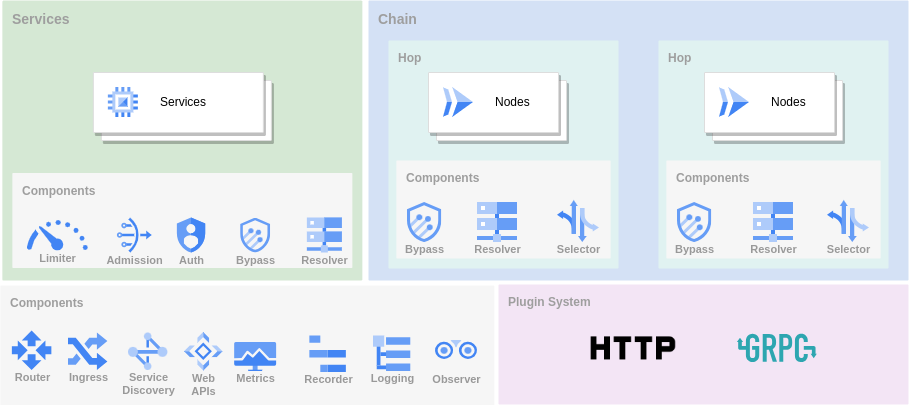
|
||||
|
||||
Google讨论组:[https://groups.google.com/d/forum/go-gost](https://groups.google.com/d/forum/go-gost)
|
||||
GOST作为隧道有三种主要使用方式。
|
||||
|
||||
旧版入口:[v2.gost.run](https://v2.gost.run)
|
||||
### 正向代理
|
||||
|
||||
作为代理服务访问网络,可以组合使用多种协议组成转发链进行转发。
|
||||
|
||||
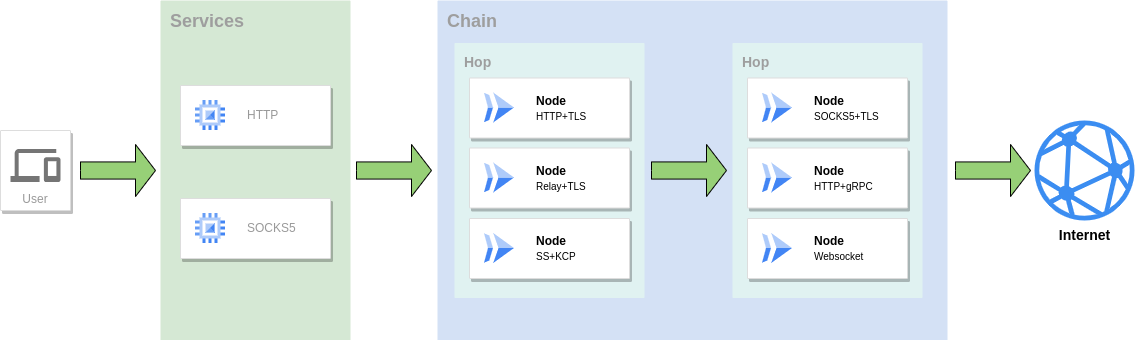
|
||||
|
||||
### 端口转发
|
||||
|
||||
将一个服务的端口映射到另外一个服务的端口,同样可以组合使用多种协议组成转发链进行转发。
|
||||
|
||||
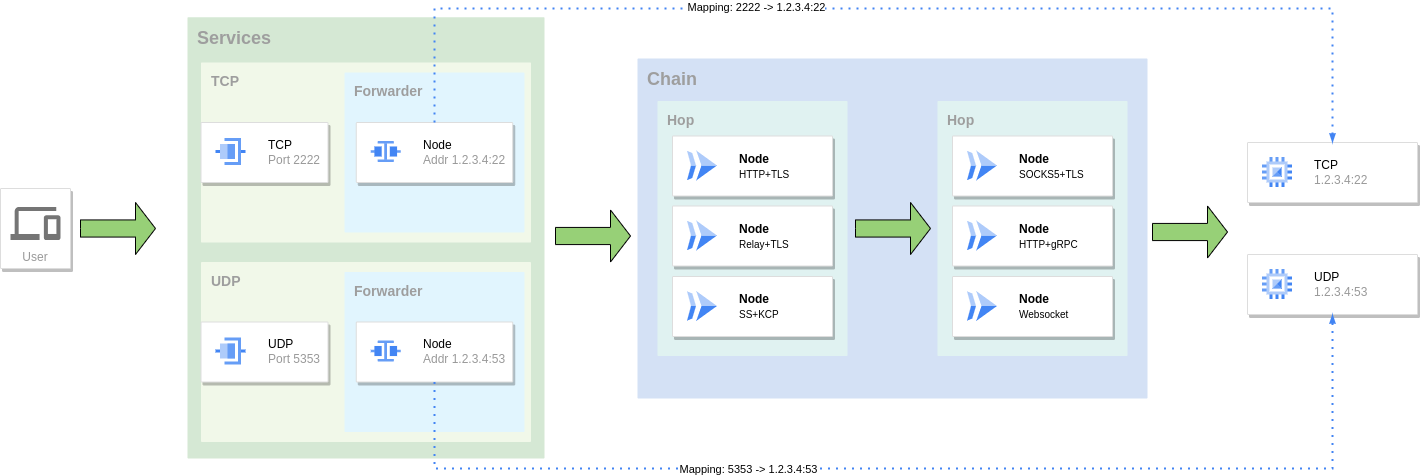
|
||||
|
||||
### 反向代理
|
||||
|
||||
利用隧道和内网穿透将内网服务暴露到公网访问。
|
||||
|
||||
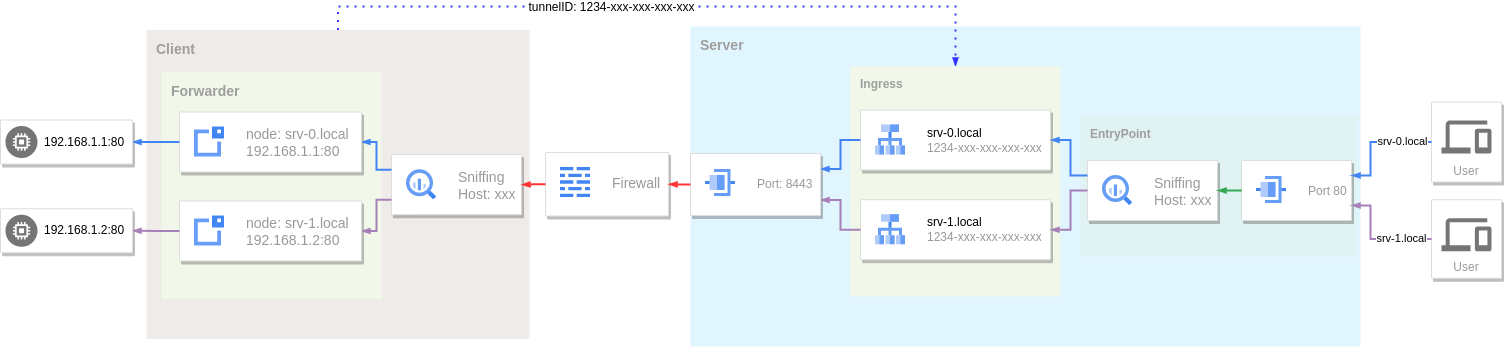
|
||||
|
||||
## 下载安装
|
||||
|
||||
|
||||
### 二进制文件
|
||||
|
||||
[https://github.com/go-gost/gost/releases](https://github.com/go-gost/gost/releases)
|
||||
|
||||
### 系统包(DEB/RPM)
|
||||
|
||||
从 [Releases](https://github.com/go-gost/gost/releases) 下载对应架构的安装包(`amd64`、`amd64v3`、`arm64`):
|
||||
|
||||
```bash
|
||||
# Debian/Ubuntu
|
||||
sudo apt install ./gost_<version>_linux_amd64.deb
|
||||
|
||||
# RHEL/Fedora
|
||||
sudo dnf install ./gost_<version>_linux_amd64.rpm
|
||||
```
|
||||
|
||||
`amd64v3` 包需要支持 AVX2 的 CPU(x86-64-v3),否则请使用 `amd64`。
|
||||
|
||||
安装包附带 systemd 服务,但不会自动启用:先创建 `/etc/gost/gost.yml`(示例见 `/usr/share/doc/gost/examples/gost.yml`),再执行 `sudo systemctl enable --now gost`。未提供配置文件时该服务会被跳过,而不是报错。
|
||||
|
||||
### 安装脚本
|
||||
|
||||
```bash
|
||||
# 安装最新版本 [https://github.com/go-gost/gost/releases](https://github.com/go-gost/gost/releases)
|
||||
bash <(curl -fsSL https://github.com/go-gost/gost/raw/master/install.sh) --install
|
||||
```
|
||||
```bash
|
||||
# 选择要安装的版本
|
||||
bash <(curl -fsSL https://github.com/go-gost/gost/raw/master/install.sh)
|
||||
```
|
||||
|
||||
### 源码编译
|
||||
|
||||
```
|
||||
@@ -52,6 +95,28 @@ go build
|
||||
docker run --rm gogost/gost -V
|
||||
```
|
||||
|
||||
## 工具
|
||||
|
||||
### GUI
|
||||
|
||||
[go-gost/gostctl](https://github.com/go-gost/gostctl)
|
||||
|
||||
### WebUI
|
||||
|
||||
[go-gost/gost-ui](https://github.com/go-gost/gost-ui)
|
||||
|
||||
### Shadowsocks Android插件
|
||||
|
||||
[xausky/ShadowsocksGostPlugin](https://github.com/xausky/ShadowsocksGostPlugin)
|
||||
[hamid-nazari/ShadowsocksGostPlugin](https://github.com/hamid-nazari/ShadowsocksGostPlugin)
|
||||
|
||||
## 帮助与支持
|
||||
|
||||
Wiki站点:[https://gost.run](https://gost.run)
|
||||
|
||||
YouTube: [https://www.youtube.com/@gost-tunnel](https://www.youtube.com/@gost-tunnel)
|
||||
|
||||
Telegram:[https://t.me/gogost](https://t.me/gogost)
|
||||
|
||||
Google讨论组:[https://groups.google.com/d/forum/go-gost](https://groups.google.com/d/forum/go-gost)
|
||||
|
||||
旧版入口:[v2.gost.run](https://v2.gost.run)
|
||||
|
||||
+78
-11
@@ -2,40 +2,85 @@
|
||||
|
||||
### A simple security tunnel written in golang
|
||||
|
||||
[](README_en.md) [](README.md)
|
||||
|
||||
## Features
|
||||
|
||||
- [x] [Listening on multiple ports](https://gost.run/en/getting-started/quick-start/)
|
||||
- [x] [Multi-level forwarding chain](https://gost.run/en/concepts/chain/)
|
||||
- [x] Rich protocol
|
||||
- [x] [TCP/UDP port forwarding](https://gost.run/en/tutorials/port-forwarding/)
|
||||
- [x] [Reverse Proxy](https://gost.run/en/tutorials/reverse-proxy/) and [Tunnel](https://gost.run/en/tutorials/reverse-proxy-tunnel/)
|
||||
- [x] [TCP/UDP transparent proxy](https://gost.run/en/tutorials/redirect/)
|
||||
- [x] DNS [resolver](https://gost.run/en/concepts/resolver/) and [proxy](https://gost.run/en/tutorials/dns/)
|
||||
- [x] [TUN/TAP device](https://gost.run/en/tutorials/tuntap/)
|
||||
- [x] [Reverse Proxy](https://gost.run/en/tutorials/reverse-proxy/)
|
||||
- [x] [TUN/TAP device](https://gost.run/en/tutorials/tuntap/) and [TUN2SOCKS](https://gost.run/en/tutorials/tungo/)
|
||||
- [x] [Load balancing](https://gost.run/en/concepts/selector/)
|
||||
- [x] [Routing control](https://gost.run/en/concepts/bypass/)
|
||||
- [x] [Bandwidth/Rate Limiter](https://gost.run/en/concepts/limiter/)
|
||||
- [x] [Admission control](https://gost.run/en/concepts/limiter/)
|
||||
- [x] [Dynamic configuration](https://gost.run/en/tutorials/api/config/)
|
||||
- [x] [Bandwidth/Rate Limiter](https://gost.run/en/concepts/limiter/)
|
||||
- [x] [Plugin System](https://gost.run/en/concepts/plugin/)
|
||||
- [x] [Prometheus metrics](https://gost.run/en/tutorials/metrics/)
|
||||
- [x] [Dynamic configuration](https://gost.run/en/tutorials/api/config/)
|
||||
- [x] [Web API](https://gost.run/en/tutorials/api/overview/)
|
||||
- [ ] Web UI
|
||||
- [x] [GUI](https://github.com/go-gost/gostctl)/[WebUI](https://github.com/go-gost/gost-ui)
|
||||
|
||||
Wiki: [https://gost.run](https://gost.run/en/)
|
||||
## Overview
|
||||
|
||||
Telegram: [https://t.me/gogost](https://t.me/gogost)
|
||||

|
||||
|
||||
Google group: [https://groups.google.com/d/forum/go-gost](https://groups.google.com/d/forum/go-gost)
|
||||
There are three main ways to use GOST as a tunnel.
|
||||
|
||||
Legacy version: [v2.gost.run](https://v2.gost.run/en/)
|
||||
### Proxy
|
||||
|
||||
As a proxy service to access the network, multiple protocols can be used in combination to form a forwarding chain for traffic forwarding.
|
||||
|
||||

|
||||
|
||||
### Port Forwarding
|
||||
|
||||
Mapping the port of one service to the port of another service, you can also use a combination of multiple protocols to form a forwarding chain for traffic forwarding.
|
||||
|
||||

|
||||
|
||||
### Reverse Proxy
|
||||
|
||||
Use tunnel and intranet penetration to expose local services behind NAT or firewall to public network for access.
|
||||
|
||||

|
||||
|
||||
## Installation
|
||||
|
||||
|
||||
### Binary files
|
||||
|
||||
[https://github.com/go-gost/gost/releases](https://github.com/go-gost/gost/releases)
|
||||
|
||||
### Packages (DEB/RPM)
|
||||
|
||||
Download the package for your architecture from the [releases page](https://github.com/go-gost/gost/releases) (`amd64`, `amd64v3`, `arm64`):
|
||||
|
||||
```bash
|
||||
# Debian/Ubuntu
|
||||
sudo apt install ./gost_<version>_linux_amd64.deb
|
||||
|
||||
# RHEL/Fedora
|
||||
sudo dnf install ./gost_<version>_linux_amd64.rpm
|
||||
```
|
||||
|
||||
The `amd64v3` package requires an AVX2-capable CPU (x86-64-v3); use `amd64` otherwise.
|
||||
|
||||
The packages ship a systemd service, but it is not enabled automatically: create `/etc/gost/gost.yml` first (see `/usr/share/doc/gost/examples/gost.yml`), then run `sudo systemctl enable --now gost`. Without a config file the service is skipped rather than failing.
|
||||
|
||||
### install script
|
||||
|
||||
```bash
|
||||
# install latest from [https://github.com/go-gost/gost/releases](https://github.com/go-gost/gost/releases)
|
||||
bash <(curl -fsSL https://github.com/go-gost/gost/raw/master/install.sh) --install
|
||||
```
|
||||
```bash
|
||||
# select version for install
|
||||
bash <(curl -fsSL https://github.com/go-gost/gost/raw/master/install.sh)
|
||||
```
|
||||
|
||||
### From source
|
||||
|
||||
```
|
||||
@@ -50,6 +95,28 @@ go build
|
||||
docker run --rm gogost/gost -V
|
||||
```
|
||||
|
||||
## Tools
|
||||
|
||||
### GUI
|
||||
|
||||
[go-gost/gostctl](https://github.com/go-gost/gostctl)
|
||||
|
||||
### WebUI
|
||||
|
||||
[go-gost/gost-ui](https://github.com/go-gost/gost-ui)
|
||||
|
||||
### Shadowsocks Android
|
||||
|
||||
[xausky/ShadowsocksGostPlugin](https://github.com/xausky/ShadowsocksGostPlugin)
|
||||
[hamid-nazari/ShadowsocksGostPlugin](https://github.com/hamid-nazari/ShadowsocksGostPlugin)
|
||||
|
||||
## Support
|
||||
|
||||
Wiki: [https://gost.run](https://gost.run/en/)
|
||||
|
||||
YouTube: [https://www.youtube.com/@gost-tunnel](https://www.youtube.com/@gost-tunnel)
|
||||
|
||||
Telegram: [https://t.me/gogost](https://t.me/gogost)
|
||||
|
||||
Google group: [https://groups.google.com/d/forum/go-gost](https://groups.google.com/d/forum/go-gost)
|
||||
|
||||
Legacy version: [v2.gost.run](https://v2.gost.run/en/)
|
||||
|
||||
-595
@@ -1,595 +0,0 @@
|
||||
package main
|
||||
|
||||
import (
|
||||
"encoding/base64"
|
||||
"errors"
|
||||
"fmt"
|
||||
"net/url"
|
||||
"os"
|
||||
"strconv"
|
||||
"strings"
|
||||
"time"
|
||||
|
||||
mdutil "github.com/go-gost/core/metadata/util"
|
||||
"github.com/go-gost/x/config"
|
||||
"github.com/go-gost/x/limiter/conn"
|
||||
"github.com/go-gost/x/limiter/traffic"
|
||||
mdx "github.com/go-gost/x/metadata"
|
||||
"github.com/go-gost/x/registry"
|
||||
)
|
||||
|
||||
var (
|
||||
ErrInvalidCmd = errors.New("invalid cmd")
|
||||
ErrInvalidNode = errors.New("invalid node")
|
||||
)
|
||||
|
||||
type stringList []string
|
||||
|
||||
func (l *stringList) String() string {
|
||||
return fmt.Sprintf("%s", *l)
|
||||
}
|
||||
func (l *stringList) Set(value string) error {
|
||||
*l = append(*l, value)
|
||||
return nil
|
||||
}
|
||||
|
||||
func buildConfigFromCmd(services, nodes stringList) (*config.Config, error) {
|
||||
namePrefix := ""
|
||||
cfg := &config.Config{}
|
||||
|
||||
var chain *config.ChainConfig
|
||||
if len(nodes) > 0 {
|
||||
chain = &config.ChainConfig{
|
||||
Name: fmt.Sprintf("%schain-0", namePrefix),
|
||||
}
|
||||
cfg.Chains = append(cfg.Chains, chain)
|
||||
}
|
||||
|
||||
for i, node := range nodes {
|
||||
url, err := normCmd(node)
|
||||
if err != nil {
|
||||
return nil, err
|
||||
}
|
||||
|
||||
nodeConfig, err := buildNodeConfig(url)
|
||||
if err != nil {
|
||||
return nil, err
|
||||
}
|
||||
nodeConfig.Name = fmt.Sprintf("%snode-0", namePrefix)
|
||||
|
||||
var nodes []*config.NodeConfig
|
||||
for _, host := range strings.Split(nodeConfig.Addr, ",") {
|
||||
if host == "" {
|
||||
continue
|
||||
}
|
||||
nodeCfg := &config.NodeConfig{}
|
||||
*nodeCfg = *nodeConfig
|
||||
nodeCfg.Name = fmt.Sprintf("%snode-%d", namePrefix, len(nodes))
|
||||
nodeCfg.Addr = host
|
||||
nodes = append(nodes, nodeCfg)
|
||||
}
|
||||
|
||||
mc := nodeConfig.Connector.Metadata
|
||||
md := mdx.NewMetadata(mc)
|
||||
|
||||
hopConfig := &config.HopConfig{
|
||||
Name: fmt.Sprintf("%shop-%d", namePrefix, i),
|
||||
Selector: parseSelector(mc),
|
||||
Nodes: nodes,
|
||||
}
|
||||
|
||||
if v := mdutil.GetString(md, "bypass"); v != "" {
|
||||
bypassCfg := &config.BypassConfig{
|
||||
Name: fmt.Sprintf("%sbypass-%d", namePrefix, len(cfg.Bypasses)),
|
||||
}
|
||||
if v[0] == '~' {
|
||||
bypassCfg.Whitelist = true
|
||||
v = v[1:]
|
||||
}
|
||||
for _, s := range strings.Split(v, ",") {
|
||||
if s == "" {
|
||||
continue
|
||||
}
|
||||
bypassCfg.Matchers = append(bypassCfg.Matchers, s)
|
||||
}
|
||||
hopConfig.Bypass = bypassCfg.Name
|
||||
cfg.Bypasses = append(cfg.Bypasses, bypassCfg)
|
||||
delete(mc, "bypass")
|
||||
}
|
||||
if v := mdutil.GetString(md, "resolver"); v != "" {
|
||||
resolverCfg := &config.ResolverConfig{
|
||||
Name: fmt.Sprintf("%sresolver-%d", namePrefix, len(cfg.Resolvers)),
|
||||
}
|
||||
for _, rs := range strings.Split(v, ",") {
|
||||
if rs == "" {
|
||||
continue
|
||||
}
|
||||
resolverCfg.Nameservers = append(
|
||||
resolverCfg.Nameservers,
|
||||
&config.NameserverConfig{
|
||||
Addr: rs,
|
||||
},
|
||||
)
|
||||
}
|
||||
hopConfig.Resolver = resolverCfg.Name
|
||||
cfg.Resolvers = append(cfg.Resolvers, resolverCfg)
|
||||
delete(mc, "resolver")
|
||||
}
|
||||
if v := mdutil.GetString(md, "hosts"); v != "" {
|
||||
hostsCfg := &config.HostsConfig{
|
||||
Name: fmt.Sprintf("%shosts-%d", namePrefix, len(cfg.Hosts)),
|
||||
}
|
||||
for _, s := range strings.Split(v, ",") {
|
||||
ss := strings.SplitN(s, ":", 2)
|
||||
if len(ss) != 2 {
|
||||
continue
|
||||
}
|
||||
hostsCfg.Mappings = append(
|
||||
hostsCfg.Mappings,
|
||||
&config.HostMappingConfig{
|
||||
Hostname: ss[0],
|
||||
IP: ss[1],
|
||||
},
|
||||
)
|
||||
}
|
||||
hopConfig.Hosts = hostsCfg.Name
|
||||
cfg.Hosts = append(cfg.Hosts, hostsCfg)
|
||||
delete(mc, "hosts")
|
||||
}
|
||||
|
||||
if v := mdutil.GetString(md, "interface"); v != "" {
|
||||
hopConfig.Interface = v
|
||||
delete(mc, "interface")
|
||||
}
|
||||
if v := mdutil.GetInt(md, "so_mark"); v > 0 {
|
||||
hopConfig.SockOpts = &config.SockOptsConfig{
|
||||
Mark: v,
|
||||
}
|
||||
delete(mc, "so_mark")
|
||||
}
|
||||
|
||||
chain.Hops = append(chain.Hops, hopConfig)
|
||||
}
|
||||
|
||||
for i, svc := range services {
|
||||
url, err := normCmd(svc)
|
||||
if err != nil {
|
||||
return nil, err
|
||||
}
|
||||
|
||||
service, err := buildServiceConfig(url)
|
||||
if err != nil {
|
||||
return nil, err
|
||||
}
|
||||
service.Name = fmt.Sprintf("%sservice-%d", namePrefix, i)
|
||||
if chain != nil {
|
||||
if service.Listener.Type == "rtcp" || service.Listener.Type == "rudp" {
|
||||
service.Listener.Chain = chain.Name
|
||||
} else {
|
||||
service.Handler.Chain = chain.Name
|
||||
}
|
||||
}
|
||||
cfg.Services = append(cfg.Services, service)
|
||||
|
||||
mh := service.Handler.Metadata
|
||||
md := mdx.NewMetadata(mh)
|
||||
if v := mdutil.GetInt(md, "retries"); v > 0 {
|
||||
service.Handler.Retries = v
|
||||
delete(mh, "retries")
|
||||
}
|
||||
if v := mdutil.GetString(md, "admission"); v != "" {
|
||||
admCfg := &config.AdmissionConfig{
|
||||
Name: fmt.Sprintf("%sadmission-%d", namePrefix, len(cfg.Admissions)),
|
||||
}
|
||||
if v[0] == '~' {
|
||||
admCfg.Whitelist = true
|
||||
v = v[1:]
|
||||
}
|
||||
for _, s := range strings.Split(v, ",") {
|
||||
if s == "" {
|
||||
continue
|
||||
}
|
||||
admCfg.Matchers = append(admCfg.Matchers, s)
|
||||
}
|
||||
service.Admission = admCfg.Name
|
||||
cfg.Admissions = append(cfg.Admissions, admCfg)
|
||||
delete(mh, "admission")
|
||||
}
|
||||
if v := mdutil.GetString(md, "bypass"); v != "" {
|
||||
bypassCfg := &config.BypassConfig{
|
||||
Name: fmt.Sprintf("%sbypass-%d", namePrefix, len(cfg.Bypasses)),
|
||||
}
|
||||
if v[0] == '~' {
|
||||
bypassCfg.Whitelist = true
|
||||
v = v[1:]
|
||||
}
|
||||
for _, s := range strings.Split(v, ",") {
|
||||
if s == "" {
|
||||
continue
|
||||
}
|
||||
bypassCfg.Matchers = append(bypassCfg.Matchers, s)
|
||||
}
|
||||
service.Bypass = bypassCfg.Name
|
||||
cfg.Bypasses = append(cfg.Bypasses, bypassCfg)
|
||||
delete(mh, "bypass")
|
||||
}
|
||||
if v := mdutil.GetString(md, "resolver"); v != "" {
|
||||
resolverCfg := &config.ResolverConfig{
|
||||
Name: fmt.Sprintf("%sresolver-%d", namePrefix, len(cfg.Resolvers)),
|
||||
}
|
||||
for _, rs := range strings.Split(v, ",") {
|
||||
if rs == "" {
|
||||
continue
|
||||
}
|
||||
resolverCfg.Nameservers = append(
|
||||
resolverCfg.Nameservers,
|
||||
&config.NameserverConfig{
|
||||
Addr: rs,
|
||||
Prefer: mdutil.GetString(md, "prefer"),
|
||||
},
|
||||
)
|
||||
}
|
||||
service.Resolver = resolverCfg.Name
|
||||
cfg.Resolvers = append(cfg.Resolvers, resolverCfg)
|
||||
delete(mh, "resolver")
|
||||
}
|
||||
if v := mdutil.GetString(md, "hosts"); v != "" {
|
||||
hostsCfg := &config.HostsConfig{
|
||||
Name: fmt.Sprintf("%shosts-%d", namePrefix, len(cfg.Hosts)),
|
||||
}
|
||||
for _, s := range strings.Split(v, ",") {
|
||||
ss := strings.SplitN(s, ":", 2)
|
||||
if len(ss) != 2 {
|
||||
continue
|
||||
}
|
||||
hostsCfg.Mappings = append(
|
||||
hostsCfg.Mappings,
|
||||
&config.HostMappingConfig{
|
||||
Hostname: ss[0],
|
||||
IP: ss[1],
|
||||
},
|
||||
)
|
||||
}
|
||||
service.Hosts = hostsCfg.Name
|
||||
cfg.Hosts = append(cfg.Hosts, hostsCfg)
|
||||
delete(mh, "hosts")
|
||||
}
|
||||
|
||||
in := mdutil.GetString(md, "limiter.in")
|
||||
out := mdutil.GetString(md, "limiter.out")
|
||||
cin := mdutil.GetString(md, "limiter.conn.in")
|
||||
cout := mdutil.GetString(md, "limiter.conn.out")
|
||||
if in != "" || cin != "" || out != "" || cout != "" {
|
||||
limiter := &config.LimiterConfig{
|
||||
Name: fmt.Sprintf("%slimiter-%d", namePrefix, len(cfg.Limiters)),
|
||||
}
|
||||
if in != "" || out != "" {
|
||||
limiter.Limits = append(limiter.Limits,
|
||||
fmt.Sprintf("%s %s %s", traffic.GlobalLimitKey, in, out))
|
||||
}
|
||||
if cin != "" || cout != "" {
|
||||
limiter.Limits = append(limiter.Limits,
|
||||
fmt.Sprintf("%s %s %s", traffic.ConnLimitKey, cin, cout))
|
||||
}
|
||||
service.Limiter = limiter.Name
|
||||
cfg.Limiters = append(cfg.Limiters, limiter)
|
||||
delete(mh, "limiter.in")
|
||||
delete(mh, "limiter.out")
|
||||
delete(mh, "limiter.conn.in")
|
||||
delete(mh, "limiter.conn.out")
|
||||
}
|
||||
|
||||
if climit := mdutil.GetInt(md, "climiter"); climit > 0 {
|
||||
limiter := &config.LimiterConfig{
|
||||
Name: fmt.Sprintf("%sclimiter-%d", namePrefix, len(cfg.CLimiters)),
|
||||
Limits: []string{fmt.Sprintf("%s %d", conn.GlobalLimitKey, climit)},
|
||||
}
|
||||
service.CLimiter = limiter.Name
|
||||
cfg.CLimiters = append(cfg.CLimiters, limiter)
|
||||
delete(mh, "climiter")
|
||||
}
|
||||
|
||||
if rlimit := mdutil.GetFloat(md, "rlimiter"); rlimit > 0 {
|
||||
limiter := &config.LimiterConfig{
|
||||
Name: fmt.Sprintf("%srlimiter-%d", namePrefix, len(cfg.RLimiters)),
|
||||
Limits: []string{fmt.Sprintf("%s %s", conn.GlobalLimitKey, strconv.FormatFloat(rlimit, 'f', -1, 64))},
|
||||
}
|
||||
service.RLimiter = limiter.Name
|
||||
cfg.RLimiters = append(cfg.RLimiters, limiter)
|
||||
delete(mh, "rlimiter")
|
||||
}
|
||||
}
|
||||
|
||||
return cfg, nil
|
||||
}
|
||||
|
||||
func buildServiceConfig(url *url.URL) (*config.ServiceConfig, error) {
|
||||
namePrefix := ""
|
||||
if v := os.Getenv("_GOST_ID"); v != "" {
|
||||
namePrefix = fmt.Sprintf("go-%s@", v)
|
||||
}
|
||||
|
||||
var handler, listener string
|
||||
schemes := strings.Split(url.Scheme, "+")
|
||||
if len(schemes) == 1 {
|
||||
handler = schemes[0]
|
||||
listener = schemes[0]
|
||||
}
|
||||
if len(schemes) == 2 {
|
||||
handler = schemes[0]
|
||||
listener = schemes[1]
|
||||
}
|
||||
|
||||
svc := &config.ServiceConfig{
|
||||
Addr: url.Host,
|
||||
}
|
||||
|
||||
if h := registry.HandlerRegistry().Get(handler); h == nil {
|
||||
handler = "auto"
|
||||
}
|
||||
if ln := registry.ListenerRegistry().Get(listener); ln == nil {
|
||||
listener = "tcp"
|
||||
if handler == "ssu" {
|
||||
listener = "udp"
|
||||
}
|
||||
}
|
||||
|
||||
// forward mode
|
||||
if remotes := strings.Trim(url.EscapedPath(), "/"); remotes != "" {
|
||||
svc.Forwarder = &config.ForwarderConfig{
|
||||
// Targets: strings.Split(remotes, ","),
|
||||
}
|
||||
for i, addr := range strings.Split(remotes, ",") {
|
||||
svc.Forwarder.Nodes = append(svc.Forwarder.Nodes,
|
||||
&config.ForwardNodeConfig{
|
||||
Name: fmt.Sprintf("%starget-%d", namePrefix, i),
|
||||
Addr: addr,
|
||||
})
|
||||
}
|
||||
if handler != "relay" {
|
||||
if listener == "tcp" || listener == "udp" ||
|
||||
listener == "rtcp" || listener == "rudp" ||
|
||||
listener == "tun" || listener == "tap" ||
|
||||
listener == "dns" {
|
||||
handler = listener
|
||||
} else {
|
||||
handler = "forward"
|
||||
}
|
||||
}
|
||||
}
|
||||
|
||||
var auth *config.AuthConfig
|
||||
if url.User != nil {
|
||||
auth = &config.AuthConfig{
|
||||
Username: url.User.Username(),
|
||||
}
|
||||
auth.Password, _ = url.User.Password()
|
||||
}
|
||||
|
||||
m := map[string]any{}
|
||||
for k, v := range url.Query() {
|
||||
if len(v) > 0 {
|
||||
m[k] = v[0]
|
||||
}
|
||||
}
|
||||
md := mdx.NewMetadata(m)
|
||||
|
||||
if sa := mdutil.GetString(md, "auth"); sa != "" {
|
||||
au, err := parseAuthFromCmd(sa)
|
||||
if err != nil {
|
||||
return nil, err
|
||||
}
|
||||
auth = au
|
||||
}
|
||||
delete(m, "auth")
|
||||
|
||||
tlsConfig := &config.TLSConfig{
|
||||
CertFile: mdutil.GetString(md, "certFile", "cert"),
|
||||
KeyFile: mdutil.GetString(md, "keyFile", "key"),
|
||||
CAFile: mdutil.GetString(md, "caFile", "ca"),
|
||||
}
|
||||
|
||||
delete(m, "certFile")
|
||||
delete(m, "cert")
|
||||
delete(m, "keyFile")
|
||||
delete(m, "key")
|
||||
delete(m, "caFile")
|
||||
delete(m, "ca")
|
||||
|
||||
if tlsConfig.CertFile == "" {
|
||||
tlsConfig = nil
|
||||
}
|
||||
|
||||
if v := mdutil.GetString(md, "dns"); v != "" {
|
||||
md.Set("dns", strings.Split(v, ","))
|
||||
}
|
||||
|
||||
if svc.Forwarder != nil {
|
||||
svc.Forwarder.Selector = parseSelector(m)
|
||||
}
|
||||
|
||||
svc.Handler = &config.HandlerConfig{
|
||||
Type: handler,
|
||||
Auth: auth,
|
||||
Metadata: m,
|
||||
}
|
||||
svc.Listener = &config.ListenerConfig{
|
||||
Type: listener,
|
||||
TLS: tlsConfig,
|
||||
Metadata: m,
|
||||
}
|
||||
|
||||
svc.Metadata = m
|
||||
|
||||
if svc.Listener.Type == "ssh" || svc.Listener.Type == "sshd" {
|
||||
svc.Handler.Auth = nil
|
||||
svc.Listener.Auth = auth
|
||||
}
|
||||
|
||||
return svc, nil
|
||||
}
|
||||
|
||||
func buildNodeConfig(url *url.URL) (*config.NodeConfig, error) {
|
||||
var connector, dialer string
|
||||
schemes := strings.Split(url.Scheme, "+")
|
||||
if len(schemes) == 1 {
|
||||
connector = schemes[0]
|
||||
dialer = schemes[0]
|
||||
}
|
||||
if len(schemes) == 2 {
|
||||
connector = schemes[0]
|
||||
dialer = schemes[1]
|
||||
}
|
||||
|
||||
node := &config.NodeConfig{
|
||||
Addr: url.Host,
|
||||
}
|
||||
|
||||
if c := registry.ConnectorRegistry().Get(connector); c == nil {
|
||||
connector = "http"
|
||||
}
|
||||
if d := registry.DialerRegistry().Get(dialer); d == nil {
|
||||
dialer = "tcp"
|
||||
if connector == "ssu" {
|
||||
dialer = "udp"
|
||||
}
|
||||
}
|
||||
|
||||
var auth *config.AuthConfig
|
||||
if url.User != nil {
|
||||
auth = &config.AuthConfig{
|
||||
Username: url.User.Username(),
|
||||
}
|
||||
auth.Password, _ = url.User.Password()
|
||||
}
|
||||
|
||||
m := map[string]any{}
|
||||
for k, v := range url.Query() {
|
||||
if len(v) > 0 {
|
||||
m[k] = v[0]
|
||||
}
|
||||
}
|
||||
md := mdx.NewMetadata(m)
|
||||
|
||||
if sauth := mdutil.GetString(md, "auth"); sauth != "" && auth == nil {
|
||||
au, err := parseAuthFromCmd(sauth)
|
||||
if err != nil {
|
||||
return nil, err
|
||||
}
|
||||
auth = au
|
||||
}
|
||||
delete(m, "auth")
|
||||
|
||||
tlsConfig := &config.TLSConfig{
|
||||
CertFile: mdutil.GetString(md, "certFile", "cert"),
|
||||
KeyFile: mdutil.GetString(md, "keyFile", "key"),
|
||||
CAFile: mdutil.GetString(md, "caFile", "ca"),
|
||||
Secure: mdutil.GetBool(md, "secure"),
|
||||
ServerName: mdutil.GetString(md, "serverName"),
|
||||
}
|
||||
if tlsConfig.ServerName == "" {
|
||||
tlsConfig.ServerName = url.Hostname()
|
||||
}
|
||||
|
||||
delete(m, "certFile")
|
||||
delete(m, "cert")
|
||||
delete(m, "keyFile")
|
||||
delete(m, "key")
|
||||
delete(m, "caFile")
|
||||
delete(m, "ca")
|
||||
delete(m, "secure")
|
||||
delete(m, "serverName")
|
||||
|
||||
if !tlsConfig.Secure && tlsConfig.CertFile == "" && tlsConfig.CAFile == "" {
|
||||
tlsConfig = nil
|
||||
}
|
||||
|
||||
node.Connector = &config.ConnectorConfig{
|
||||
Type: connector,
|
||||
Auth: auth,
|
||||
Metadata: m,
|
||||
}
|
||||
node.Dialer = &config.DialerConfig{
|
||||
Type: dialer,
|
||||
TLS: tlsConfig,
|
||||
Metadata: m,
|
||||
}
|
||||
|
||||
if node.Dialer.Type == "ssh" || node.Dialer.Type == "sshd" {
|
||||
node.Connector.Auth = nil
|
||||
node.Dialer.Auth = auth
|
||||
}
|
||||
|
||||
return node, nil
|
||||
}
|
||||
|
||||
func normCmd(s string) (*url.URL, error) {
|
||||
s = strings.TrimSpace(s)
|
||||
if s == "" {
|
||||
return nil, ErrInvalidCmd
|
||||
}
|
||||
|
||||
if s[0] == ':' || !strings.Contains(s, "://") {
|
||||
s = "auto://" + s
|
||||
}
|
||||
|
||||
url, err := url.Parse(s)
|
||||
if err != nil {
|
||||
return nil, err
|
||||
}
|
||||
if url.Scheme == "https" {
|
||||
url.Scheme = "http+tls"
|
||||
}
|
||||
|
||||
return url, nil
|
||||
}
|
||||
|
||||
func parseAuthFromCmd(sa string) (*config.AuthConfig, error) {
|
||||
v, err := base64.StdEncoding.DecodeString(sa)
|
||||
if err != nil {
|
||||
return nil, err
|
||||
}
|
||||
cs := string(v)
|
||||
n := strings.IndexByte(cs, ':')
|
||||
if n < 0 {
|
||||
return &config.AuthConfig{
|
||||
Username: cs,
|
||||
}, nil
|
||||
}
|
||||
|
||||
return &config.AuthConfig{
|
||||
Username: cs[:n],
|
||||
Password: cs[n+1:],
|
||||
}, nil
|
||||
}
|
||||
|
||||
func parseSelector(m map[string]any) *config.SelectorConfig {
|
||||
md := mdx.NewMetadata(m)
|
||||
strategy := mdutil.GetString(md, "strategy")
|
||||
maxFails := mdutil.GetInt(md, "maxFails", "max_fails")
|
||||
failTimeout := mdutil.GetDuration(md, "failTimeout", "fail_timeout")
|
||||
if strategy == "" && maxFails <= 0 && failTimeout <= 0 {
|
||||
return nil
|
||||
}
|
||||
if strategy == "" {
|
||||
strategy = "round"
|
||||
}
|
||||
if maxFails <= 0 {
|
||||
maxFails = 1
|
||||
}
|
||||
if failTimeout <= 0 {
|
||||
failTimeout = 30 * time.Second
|
||||
}
|
||||
|
||||
delete(m, "strategy")
|
||||
delete(m, "maxFails")
|
||||
delete(m, "max_fails")
|
||||
delete(m, "failTimeout")
|
||||
delete(m, "fail_timeout")
|
||||
|
||||
return &config.SelectorConfig{
|
||||
Strategy: strategy,
|
||||
MaxFails: maxFails,
|
||||
FailTimeout: failTimeout,
|
||||
}
|
||||
}
|
||||
@@ -1,204 +0,0 @@
|
||||
package main
|
||||
|
||||
import (
|
||||
"io"
|
||||
"os"
|
||||
"path/filepath"
|
||||
|
||||
"github.com/go-gost/core/logger"
|
||||
"github.com/go-gost/core/service"
|
||||
"github.com/go-gost/x/api"
|
||||
"github.com/go-gost/x/config"
|
||||
"github.com/go-gost/x/config/parsing"
|
||||
xlogger "github.com/go-gost/x/logger"
|
||||
metrics "github.com/go-gost/x/metrics/service"
|
||||
"github.com/go-gost/x/registry"
|
||||
"gopkg.in/natefinch/lumberjack.v2"
|
||||
)
|
||||
|
||||
func buildService(cfg *config.Config) (services []service.Service) {
|
||||
if cfg == nil {
|
||||
return
|
||||
}
|
||||
|
||||
for _, autherCfg := range cfg.Authers {
|
||||
if auther := parsing.ParseAuther(autherCfg); auther != nil {
|
||||
if err := registry.AutherRegistry().Register(autherCfg.Name, auther); err != nil {
|
||||
log.Fatal(err)
|
||||
}
|
||||
}
|
||||
}
|
||||
|
||||
for _, admissionCfg := range cfg.Admissions {
|
||||
if adm := parsing.ParseAdmission(admissionCfg); adm != nil {
|
||||
if err := registry.AdmissionRegistry().Register(admissionCfg.Name, adm); err != nil {
|
||||
log.Fatal(err)
|
||||
}
|
||||
}
|
||||
}
|
||||
|
||||
for _, bypassCfg := range cfg.Bypasses {
|
||||
if bp := parsing.ParseBypass(bypassCfg); bp != nil {
|
||||
if err := registry.BypassRegistry().Register(bypassCfg.Name, bp); err != nil {
|
||||
log.Fatal(err)
|
||||
}
|
||||
}
|
||||
}
|
||||
|
||||
for _, resolverCfg := range cfg.Resolvers {
|
||||
r, err := parsing.ParseResolver(resolverCfg)
|
||||
if err != nil {
|
||||
log.Fatal(err)
|
||||
}
|
||||
if r != nil {
|
||||
if err := registry.ResolverRegistry().Register(resolverCfg.Name, r); err != nil {
|
||||
log.Fatal(err)
|
||||
}
|
||||
}
|
||||
}
|
||||
|
||||
for _, hostsCfg := range cfg.Hosts {
|
||||
if h := parsing.ParseHosts(hostsCfg); h != nil {
|
||||
if err := registry.HostsRegistry().Register(hostsCfg.Name, h); err != nil {
|
||||
log.Fatal(err)
|
||||
}
|
||||
}
|
||||
}
|
||||
|
||||
for _, ingressCfg := range cfg.Ingresses {
|
||||
if h := parsing.ParseIngress(ingressCfg); h != nil {
|
||||
if err := registry.IngressRegistry().Register(ingressCfg.Name, h); err != nil {
|
||||
log.Fatal(err)
|
||||
}
|
||||
}
|
||||
}
|
||||
|
||||
for _, recorderCfg := range cfg.Recorders {
|
||||
if h := parsing.ParseRecorder(recorderCfg); h != nil {
|
||||
if err := registry.RecorderRegistry().Register(recorderCfg.Name, h); err != nil {
|
||||
log.Fatal(err)
|
||||
}
|
||||
}
|
||||
}
|
||||
|
||||
for _, limiterCfg := range cfg.Limiters {
|
||||
if h := parsing.ParseTrafficLimiter(limiterCfg); h != nil {
|
||||
if err := registry.TrafficLimiterRegistry().Register(limiterCfg.Name, h); err != nil {
|
||||
log.Fatal(err)
|
||||
}
|
||||
}
|
||||
}
|
||||
for _, limiterCfg := range cfg.CLimiters {
|
||||
if h := parsing.ParseConnLimiter(limiterCfg); h != nil {
|
||||
if err := registry.ConnLimiterRegistry().Register(limiterCfg.Name, h); err != nil {
|
||||
log.Fatal(err)
|
||||
}
|
||||
}
|
||||
}
|
||||
for _, limiterCfg := range cfg.RLimiters {
|
||||
if h := parsing.ParseRateLimiter(limiterCfg); h != nil {
|
||||
if err := registry.RateLimiterRegistry().Register(limiterCfg.Name, h); err != nil {
|
||||
log.Fatal(err)
|
||||
}
|
||||
}
|
||||
}
|
||||
for _, hopCfg := range cfg.Hops {
|
||||
hop, err := parsing.ParseHop(hopCfg)
|
||||
if err != nil {
|
||||
log.Fatal(err)
|
||||
}
|
||||
if hop != nil {
|
||||
if err := registry.HopRegistry().Register(hopCfg.Name, hop); err != nil {
|
||||
log.Fatal(err)
|
||||
}
|
||||
}
|
||||
}
|
||||
for _, chainCfg := range cfg.Chains {
|
||||
c, err := parsing.ParseChain(chainCfg)
|
||||
if err != nil {
|
||||
log.Fatal(err)
|
||||
}
|
||||
if c != nil {
|
||||
if err := registry.ChainRegistry().Register(chainCfg.Name, c); err != nil {
|
||||
log.Fatal(err)
|
||||
}
|
||||
}
|
||||
}
|
||||
|
||||
for _, svcCfg := range cfg.Services {
|
||||
svc, err := parsing.ParseService(svcCfg)
|
||||
if err != nil {
|
||||
log.Fatal(err)
|
||||
}
|
||||
if svc != nil {
|
||||
if err := registry.ServiceRegistry().Register(svcCfg.Name, svc); err != nil {
|
||||
log.Fatal(err)
|
||||
}
|
||||
}
|
||||
services = append(services, svc)
|
||||
}
|
||||
|
||||
return
|
||||
}
|
||||
|
||||
func logFromConfig(cfg *config.LogConfig) logger.Logger {
|
||||
if cfg == nil {
|
||||
cfg = &config.LogConfig{}
|
||||
}
|
||||
opts := []xlogger.LoggerOption{
|
||||
xlogger.FormatLoggerOption(logger.LogFormat(cfg.Format)),
|
||||
xlogger.LevelLoggerOption(logger.LogLevel(cfg.Level)),
|
||||
}
|
||||
|
||||
var out io.Writer = os.Stderr
|
||||
switch cfg.Output {
|
||||
case "none", "null":
|
||||
return xlogger.Nop()
|
||||
case "stdout":
|
||||
out = os.Stdout
|
||||
case "stderr", "":
|
||||
out = os.Stderr
|
||||
default:
|
||||
if cfg.Rotation != nil {
|
||||
out = &lumberjack.Logger{
|
||||
Filename: cfg.Output,
|
||||
MaxSize: cfg.Rotation.MaxSize,
|
||||
MaxAge: cfg.Rotation.MaxAge,
|
||||
MaxBackups: cfg.Rotation.MaxBackups,
|
||||
LocalTime: cfg.Rotation.LocalTime,
|
||||
Compress: cfg.Rotation.Compress,
|
||||
}
|
||||
} else {
|
||||
os.MkdirAll(filepath.Dir(cfg.Output), 0755)
|
||||
f, err := os.OpenFile(cfg.Output, os.O_CREATE|os.O_WRONLY|os.O_APPEND, 0666)
|
||||
if err != nil {
|
||||
log.Warn(err)
|
||||
} else {
|
||||
out = f
|
||||
}
|
||||
}
|
||||
}
|
||||
opts = append(opts, xlogger.OutputLoggerOption(out))
|
||||
|
||||
return xlogger.NewLogger(opts...)
|
||||
}
|
||||
|
||||
func buildAPIService(cfg *config.APIConfig) (service.Service, error) {
|
||||
auther := parsing.ParseAutherFromAuth(cfg.Auth)
|
||||
if cfg.Auther != "" {
|
||||
auther = registry.AutherRegistry().Get(cfg.Auther)
|
||||
}
|
||||
return api.NewService(
|
||||
cfg.Addr,
|
||||
api.PathPrefixOption(cfg.PathPrefix),
|
||||
api.AccessLogOption(cfg.AccessLog),
|
||||
api.AutherOption(auther),
|
||||
)
|
||||
}
|
||||
|
||||
func buildMetricsService(cfg *config.MetricsConfig) (service.Service, error) {
|
||||
return metrics.NewService(
|
||||
cfg.Addr,
|
||||
metrics.PathOption(cfg.Path),
|
||||
)
|
||||
}
|
||||
+48
-210
@@ -4,73 +4,88 @@ import (
|
||||
"context"
|
||||
"flag"
|
||||
"fmt"
|
||||
"net/http"
|
||||
"log"
|
||||
_ "net/http/pprof"
|
||||
"os"
|
||||
"os/exec"
|
||||
"os/signal"
|
||||
"runtime"
|
||||
"strings"
|
||||
"sync"
|
||||
"syscall"
|
||||
"sync/atomic"
|
||||
"time"
|
||||
|
||||
"github.com/go-gost/core/logger"
|
||||
"github.com/go-gost/x/config"
|
||||
"github.com/go-gost/x/config/parsing"
|
||||
xlogger "github.com/go-gost/x/logger"
|
||||
xmetrics "github.com/go-gost/x/metrics"
|
||||
"github.com/go-gost/x/registry"
|
||||
"github.com/judwhite/go-svc"
|
||||
)
|
||||
|
||||
var (
|
||||
log logger.Logger
|
||||
type stringList []string
|
||||
|
||||
cfgFile string
|
||||
func (l *stringList) String() string {
|
||||
return fmt.Sprintf("%s", *l)
|
||||
}
|
||||
func (l *stringList) Set(value string) error {
|
||||
*l = append(*l, value)
|
||||
return nil
|
||||
}
|
||||
|
||||
var (
|
||||
cfgFiles stringList
|
||||
outputFormat string
|
||||
services stringList
|
||||
nodes stringList
|
||||
debug bool
|
||||
trace bool
|
||||
apiAddr string
|
||||
metricsAddr string
|
||||
reload time.Duration
|
||||
)
|
||||
|
||||
func init() {
|
||||
log.SetFlags(log.LstdFlags | log.Lshortfile | log.Lmicroseconds)
|
||||
|
||||
args := strings.Join(os.Args[1:], " ")
|
||||
|
||||
if strings.Contains(args, " -- ") {
|
||||
var (
|
||||
wg sync.WaitGroup
|
||||
ret int
|
||||
ret atomic.Int32
|
||||
)
|
||||
|
||||
ctx, cancel := context.WithCancel(context.Background())
|
||||
defer cancel()
|
||||
wargsList := strings.Split(" "+args+" ", " -- ")
|
||||
|
||||
for wid, wargs := range strings.Split(" "+args+" ", " -- ") {
|
||||
wg.Add(1)
|
||||
go func(wid int, wargs string) {
|
||||
defer wg.Done()
|
||||
defer cancel()
|
||||
worker(wid, strings.Split(wargs, " "), &ctx, &ret)
|
||||
}(wid, strings.TrimSpace(wargs))
|
||||
ctx, cancel := context.WithCancel(context.Background())
|
||||
|
||||
for wid, wargs := range wargsList {
|
||||
wg.Go(func() {
|
||||
worker(wid, strings.Split(strings.TrimSpace(wargs), " "), ctx, &ret)
|
||||
})
|
||||
}
|
||||
|
||||
wg.Wait()
|
||||
cancel()
|
||||
|
||||
os.Exit(ret)
|
||||
os.Exit(int(ret.Load()))
|
||||
}
|
||||
}
|
||||
|
||||
func worker(id int, args []string, ctx *context.Context, ret *int) {
|
||||
cmd := exec.CommandContext(*ctx, os.Args[0], args...)
|
||||
func worker(id int, args []string, ctx context.Context, ret *atomic.Int32) {
|
||||
cmd := exec.CommandContext(ctx, os.Args[0], args...)
|
||||
|
||||
cmd.Stdout = os.Stdout
|
||||
cmd.Stderr = os.Stderr
|
||||
cmd.Env = append(os.Environ(), fmt.Sprintf("_GOST_ID=%d", id))
|
||||
|
||||
cmd.Run()
|
||||
if cmd.ProcessState.Exited() {
|
||||
*ret = cmd.ProcessState.ExitCode()
|
||||
if err := cmd.Run(); err != nil {
|
||||
// Context cancellation is expected when one worker exits early.
|
||||
// Only log fatal on other errors.
|
||||
if ctx.Err() == nil {
|
||||
log.Fatal(err)
|
||||
}
|
||||
return
|
||||
}
|
||||
if cmd.ProcessState != nil && cmd.ProcessState.Exited() {
|
||||
ret.Store(int32(cmd.ProcessState.ExitCode()))
|
||||
}
|
||||
}
|
||||
|
||||
@@ -79,12 +94,14 @@ func init() {
|
||||
|
||||
flag.Var(&services, "L", "service list")
|
||||
flag.Var(&nodes, "F", "chain node list")
|
||||
flag.StringVar(&cfgFile, "C", "", "configuration file")
|
||||
flag.Var(&cfgFiles, "C", "config file(s), URL(s), or inline JSON")
|
||||
flag.BoolVar(&printVersion, "V", false, "print version")
|
||||
flag.StringVar(&outputFormat, "O", "", "output format, one of yaml|json format")
|
||||
flag.BoolVar(&debug, "D", false, "debug mode")
|
||||
flag.BoolVar(&trace, "DD", false, "trace mode")
|
||||
flag.StringVar(&apiAddr, "api", "", "api service address")
|
||||
flag.StringVar(&metricsAddr, "metrics", "", "metrics service address")
|
||||
flag.DurationVar(&reload, "R", 0, "auto reload period (e.g. 30s, 1m)")
|
||||
flag.Parse()
|
||||
|
||||
if printVersion {
|
||||
@@ -92,194 +109,15 @@ func init() {
|
||||
version, runtime.Version(), runtime.GOOS, runtime.GOARCH)
|
||||
os.Exit(0)
|
||||
}
|
||||
|
||||
log = xlogger.NewLogger()
|
||||
logger.SetDefault(log)
|
||||
}
|
||||
|
||||
func main() {
|
||||
cfg := &config.Config{}
|
||||
if cfgFile != "" {
|
||||
if err := cfg.ReadFile(cfgFile); err != nil {
|
||||
log.Fatal(err)
|
||||
}
|
||||
}
|
||||
|
||||
cmdCfg, err := buildConfigFromCmd(services, nodes)
|
||||
if err != nil {
|
||||
log.Fatal(err)
|
||||
}
|
||||
cfg = mergeConfig(cfg, cmdCfg)
|
||||
|
||||
if len(cfg.Services) == 0 && apiAddr == "" {
|
||||
if err := cfg.Load(); err != nil {
|
||||
log.Fatal(err)
|
||||
}
|
||||
}
|
||||
|
||||
if v := os.Getenv("GOST_PROFILING"); v != "" {
|
||||
cfg.Profiling = &config.ProfilingConfig{
|
||||
Addr: v,
|
||||
}
|
||||
}
|
||||
if v := os.Getenv("GOST_METRICS"); v != "" {
|
||||
cfg.Metrics = &config.MetricsConfig{
|
||||
Addr: v,
|
||||
}
|
||||
}
|
||||
|
||||
if v := os.Getenv("GOST_LOGGER_LEVEL"); v != "" {
|
||||
cfg.Log = &config.LogConfig{
|
||||
Level: v,
|
||||
}
|
||||
}
|
||||
|
||||
if v := os.Getenv("GOST_API"); v != "" {
|
||||
cfg.API = &config.APIConfig{
|
||||
Addr: v,
|
||||
}
|
||||
}
|
||||
|
||||
if debug {
|
||||
if cfg.Log == nil {
|
||||
cfg.Log = &config.LogConfig{}
|
||||
}
|
||||
cfg.Log.Level = string(logger.DebugLevel)
|
||||
}
|
||||
if apiAddr != "" {
|
||||
cfg.API = &config.APIConfig{
|
||||
Addr: apiAddr,
|
||||
}
|
||||
}
|
||||
if metricsAddr != "" {
|
||||
cfg.Metrics = &config.MetricsConfig{
|
||||
Addr: metricsAddr,
|
||||
}
|
||||
}
|
||||
|
||||
log = logFromConfig(cfg.Log)
|
||||
|
||||
log := xlogger.NewLogger()
|
||||
logger.SetDefault(log)
|
||||
|
||||
if outputFormat != "" {
|
||||
if err := cfg.Write(os.Stdout, outputFormat); err != nil {
|
||||
log.Fatal(err)
|
||||
}
|
||||
os.Exit(0)
|
||||
}
|
||||
p := &program{}
|
||||
|
||||
if cfg.Profiling != nil {
|
||||
go func() {
|
||||
addr := cfg.Profiling.Addr
|
||||
if addr == "" {
|
||||
addr = ":6060"
|
||||
}
|
||||
log.Info("profiling server on ", addr)
|
||||
log.Fatal(http.ListenAndServe(addr, nil))
|
||||
}()
|
||||
}
|
||||
|
||||
if cfg.API != nil {
|
||||
s, err := buildAPIService(cfg.API)
|
||||
if err != nil {
|
||||
log.Fatal(err)
|
||||
}
|
||||
defer s.Close()
|
||||
|
||||
go func() {
|
||||
log.Info("api service on ", s.Addr())
|
||||
log.Fatal(s.Serve())
|
||||
}()
|
||||
}
|
||||
|
||||
if cfg.Metrics != nil {
|
||||
xmetrics.Init(xmetrics.NewMetrics())
|
||||
if cfg.Metrics.Addr != "" {
|
||||
s, err := buildMetricsService(cfg.Metrics)
|
||||
if err != nil {
|
||||
log.Fatal(err)
|
||||
}
|
||||
go func() {
|
||||
defer s.Close()
|
||||
log.Info("metrics service on ", s.Addr())
|
||||
log.Fatal(s.Serve())
|
||||
}()
|
||||
}
|
||||
}
|
||||
|
||||
parsing.BuildDefaultTLSConfig(cfg.TLS)
|
||||
|
||||
services := buildService(cfg)
|
||||
for _, svc := range services {
|
||||
svc := svc
|
||||
go func() {
|
||||
svc.Serve()
|
||||
// svc.Close()
|
||||
}()
|
||||
}
|
||||
|
||||
config.SetGlobal(cfg)
|
||||
|
||||
sigs := make(chan os.Signal, 1)
|
||||
signal.Notify(sigs, os.Interrupt, syscall.SIGTERM, syscall.SIGINT, syscall.SIGHUP)
|
||||
|
||||
for sig := range sigs {
|
||||
switch sig {
|
||||
case syscall.SIGHUP:
|
||||
return
|
||||
default:
|
||||
for name, srv := range registry.ServiceRegistry().GetAll() {
|
||||
srv.Close()
|
||||
log.Debugf("service %s shutdown", name)
|
||||
}
|
||||
return
|
||||
}
|
||||
if err := svc.Run(p); err != nil {
|
||||
logger.Default().Fatal(err)
|
||||
}
|
||||
}
|
||||
|
||||
func mergeConfig(cfg1, cfg2 *config.Config) *config.Config {
|
||||
if cfg1 == nil {
|
||||
return cfg2
|
||||
}
|
||||
if cfg2 == nil {
|
||||
return cfg1
|
||||
}
|
||||
|
||||
cfg := &config.Config{
|
||||
Services: append(cfg1.Services, cfg2.Services...),
|
||||
Chains: append(cfg1.Chains, cfg2.Chains...),
|
||||
Hops: append(cfg1.Hops, cfg2.Hops...),
|
||||
Authers: append(cfg1.Authers, cfg2.Authers...),
|
||||
Admissions: append(cfg1.Admissions, cfg2.Admissions...),
|
||||
Bypasses: append(cfg1.Bypasses, cfg2.Bypasses...),
|
||||
Resolvers: append(cfg1.Resolvers, cfg2.Resolvers...),
|
||||
Hosts: append(cfg1.Hosts, cfg2.Hosts...),
|
||||
Ingresses: append(cfg1.Ingresses, cfg2.Ingresses...),
|
||||
Recorders: append(cfg1.Recorders, cfg2.Recorders...),
|
||||
Limiters: append(cfg1.Limiters, cfg2.Limiters...),
|
||||
CLimiters: append(cfg1.CLimiters, cfg2.CLimiters...),
|
||||
RLimiters: append(cfg1.RLimiters, cfg2.RLimiters...),
|
||||
TLS: cfg1.TLS,
|
||||
Log: cfg1.Log,
|
||||
API: cfg1.API,
|
||||
Metrics: cfg1.Metrics,
|
||||
Profiling: cfg1.Profiling,
|
||||
}
|
||||
if cfg2.TLS != nil {
|
||||
cfg.TLS = cfg2.TLS
|
||||
}
|
||||
if cfg2.Log != nil {
|
||||
cfg.Log = cfg2.Log
|
||||
}
|
||||
if cfg2.API != nil {
|
||||
cfg.API = cfg2.API
|
||||
}
|
||||
if cfg2.Metrics != nil {
|
||||
cfg.Metrics = cfg2.Metrics
|
||||
}
|
||||
if cfg2.Profiling != nil {
|
||||
cfg.Profiling = cfg2.Profiling
|
||||
}
|
||||
|
||||
return cfg
|
||||
}
|
||||
|
||||
@@ -0,0 +1,296 @@
|
||||
package main
|
||||
|
||||
import (
|
||||
"context"
|
||||
"errors"
|
||||
"net/http"
|
||||
"os"
|
||||
"os/signal"
|
||||
"strings"
|
||||
"syscall"
|
||||
"time"
|
||||
|
||||
"github.com/go-gost/core/auth"
|
||||
"github.com/go-gost/core/logger"
|
||||
"github.com/go-gost/core/service"
|
||||
api_service "github.com/go-gost/x/api/service"
|
||||
xauth "github.com/go-gost/x/auth"
|
||||
"github.com/go-gost/x/config"
|
||||
"github.com/go-gost/x/config/loader"
|
||||
auth_parser "github.com/go-gost/x/config/parsing/auth"
|
||||
"github.com/go-gost/x/config/parsing/parser"
|
||||
xmetrics "github.com/go-gost/x/metrics"
|
||||
metrics "github.com/go-gost/x/metrics/service"
|
||||
xplugin "github.com/go-gost/x/plugin"
|
||||
"github.com/go-gost/x/registry"
|
||||
"github.com/judwhite/go-svc"
|
||||
)
|
||||
|
||||
type program struct {
|
||||
srvApi service.Service
|
||||
srvMetrics service.Service
|
||||
srvProfiling *http.Server
|
||||
|
||||
cancel context.CancelFunc
|
||||
}
|
||||
|
||||
func (p *program) Init(env svc.Environment) error {
|
||||
parser.Init(parser.Args{
|
||||
CfgFiles: cfgFiles,
|
||||
Services: services,
|
||||
Nodes: nodes,
|
||||
Debug: debug,
|
||||
Trace: trace,
|
||||
ApiAddr: apiAddr,
|
||||
MetricsAddr: metricsAddr,
|
||||
})
|
||||
|
||||
return nil
|
||||
}
|
||||
|
||||
func (p *program) Start() error {
|
||||
cfg, err := parser.Parse()
|
||||
if err != nil {
|
||||
return err
|
||||
}
|
||||
|
||||
if outputFormat != "" {
|
||||
if err := cfg.Write(os.Stdout, outputFormat); err != nil {
|
||||
return err
|
||||
}
|
||||
os.Exit(0)
|
||||
}
|
||||
|
||||
config.Set(cfg)
|
||||
|
||||
// Enable metrics before loading services so that listener wrappers
|
||||
// can observe the enabled state at Init time.
|
||||
if cfg.Metrics != nil && cfg.Metrics.Addr != "" {
|
||||
xmetrics.Enable(true)
|
||||
}
|
||||
|
||||
if err := loader.Load(cfg); err != nil {
|
||||
return err
|
||||
}
|
||||
|
||||
if err := p.run(cfg); err != nil {
|
||||
return err
|
||||
}
|
||||
|
||||
ctx, cancel := context.WithCancel(context.Background())
|
||||
p.cancel = cancel
|
||||
go p.reload(ctx)
|
||||
|
||||
return nil
|
||||
}
|
||||
|
||||
func (p *program) run(cfg *config.Config) error {
|
||||
for _, svc := range registry.ServiceRegistry().GetAll() {
|
||||
svc := svc
|
||||
go func() {
|
||||
svc.Serve()
|
||||
}()
|
||||
}
|
||||
|
||||
if p.srvApi != nil {
|
||||
p.srvApi.Close()
|
||||
p.srvApi = nil
|
||||
}
|
||||
if cfg.API != nil {
|
||||
s, err := buildApiService(cfg.API)
|
||||
if err != nil {
|
||||
return err
|
||||
}
|
||||
|
||||
p.srvApi = s
|
||||
|
||||
go func() {
|
||||
defer s.Close()
|
||||
|
||||
log := logger.Default().WithFields(map[string]any{"kind": "service", "service": "@api"})
|
||||
|
||||
log.Info("listening on ", s.Addr())
|
||||
if err := s.Serve(); !errors.Is(err, http.ErrServerClosed) {
|
||||
log.Error(err)
|
||||
}
|
||||
}()
|
||||
}
|
||||
|
||||
if p.srvMetrics != nil {
|
||||
p.srvMetrics.Close()
|
||||
p.srvMetrics = nil
|
||||
}
|
||||
if cfg.Metrics != nil && cfg.Metrics.Addr != "" {
|
||||
s, err := buildMetricsService(cfg.Metrics)
|
||||
if err != nil {
|
||||
return err
|
||||
}
|
||||
|
||||
p.srvMetrics = s
|
||||
|
||||
go func() {
|
||||
defer s.Close()
|
||||
|
||||
log := logger.Default().WithFields(map[string]any{"kind": "service", "service": "@metrics"})
|
||||
|
||||
log.Info("listening on ", s.Addr())
|
||||
if err := s.Serve(); !errors.Is(err, http.ErrServerClosed) {
|
||||
log.Error(err)
|
||||
}
|
||||
}()
|
||||
}
|
||||
|
||||
if p.srvProfiling != nil {
|
||||
p.srvProfiling.Close()
|
||||
p.srvProfiling = nil
|
||||
}
|
||||
if cfg.Profiling != nil {
|
||||
addr := cfg.Profiling.Addr
|
||||
if addr == "" {
|
||||
addr = ":6060"
|
||||
}
|
||||
s := &http.Server{
|
||||
Addr: addr,
|
||||
}
|
||||
p.srvProfiling = s
|
||||
|
||||
go func() {
|
||||
defer s.Close()
|
||||
|
||||
log := logger.Default().WithFields(map[string]any{"kind": "service", "service": "@profiling"})
|
||||
|
||||
log.Info("listening on ", addr)
|
||||
if err := s.ListenAndServe(); !errors.Is(err, http.ErrServerClosed) {
|
||||
log.Error(err)
|
||||
}
|
||||
}()
|
||||
}
|
||||
|
||||
return nil
|
||||
}
|
||||
|
||||
func (p *program) Stop() error {
|
||||
if p.cancel != nil {
|
||||
p.cancel()
|
||||
}
|
||||
|
||||
for name, srv := range registry.ServiceRegistry().GetAll() {
|
||||
srv.Close()
|
||||
logger.Default().Debugf("service %s shutdown", name)
|
||||
}
|
||||
|
||||
if p.srvApi != nil {
|
||||
p.srvApi.Close()
|
||||
logger.Default().Debug("service @api shutdown")
|
||||
}
|
||||
if p.srvMetrics != nil {
|
||||
p.srvMetrics.Close()
|
||||
logger.Default().Debug("service @metrics shutdown")
|
||||
}
|
||||
if p.srvProfiling != nil {
|
||||
p.srvProfiling.Close()
|
||||
logger.Default().Debug("service @profiling shutdown")
|
||||
}
|
||||
|
||||
xplugin.Shutdown()
|
||||
|
||||
return nil
|
||||
}
|
||||
|
||||
func (p *program) reload(ctx context.Context) {
|
||||
c := make(chan os.Signal, 1)
|
||||
signal.Notify(c, syscall.SIGHUP)
|
||||
|
||||
var ticker <-chan time.Time
|
||||
if reload > 0 {
|
||||
t := time.NewTicker(reload)
|
||||
defer t.Stop()
|
||||
ticker = t.C
|
||||
}
|
||||
|
||||
for {
|
||||
select {
|
||||
case <-c:
|
||||
if err := p.reloadConfig(); err != nil {
|
||||
logger.Default().Error(err)
|
||||
} else {
|
||||
logger.Default().Info("config reloaded")
|
||||
}
|
||||
|
||||
case <-ticker:
|
||||
if err := p.reloadConfig(); err != nil {
|
||||
logger.Default().Errorf("auto reload: %v", err)
|
||||
} else {
|
||||
logger.Default().Debug("config auto reloaded")
|
||||
}
|
||||
|
||||
case <-ctx.Done():
|
||||
return
|
||||
}
|
||||
}
|
||||
}
|
||||
|
||||
func (p *program) reloadConfig() error {
|
||||
cfg, err := parser.Parse()
|
||||
if err != nil {
|
||||
return err
|
||||
}
|
||||
config.Set(cfg)
|
||||
|
||||
if err := loader.Load(cfg); err != nil {
|
||||
return err
|
||||
}
|
||||
|
||||
if err := p.run(cfg); err != nil {
|
||||
return err
|
||||
}
|
||||
|
||||
return nil
|
||||
}
|
||||
|
||||
func buildApiService(cfg *config.APIConfig) (service.Service, error) {
|
||||
var authers []auth.Authenticator
|
||||
if auther := auth_parser.ParseAutherFromAuth(cfg.Auth); auther != nil {
|
||||
authers = append(authers, auther)
|
||||
}
|
||||
if cfg.Auther != "" {
|
||||
authers = append(authers, registry.AutherRegistry().Get(cfg.Auther))
|
||||
}
|
||||
|
||||
var auther auth.Authenticator
|
||||
if len(authers) > 0 {
|
||||
auther = xauth.AuthenticatorGroup(authers...)
|
||||
}
|
||||
|
||||
network := "tcp"
|
||||
addr := cfg.Addr
|
||||
if strings.HasPrefix(addr, "unix://") {
|
||||
network = "unix"
|
||||
addr = strings.TrimPrefix(addr, "unix://")
|
||||
}
|
||||
return api_service.NewService(
|
||||
network, addr,
|
||||
api_service.PathPrefixOption(cfg.PathPrefix),
|
||||
api_service.AccessLogOption(cfg.AccessLog),
|
||||
api_service.AutherOption(auther),
|
||||
)
|
||||
}
|
||||
|
||||
func buildMetricsService(cfg *config.MetricsConfig) (service.Service, error) {
|
||||
auther := auth_parser.ParseAutherFromAuth(cfg.Auth)
|
||||
if cfg.Auther != "" {
|
||||
auther = registry.AutherRegistry().Get(cfg.Auther)
|
||||
}
|
||||
|
||||
network := "tcp"
|
||||
addr := cfg.Addr
|
||||
if strings.HasPrefix(addr, "unix://") {
|
||||
network = "unix"
|
||||
addr = strings.TrimPrefix(addr, "unix://")
|
||||
}
|
||||
return metrics.NewService(
|
||||
network, addr,
|
||||
metrics.PathOption(cfg.Path),
|
||||
metrics.AutherOption(auther),
|
||||
)
|
||||
}
|
||||
@@ -6,13 +6,19 @@ import (
|
||||
_ "github.com/go-gost/x/connector/forward"
|
||||
_ "github.com/go-gost/x/connector/http"
|
||||
_ "github.com/go-gost/x/connector/http2"
|
||||
_ "github.com/go-gost/x/connector/masque"
|
||||
_ "github.com/go-gost/x/connector/relay"
|
||||
_ "github.com/go-gost/x/connector/router"
|
||||
_ "github.com/go-gost/x/connector/serial"
|
||||
_ "github.com/go-gost/x/connector/sni"
|
||||
_ "github.com/go-gost/x/connector/socks/v4"
|
||||
_ "github.com/go-gost/x/connector/socks/v5"
|
||||
_ "github.com/go-gost/x/connector/ss"
|
||||
_ "github.com/go-gost/x/connector/ss/udp"
|
||||
_ "github.com/go-gost/x/connector/sshd"
|
||||
_ "github.com/go-gost/x/connector/tcp"
|
||||
_ "github.com/go-gost/x/connector/tunnel"
|
||||
_ "github.com/go-gost/x/connector/unix"
|
||||
|
||||
// Register dialers
|
||||
_ "github.com/go-gost/x/dialer/direct"
|
||||
@@ -22,32 +28,44 @@ import (
|
||||
_ "github.com/go-gost/x/dialer/http2"
|
||||
_ "github.com/go-gost/x/dialer/http2/h2"
|
||||
_ "github.com/go-gost/x/dialer/http3"
|
||||
_ "github.com/go-gost/x/dialer/http3/masque"
|
||||
_ "github.com/go-gost/x/dialer/http3/wt"
|
||||
_ "github.com/go-gost/x/dialer/icmp"
|
||||
_ "github.com/go-gost/x/dialer/kcp"
|
||||
_ "github.com/go-gost/x/dialer/mtcp"
|
||||
_ "github.com/go-gost/x/dialer/mtls"
|
||||
_ "github.com/go-gost/x/dialer/mws"
|
||||
_ "github.com/go-gost/x/dialer/obfs/http"
|
||||
_ "github.com/go-gost/x/dialer/obfs/tls"
|
||||
_ "github.com/go-gost/x/dialer/pht"
|
||||
_ "github.com/go-gost/x/dialer/quic"
|
||||
_ "github.com/go-gost/x/dialer/serial"
|
||||
_ "github.com/go-gost/x/dialer/ssh"
|
||||
_ "github.com/go-gost/x/dialer/sshd"
|
||||
_ "github.com/go-gost/x/dialer/tcp"
|
||||
_ "github.com/go-gost/x/dialer/tls"
|
||||
_ "github.com/go-gost/x/dialer/udp"
|
||||
_ "github.com/go-gost/x/dialer/unix"
|
||||
_ "github.com/go-gost/x/dialer/utls"
|
||||
_ "github.com/go-gost/x/dialer/ws"
|
||||
|
||||
// Register handlers
|
||||
_ "github.com/go-gost/x/handler/api"
|
||||
_ "github.com/go-gost/x/handler/auto"
|
||||
_ "github.com/go-gost/x/handler/dns"
|
||||
_ "github.com/go-gost/x/handler/file"
|
||||
_ "github.com/go-gost/x/handler/forward/local"
|
||||
_ "github.com/go-gost/x/handler/forward/remote"
|
||||
_ "github.com/go-gost/x/handler/http"
|
||||
_ "github.com/go-gost/x/handler/http2"
|
||||
_ "github.com/go-gost/x/handler/http3"
|
||||
_ "github.com/go-gost/x/handler/masque"
|
||||
_ "github.com/go-gost/x/handler/metrics"
|
||||
_ "github.com/go-gost/x/handler/redirect/tcp"
|
||||
_ "github.com/go-gost/x/handler/redirect/udp"
|
||||
_ "github.com/go-gost/x/handler/relay"
|
||||
_ "github.com/go-gost/x/handler/router"
|
||||
_ "github.com/go-gost/x/handler/serial"
|
||||
_ "github.com/go-gost/x/handler/sni"
|
||||
_ "github.com/go-gost/x/handler/socks/v4"
|
||||
_ "github.com/go-gost/x/handler/socks/v5"
|
||||
@@ -56,6 +74,9 @@ import (
|
||||
_ "github.com/go-gost/x/handler/sshd"
|
||||
_ "github.com/go-gost/x/handler/tap"
|
||||
_ "github.com/go-gost/x/handler/tun"
|
||||
_ "github.com/go-gost/x/handler/tungo"
|
||||
_ "github.com/go-gost/x/handler/tunnel"
|
||||
_ "github.com/go-gost/x/handler/unix"
|
||||
|
||||
// Register listeners
|
||||
_ "github.com/go-gost/x/listener/dns"
|
||||
@@ -66,8 +87,10 @@ import (
|
||||
_ "github.com/go-gost/x/listener/http2/h2"
|
||||
_ "github.com/go-gost/x/listener/http3"
|
||||
_ "github.com/go-gost/x/listener/http3/h3"
|
||||
_ "github.com/go-gost/x/listener/http3/wt"
|
||||
_ "github.com/go-gost/x/listener/icmp"
|
||||
_ "github.com/go-gost/x/listener/kcp"
|
||||
_ "github.com/go-gost/x/listener/mtcp"
|
||||
_ "github.com/go-gost/x/listener/mtls"
|
||||
_ "github.com/go-gost/x/listener/mws"
|
||||
_ "github.com/go-gost/x/listener/obfs/http"
|
||||
@@ -78,12 +101,17 @@ import (
|
||||
_ "github.com/go-gost/x/listener/redirect/udp"
|
||||
_ "github.com/go-gost/x/listener/rtcp"
|
||||
_ "github.com/go-gost/x/listener/rudp"
|
||||
_ "github.com/go-gost/x/listener/runix"
|
||||
_ "github.com/go-gost/x/listener/serial"
|
||||
_ "github.com/go-gost/x/listener/stdio"
|
||||
_ "github.com/go-gost/x/listener/ssh"
|
||||
_ "github.com/go-gost/x/listener/sshd"
|
||||
_ "github.com/go-gost/x/listener/tap"
|
||||
_ "github.com/go-gost/x/listener/tcp"
|
||||
_ "github.com/go-gost/x/listener/tls"
|
||||
_ "github.com/go-gost/x/listener/tun"
|
||||
_ "github.com/go-gost/x/listener/tungo"
|
||||
_ "github.com/go-gost/x/listener/udp"
|
||||
_ "github.com/go-gost/x/listener/unix"
|
||||
_ "github.com/go-gost/x/listener/ws"
|
||||
)
|
||||
|
||||
+2
-2
@@ -1,5 +1,5 @@
|
||||
package main
|
||||
|
||||
const (
|
||||
version = "3.0.0-rc.3"
|
||||
var (
|
||||
version = "3.3.1"
|
||||
)
|
||||
|
||||
@@ -1,4 +0,0 @@
|
||||
version: "3.4"
|
||||
services:
|
||||
gost:
|
||||
build: .
|
||||
@@ -1,112 +1,175 @@
|
||||
module github.com/go-gost/gost
|
||||
|
||||
go 1.18
|
||||
|
||||
replace github.com/templexxx/cpu v0.0.7 => github.com/templexxx/cpu v0.0.10-0.20211111114238-98168dcec14a
|
||||
go 1.26.3
|
||||
|
||||
require (
|
||||
github.com/go-gost/core v0.0.0-20230114050924-1a8c1ccb1dc5
|
||||
github.com/go-gost/x v0.0.0-20230115094412-834c6447ca15
|
||||
gopkg.in/natefinch/lumberjack.v2 v2.0.0
|
||||
github.com/go-gost/core v0.6.1
|
||||
github.com/go-gost/x v0.19.5
|
||||
github.com/judwhite/go-svc v1.2.1
|
||||
github.com/moby/moby/client v0.4.0
|
||||
github.com/stretchr/testify v1.11.1
|
||||
github.com/testcontainers/testcontainers-go v0.42.0
|
||||
)
|
||||
|
||||
require (
|
||||
github.com/aead/chacha20 v0.0.0-20180709150244-8b13a72661da // indirect
|
||||
dario.cat/mergo v1.0.2 // indirect
|
||||
github.com/Azure/go-ansiterm v0.0.0-20250102033503-faa5f7b0171c // indirect
|
||||
github.com/Microsoft/go-winio v0.6.2 // indirect
|
||||
github.com/alecthomas/units v0.0.0-20211218093645-b94a6e3cc137 // indirect
|
||||
github.com/asaskevich/govalidator v0.0.0-20210307081110-f21760c49a8d // indirect
|
||||
github.com/alessio/shellescape v1.4.1 // indirect
|
||||
github.com/andybalholm/brotli v1.2.2 // indirect
|
||||
github.com/beorn7/perks v1.0.1 // indirect
|
||||
github.com/cespare/xxhash/v2 v2.1.2 // indirect
|
||||
github.com/bytedance/gopkg v0.1.3 // indirect
|
||||
github.com/bytedance/sonic v1.15.0 // indirect
|
||||
github.com/bytedance/sonic/loader v0.5.0 // indirect
|
||||
github.com/cenkalti/backoff/v4 v4.3.0 // indirect
|
||||
github.com/cespare/xxhash/v2 v2.3.0 // indirect
|
||||
github.com/cloudwego/base64x v0.1.6 // indirect
|
||||
github.com/containerd/errdefs v1.0.0 // indirect
|
||||
github.com/containerd/errdefs/pkg v0.3.0 // indirect
|
||||
github.com/containerd/log v0.1.0 // indirect
|
||||
github.com/containerd/platforms v0.2.1 // indirect
|
||||
github.com/coreos/go-iptables v0.5.0 // indirect
|
||||
github.com/cpuguy83/dockercfg v0.3.2 // indirect
|
||||
github.com/danieljoos/wincred v1.2.0 // indirect
|
||||
github.com/davecgh/go-spew v1.1.2-0.20180830191138-d8f796af33cc // indirect
|
||||
github.com/dgryski/go-rendezvous v0.0.0-20200823014737-9f7001d12a5f // indirect
|
||||
github.com/fsnotify/fsnotify v1.6.0 // indirect
|
||||
github.com/gin-contrib/cors v1.3.1 // indirect
|
||||
github.com/gin-contrib/sse v0.1.0 // indirect
|
||||
github.com/gin-gonic/gin v1.8.2 // indirect
|
||||
github.com/go-gost/gosocks4 v0.0.1 // indirect
|
||||
github.com/go-gost/gosocks5 v0.3.1-0.20211109033403-d894d75b7f09 // indirect
|
||||
github.com/go-gost/relay v0.2.0 // indirect
|
||||
github.com/go-gost/tls-dissector v0.0.2-0.20220408131628-aac992c27451 // indirect
|
||||
github.com/go-playground/locales v0.14.0 // indirect
|
||||
github.com/go-playground/universal-translator v0.18.0 // indirect
|
||||
github.com/go-playground/validator/v10 v10.11.1 // indirect
|
||||
github.com/distribution/reference v0.6.0 // indirect
|
||||
github.com/docker/go-connections v0.7.0 // indirect
|
||||
github.com/docker/go-units v0.5.0 // indirect
|
||||
github.com/dunglas/httpsfv v1.1.0 // indirect
|
||||
github.com/ebitengine/purego v0.10.0 // indirect
|
||||
github.com/felixge/httpsnoop v1.0.4 // indirect
|
||||
github.com/fsnotify/fsnotify v1.7.0 // indirect
|
||||
github.com/gabriel-vasile/mimetype v1.4.12 // indirect
|
||||
github.com/gin-contrib/cors v1.7.2 // indirect
|
||||
github.com/gin-contrib/sse v1.1.0 // indirect
|
||||
github.com/gin-gonic/gin v1.12.0 // indirect
|
||||
github.com/go-gost/go-shadowsocks2 v0.1.4 // indirect
|
||||
github.com/go-gost/gosocks4 v0.1.0 // indirect
|
||||
github.com/go-gost/gosocks5 v0.5.0 // indirect
|
||||
github.com/go-gost/plugin v0.8.1 // indirect
|
||||
github.com/go-gost/quic-dissector v0.1.0 // indirect
|
||||
github.com/go-gost/relay v0.7.0 // indirect
|
||||
github.com/go-gost/tls-dissector v0.3.1 // indirect
|
||||
github.com/go-logr/logr v1.4.3 // indirect
|
||||
github.com/go-logr/stdr v1.2.2 // indirect
|
||||
github.com/go-ole/go-ole v1.2.6 // indirect
|
||||
github.com/go-playground/locales v0.14.1 // indirect
|
||||
github.com/go-playground/universal-translator v0.18.1 // indirect
|
||||
github.com/go-playground/validator/v10 v10.30.1 // indirect
|
||||
github.com/go-redis/redis/v8 v8.11.5 // indirect
|
||||
github.com/go-task/slim-sprig v0.0.0-20210107165309-348f09dbbbc0 // indirect
|
||||
github.com/gobwas/glob v0.2.3 // indirect
|
||||
github.com/goccy/go-json v0.10.0 // indirect
|
||||
github.com/golang/mock v1.6.0 // indirect
|
||||
github.com/golang/protobuf v1.5.2 // indirect
|
||||
github.com/goccy/go-json v0.10.5 // indirect
|
||||
github.com/goccy/go-yaml v1.19.2 // indirect
|
||||
github.com/godbus/dbus/v5 v5.1.0 // indirect
|
||||
github.com/golang/snappy v0.0.4 // indirect
|
||||
github.com/google/btree v1.1.3 // indirect
|
||||
github.com/google/gopacket v1.1.19 // indirect
|
||||
github.com/google/pprof v0.0.0-20221219190121-3cb0bae90811 // indirect
|
||||
github.com/google/uuid v1.3.0 // indirect
|
||||
github.com/gorilla/websocket v1.5.0 // indirect
|
||||
github.com/google/shlex v0.0.0-20191202100458-e7afc7fbc510 // indirect
|
||||
github.com/google/uuid v1.6.0 // indirect
|
||||
github.com/gorilla/websocket v1.5.3 // indirect
|
||||
github.com/hashicorp/hcl v1.0.0 // indirect
|
||||
github.com/hashicorp/yamux v0.1.1 // indirect
|
||||
github.com/json-iterator/go v1.1.12 // indirect
|
||||
github.com/klauspost/cpuid v1.3.1 // indirect
|
||||
github.com/klauspost/reedsolomon v1.9.9 // indirect
|
||||
github.com/leodido/go-urn v1.2.1 // indirect
|
||||
github.com/lucas-clemente/quic-go v0.31.1 // indirect
|
||||
github.com/magiconair/properties v1.8.7 // indirect
|
||||
github.com/marten-seemann/qpack v0.3.0 // indirect
|
||||
github.com/marten-seemann/qtls-go1-18 v0.1.3 // indirect
|
||||
github.com/marten-seemann/qtls-go1-19 v0.1.1 // indirect
|
||||
github.com/mattn/go-isatty v0.0.16 // indirect
|
||||
github.com/matttproud/golang_protobuf_extensions v1.0.1 // indirect
|
||||
github.com/miekg/dns v1.1.50 // indirect
|
||||
github.com/klauspost/compress v1.19.0 // indirect
|
||||
github.com/klauspost/cpuid/v2 v2.4.0 // indirect
|
||||
github.com/klauspost/reedsolomon v1.12.0 // indirect
|
||||
github.com/leodido/go-urn v1.4.0 // indirect
|
||||
github.com/lufia/plan9stats v0.0.0-20211012122336-39d0f177ccd0 // indirect
|
||||
github.com/magiconair/properties v1.8.10 // indirect
|
||||
github.com/mattn/go-isatty v0.0.22 // indirect
|
||||
github.com/miekg/dns v1.1.61 // indirect
|
||||
github.com/mitchellh/go-homedir v1.1.0 // indirect
|
||||
github.com/mitchellh/mapstructure v1.5.0 // indirect
|
||||
github.com/mmcloughlin/avo v0.0.0-20200803215136-443f81d77104 // indirect
|
||||
github.com/moby/docker-image-spec v1.3.1 // indirect
|
||||
github.com/moby/go-archive v0.3.0 // indirect
|
||||
github.com/moby/moby/api v1.54.1 // indirect
|
||||
github.com/moby/patternmatcher v0.6.1 // indirect
|
||||
github.com/moby/sys/sequential v0.7.0 // indirect
|
||||
github.com/moby/sys/user v0.4.1 // indirect
|
||||
github.com/moby/sys/userns v0.1.0 // indirect
|
||||
github.com/moby/term v0.5.2 // indirect
|
||||
github.com/modern-go/concurrent v0.0.0-20180306012644-bacd9c7ef1dd // indirect
|
||||
github.com/modern-go/reflect2 v1.0.2 // indirect
|
||||
github.com/onsi/ginkgo/v2 v2.6.1 // indirect
|
||||
github.com/munnerz/goautoneg v0.0.0-20191010083416-a7dc8b61c822 // indirect
|
||||
github.com/opencontainers/go-digest v1.0.0 // indirect
|
||||
github.com/opencontainers/image-spec v1.1.1 // indirect
|
||||
github.com/patrickmn/go-cache v2.1.0+incompatible // indirect
|
||||
github.com/pelletier/go-toml v1.9.5 // indirect
|
||||
github.com/pelletier/go-toml/v2 v2.0.6 // indirect
|
||||
github.com/pion/dtls/v2 v2.1.5 // indirect
|
||||
github.com/pion/logging v0.2.2 // indirect
|
||||
github.com/pion/transport v0.14.1 // indirect
|
||||
github.com/pion/udp v0.1.1 // indirect
|
||||
github.com/pires/go-proxyproto v0.6.2 // indirect
|
||||
github.com/pelletier/go-toml/v2 v2.4.2 // indirect
|
||||
github.com/pion/dtls/v3 v3.1.4 // indirect
|
||||
github.com/pion/logging v0.2.4 // indirect
|
||||
github.com/pion/transport/v4 v4.0.1 // indirect
|
||||
github.com/pires/go-proxyproto v0.8.1 // indirect
|
||||
github.com/pkg/errors v0.9.1 // indirect
|
||||
github.com/prometheus/client_golang v1.14.0 // indirect
|
||||
github.com/prometheus/client_model v0.3.0 // indirect
|
||||
github.com/prometheus/common v0.37.0 // indirect
|
||||
github.com/prometheus/procfs v0.8.0 // indirect
|
||||
github.com/pmezard/go-difflib v1.0.1-0.20181226105442-5d4384ee4fb2 // indirect
|
||||
github.com/power-devops/perfstat v0.0.0-20240221224432-82ca36839d55 // indirect
|
||||
github.com/prometheus/client_golang v1.21.1 // indirect
|
||||
github.com/prometheus/client_model v0.6.2 // indirect
|
||||
github.com/prometheus/common v0.62.0 // indirect
|
||||
github.com/prometheus/procfs v0.15.1 // indirect
|
||||
github.com/quic-go/qpack v0.6.0 // indirect
|
||||
github.com/quic-go/quic-go v0.60.0 // indirect
|
||||
github.com/quic-go/webtransport-go v0.11.1 // indirect
|
||||
github.com/refraction-networking/utls v1.8.2 // indirect
|
||||
github.com/riobard/go-bloom v0.0.0-20200614022211-cdc8013cb5b3 // indirect
|
||||
github.com/rs/xid v1.3.0 // indirect
|
||||
github.com/shadowsocks/go-shadowsocks2 v0.1.5 // indirect
|
||||
github.com/shadowsocks/shadowsocks-go v0.0.0-20200409064450-3e585ff90601 // indirect
|
||||
github.com/sirupsen/logrus v1.8.1 // indirect
|
||||
github.com/sagikazarmark/locafero v0.4.0 // indirect
|
||||
github.com/sagikazarmark/slog-shim v0.1.0 // indirect
|
||||
github.com/shirou/gopsutil/v3 v3.24.5 // indirect
|
||||
github.com/shirou/gopsutil/v4 v4.26.3 // indirect
|
||||
github.com/shoenig/go-m1cpu v0.2.1 // indirect
|
||||
github.com/sirupsen/logrus v1.9.4 // indirect
|
||||
github.com/songgao/water v0.0.0-20200317203138-2b4b6d7c09d8 // indirect
|
||||
github.com/spf13/afero v1.9.3 // indirect
|
||||
github.com/spf13/cast v1.5.0 // indirect
|
||||
github.com/spf13/jwalterweatherman v1.1.0 // indirect
|
||||
github.com/sourcegraph/conc v0.3.0 // indirect
|
||||
github.com/spf13/afero v1.11.0 // indirect
|
||||
github.com/spf13/cast v1.6.0 // indirect
|
||||
github.com/spf13/pflag v1.0.5 // indirect
|
||||
github.com/spf13/viper v1.14.0 // indirect
|
||||
github.com/subosito/gotenv v1.4.1 // indirect
|
||||
github.com/templexxx/cpu v0.0.7 // indirect
|
||||
github.com/templexxx/xorsimd v0.4.1 // indirect
|
||||
github.com/tjfoc/gmsm v1.3.2 // indirect
|
||||
github.com/ugorji/go/codec v1.2.7 // indirect
|
||||
github.com/vishvananda/netlink v1.1.0 // indirect
|
||||
github.com/vishvananda/netns v0.0.0-20191106174202-0a2b9b5464df // indirect
|
||||
github.com/xtaci/kcp-go/v5 v5.6.1 // indirect
|
||||
github.com/xtaci/smux v1.5.16 // indirect
|
||||
github.com/spf13/viper v1.19.0 // indirect
|
||||
github.com/subosito/gotenv v1.6.0 // indirect
|
||||
github.com/tidwall/gjson v1.19.0 // indirect
|
||||
github.com/tidwall/match v1.1.1 // indirect
|
||||
github.com/tidwall/pretty v1.2.0 // indirect
|
||||
github.com/tidwall/sjson v1.2.5 // indirect
|
||||
github.com/tjfoc/gmsm v1.4.1 // indirect
|
||||
github.com/tklauser/go-sysconf v0.3.16 // indirect
|
||||
github.com/tklauser/numcpus v0.11.0 // indirect
|
||||
github.com/twitchyliquid64/golang-asm v0.15.1 // indirect
|
||||
github.com/ugorji/go/codec v1.3.1 // indirect
|
||||
github.com/vishvananda/netlink v1.1.1-0.20211118161826-650dca95af54 // indirect
|
||||
github.com/vishvananda/netns v0.0.4 // indirect
|
||||
github.com/xjasonlyu/tun2socks/v2 v2.6.0 // indirect
|
||||
github.com/xtaci/kcp-go/v5 v5.6.72 // indirect
|
||||
github.com/xtaci/smux v1.5.57 // indirect
|
||||
github.com/xtaci/tcpraw v1.2.25 // indirect
|
||||
github.com/yl2chen/cidranger v1.0.2 // indirect
|
||||
golang.org/x/crypto v0.4.0 // indirect
|
||||
golang.org/x/exp v0.0.0-20221217163422-3c43f8badb15 // indirect
|
||||
golang.org/x/mod v0.7.0 // indirect
|
||||
golang.org/x/net v0.4.0 // indirect
|
||||
golang.org/x/sys v0.3.0 // indirect
|
||||
golang.org/x/text v0.5.0 // indirect
|
||||
golang.org/x/time v0.3.0 // indirect
|
||||
golang.org/x/tools v0.4.0 // indirect
|
||||
golang.zx2c4.com/wintun v0.0.0-20211104114900-415007cec224 // indirect
|
||||
golang.zx2c4.com/wireguard v0.0.0-20220703234212-c31a7b1ab478 // indirect
|
||||
google.golang.org/genproto v0.0.0-20221024183307-1bc688fe9f3e // indirect
|
||||
google.golang.org/grpc v1.51.0 // indirect
|
||||
google.golang.org/protobuf v1.28.1 // indirect
|
||||
github.com/yusufpapurcu/wmi v1.2.4 // indirect
|
||||
github.com/zalando/go-keyring v0.2.4 // indirect
|
||||
github.com/zeebo/blake3 v0.2.4 // indirect
|
||||
go.mongodb.org/mongo-driver/v2 v2.7.0 // indirect
|
||||
go.opentelemetry.io/auto/sdk v1.2.1 // indirect
|
||||
go.opentelemetry.io/contrib/instrumentation/net/http/otelhttp v0.61.0 // indirect
|
||||
go.opentelemetry.io/otel v1.44.0 // indirect
|
||||
go.opentelemetry.io/otel/metric v1.44.0 // indirect
|
||||
go.opentelemetry.io/otel/trace v1.44.0 // indirect
|
||||
go.uber.org/multierr v1.11.0 // indirect
|
||||
golang.org/x/arch v0.22.0 // indirect
|
||||
golang.org/x/crypto v0.55.0 // indirect
|
||||
golang.org/x/exp v0.0.0-20241210194714-1829a127f884 // indirect
|
||||
golang.org/x/mod v0.38.0 // indirect
|
||||
golang.org/x/net v0.58.0 // indirect
|
||||
golang.org/x/sync v0.22.0 // indirect
|
||||
golang.org/x/sys v0.47.0 // indirect
|
||||
golang.org/x/text v0.41.0 // indirect
|
||||
golang.org/x/time v0.14.0 // indirect
|
||||
golang.org/x/tools v0.48.0 // indirect
|
||||
golang.zx2c4.com/wintun v0.0.0-20230126152724-0fa3db229ce2 // indirect
|
||||
golang.zx2c4.com/wireguard v0.0.0-20250521234502-f333402bd9cb // indirect
|
||||
google.golang.org/genproto/googleapis/rpc v0.0.0-20260723215102-3fe39f3c1018 // indirect
|
||||
google.golang.org/grpc v1.83.2 // indirect
|
||||
google.golang.org/protobuf v1.36.11 // indirect
|
||||
gopkg.in/ini.v1 v1.67.0 // indirect
|
||||
gopkg.in/yaml.v2 v2.4.0 // indirect
|
||||
gopkg.in/natefinch/lumberjack.v2 v2.2.1 // indirect
|
||||
gopkg.in/yaml.v3 v3.0.1 // indirect
|
||||
gvisor.dev/gvisor v0.0.0-20250523182742-eede7a881b20 // indirect
|
||||
)
|
||||
|
||||
@@ -0,0 +1,45 @@
|
||||
[Unit]
|
||||
Description=GO Simple Tunnel
|
||||
Documentation=https://gost.run/
|
||||
After=network-online.target nss-lookup.target
|
||||
ConditionPathExists=/etc/gost/gost.yml
|
||||
|
||||
[Service]
|
||||
Type=simple
|
||||
WorkingDirectory=/run/gost
|
||||
ExecStart=/usr/bin/gost -C /etc/gost/gost.yml
|
||||
ExecReload=/bin/kill -SIGHUP $MAINPID
|
||||
|
||||
DynamicUser=yes
|
||||
RuntimeDirectory=gost
|
||||
LogsDirectory=gost
|
||||
TimeoutStopSec=5s
|
||||
Restart=on-failure
|
||||
RestartSec=1s
|
||||
|
||||
AmbientCapabilities=CAP_NET_ADMIN CAP_NET_BIND_SERVICE
|
||||
CapabilityBoundingSet=CAP_NET_ADMIN CAP_NET_BIND_SERVICE
|
||||
|
||||
PrivateTmp=yes
|
||||
PrivateDevices=no
|
||||
ProtectSystem=full
|
||||
ProtectHostname=yes
|
||||
ProtectHome=yes
|
||||
ProtectKernelTunables=yes
|
||||
ProtectKernelLogs=yes
|
||||
ProtectKernelModules=yes
|
||||
ProtectControlGroups=yes
|
||||
ProtectClock=yes
|
||||
MemoryDenyWriteExecute=yes
|
||||
NoNewPrivileges=yes
|
||||
|
||||
SystemCallFilter=~@privileged @mount @debug @cpu-emulation @obsolete
|
||||
SystemCallFilter=@chown
|
||||
SystemCallErrorNumber=EPERM
|
||||
SystemCallArchitectures=native
|
||||
RestrictNamespaces=yes
|
||||
RestrictSUIDSGID=yes
|
||||
LockPersonality=yes
|
||||
|
||||
[Install]
|
||||
WantedBy=multi-user.target
|
||||
Executable
+102
@@ -0,0 +1,102 @@
|
||||
#!/usr/bin/env bash
|
||||
|
||||
# Check Root User
|
||||
|
||||
# If you want to run as another user, please modify $EUID to be owned by this user
|
||||
if [[ "$EUID" -ne '0' ]]; then
|
||||
echo "$(tput setaf 1)Error: You must run this script as root!$(tput sgr0)"
|
||||
exit 1
|
||||
fi
|
||||
|
||||
# Set the desired GitHub repository
|
||||
repo="go-gost/gost"
|
||||
base_url="https://api.github.com/repos/$repo/releases"
|
||||
|
||||
# Function to download and install gost
|
||||
install_gost() {
|
||||
version=$1
|
||||
# Detect the operating system
|
||||
if [[ "$(uname)" == "Linux" ]]; then
|
||||
os="linux"
|
||||
elif [[ "$(uname)" == "Darwin" ]]; then
|
||||
os="darwin"
|
||||
elif [[ "$(uname)" == "MINGW"* ]]; then
|
||||
os="windows"
|
||||
else
|
||||
echo "Unsupported operating system."
|
||||
exit 1
|
||||
fi
|
||||
|
||||
# Detect the CPU architecture
|
||||
arch=$(uname -m)
|
||||
case $arch in
|
||||
x86_64)
|
||||
cpu_arch="amd64"
|
||||
;;
|
||||
armv5*)
|
||||
cpu_arch="armv5"
|
||||
;;
|
||||
armv6*)
|
||||
cpu_arch="armv6"
|
||||
;;
|
||||
armv7*)
|
||||
cpu_arch="armv7"
|
||||
;;
|
||||
aarch64|arm64)
|
||||
cpu_arch="arm64"
|
||||
;;
|
||||
i686)
|
||||
cpu_arch="386"
|
||||
;;
|
||||
mips64*)
|
||||
cpu_arch="mips64"
|
||||
;;
|
||||
mips*)
|
||||
cpu_arch="mips"
|
||||
;;
|
||||
mipsel*)
|
||||
cpu_arch="mipsle"
|
||||
;;
|
||||
riscv64)
|
||||
cpu_arch="riscv64"
|
||||
;;
|
||||
*)
|
||||
echo "Unsupported CPU architecture."
|
||||
exit 1
|
||||
;;
|
||||
esac
|
||||
get_download_url="$base_url/tags/$version"
|
||||
download_url=$(curl -s "$get_download_url" | awk -F'"' -v re=".*${os}.*${cpu_arch}.*" '/"browser_download_url":/ && $4 ~ re { print $4 }' | head -n 1)
|
||||
|
||||
# Download and install the binary
|
||||
install_path="/usr/local/bin"
|
||||
echo "Downloading and installing gost version $version..."
|
||||
curl -fsSL "$download_url" | tar -xzC "$install_path" gost
|
||||
chmod +x "$install_path/gost"
|
||||
|
||||
# Remove binary from macOS quarantine when installing for first time
|
||||
[[ "$os" == "darwin" ]] && { xattr -d com.apple.quarantine "$install_path/gost" 2>&-; }
|
||||
|
||||
echo "gost installation completed!"
|
||||
}
|
||||
|
||||
# Retrieve available versions from GitHub API
|
||||
versions=$(curl -s "$base_url" | awk -F'"' '/"tag_name":/ {print $4}')
|
||||
|
||||
# Check if --install option provided
|
||||
if [[ "$1" == "--install" ]]; then
|
||||
# Install the latest version automatically
|
||||
latest_version=$(echo "$versions" | head -n 1)
|
||||
install_gost $latest_version
|
||||
else
|
||||
# Display available versions to the user
|
||||
echo "Available gost versions:"
|
||||
select version in $versions; do
|
||||
if [[ -n $version ]]; then
|
||||
install_gost $version
|
||||
break
|
||||
else
|
||||
echo "Invalid choice! Please select a valid option."
|
||||
fi
|
||||
done
|
||||
fi
|
||||
@@ -0,0 +1,4 @@
|
||||
FROM alpine:3.22
|
||||
|
||||
# add tools needed by e2e containers and health checks
|
||||
RUN apk add --no-cache iptables curl netcat-openbsd python3 openssl
|
||||
@@ -0,0 +1,276 @@
|
||||
# 执行计划:HTTP Handler E2E 测试 + utils.go 重构
|
||||
|
||||
## 背景
|
||||
|
||||
从 PLAN.md 的 Step 0 和 Step 1A 开始实施。HTTP proxy 是 gost 最基础的协议,目前 e2e 测试仅覆盖 shadowsocks 和 parallel selector。本计划先重构 utils.go 提取公共 helper,然后用 helper 写 HTTP handler 测试套件,最后同步重构 shadowsocks_test.go。
|
||||
|
||||
## 变更文件清单
|
||||
|
||||
| 文件 | 操作 | 说明 |
|
||||
|------|------|------|
|
||||
| `tests/e2e/utils.go` | 修改 | 新增 `RunTCPCase` / `RunUDPCase` |
|
||||
| `tests/e2e/http_test.go` | 新建 | HTTP proxy 测试套件 |
|
||||
| `tests/e2e/testdata/http/server.yaml` | 新建 | 无 auth 的 HTTP proxy 服务器 |
|
||||
| `tests/e2e/testdata/http/server_auth.yaml` | 新建 | 带 auth 的 HTTP proxy 服务器 |
|
||||
| `tests/e2e/shadowsocks_test.go` | 修改 | 重构为使用 `RunTCPCase` / `RunUDPCase` |
|
||||
|
||||
---
|
||||
|
||||
## Step 1: 修改 `utils.go` — 提取 RunTCPCase / RunUDPCase
|
||||
|
||||
从 `shadowsocks_test.go` 的 `runTCPCase` 和 `runUDPCase` 提取为包级函数。关键差异:参数需要传入 echo container IP 和 echo container 本身(用于 dump logs)。
|
||||
|
||||
### RunTCPCase 签名与逻辑
|
||||
|
||||
```go
|
||||
// RunTCPCase runs a full TCP proxy test case:
|
||||
// start server → render client config → start client → curl assertion → cleanup.
|
||||
func RunTCPCase(t *testing.T, ctx context.Context, networkName, echoIP string,
|
||||
name, serverConfig, clientConfig string)
|
||||
```
|
||||
|
||||
逻辑(从 shadowsocks_test.go:132-160 提取,一字不差):
|
||||
1. 生成 serverAlias = `name + "-server"`
|
||||
2. `RunGostContainerWithOptions(ctx, networkName, serverConfig, [serverAlias], ["8388/tcp"])`
|
||||
3. `defer serverC.Terminate(ctx)`
|
||||
4. `RenderConfig(clientConfig, {ServerAddr: serverAlias + ":8388"})`
|
||||
5. `defer os.Remove(rendered)`
|
||||
6. `RunGostContainerWithPorts(ctx, networkName, rendered, "8080/tcp")`
|
||||
7. `defer clientC.Terminate(ctx)`
|
||||
8. `clientC.Exec(ctx, ["curl", "-v", "-s", "-x", "http://127.0.0.1:8080", "http://<echoIP>:5678"])`
|
||||
9. 断言 exitCode==0 且 body 包含 `"hello-gost"`,失败时 DumpLogs
|
||||
|
||||
**问题:端口硬编码**。shadowsocks 用 8388 作为服务端口,但其他协议可能用不同端口。需要参数化。
|
||||
|
||||
### 修正设计 — 参数化端口
|
||||
|
||||
```go
|
||||
type TCPOptions struct {
|
||||
ServerPort string // 容器内服务端口,默认 "8388/tcp"
|
||||
ClientPort string // 客户端代理端口,默认 "8080/tcp"
|
||||
}
|
||||
|
||||
func RunTCPCase(t *testing.T, ctx context.Context, networkName, echoIP string,
|
||||
name, serverConfig, clientConfig string, opts ...TCPOptions)
|
||||
```
|
||||
|
||||
当 `opts` 为空时使用默认值 `{ServerPort: "8388/tcp", ClientPort: "8080/tcp"}`。这样 shadowsocks 测试无需任何改动,而 HTTP 测试可传 `TCPOptions{ServerPort: "8080/tcp", ClientPort: "8080/tcp"}`。
|
||||
|
||||
等一下 — 仔细看 shadowsocks 的 server 容器暴露的是 `8388/tcp`,HTTP proxy 场景下只有一个 gost 容器(不做 server→client 链路),直接暴露 proxy 端口。
|
||||
|
||||
**重新思考:HTTP proxy 不需要 server+client 两容器模式。**
|
||||
|
||||
HTTP proxy 测试是最简单的模式 — 只需一个 gost 容器运行 HTTP proxy,然后容器内 curl 通过它访问 echo server。这和 parallel_selector_test.go 的模式一致。但为了统一框架和后续协议(SOCKS5、relay 等都需要 server+client 模式),我们应该:
|
||||
|
||||
- HTTP 的"无 auth"用例:**单容器模式**(同 parallel_selector)
|
||||
- HTTP 的"带 auth"用例:**也可以单容器**,只需在 curl 加 `--proxy-user`
|
||||
|
||||
所以 HTTP proxy 不需要 server/client 分离,但 RunTCPCase helper 仍然服务于 SOCKS5/relay 等需要链路的协议。
|
||||
|
||||
### 最终 RunTCPCase 设计
|
||||
|
||||
```go
|
||||
func RunTCPCase(t *testing.T, ctx context.Context, networkName, echoIP, name string,
|
||||
serverConfig, clientConfig string, serverPort, clientPort string)
|
||||
```
|
||||
|
||||
- `serverPort`: 服务端容器暴露端口,如 `"8388/tcp"`
|
||||
- `clientPort`: 客户端容器暴露端口,如 `"8080/tcp"`
|
||||
- 渲染模板时用 `ServerAddr: serverAlias + ":" + strings.TrimSuffix(serverPort, "/tcp")`
|
||||
|
||||
### RunUDPCase 设计
|
||||
|
||||
```go
|
||||
func RunUDPCase(t *testing.T, ctx context.Context, networkName, name string,
|
||||
serverConfig, clientConfig string, serverPort, clientPort string)
|
||||
```
|
||||
|
||||
逻辑从 shadowsocks_test.go:76-126 提取。
|
||||
|
||||
---
|
||||
|
||||
## Step 2: 新建 `testdata/http/` 配置文件
|
||||
|
||||
### `testdata/http/server.yaml` — 无 auth 的 HTTP proxy
|
||||
|
||||
```yaml
|
||||
services:
|
||||
- name: http-proxy
|
||||
addr: :8080
|
||||
handler:
|
||||
type: http
|
||||
listener:
|
||||
type: tcp
|
||||
```
|
||||
|
||||
单容器即可测试:gost 启动后在 :8080 提供 HTTP proxy 服务。
|
||||
|
||||
### `testdata/http/server_auth.yaml` — 带 auth 的 HTTP proxy
|
||||
|
||||
```yaml
|
||||
services:
|
||||
- name: http-proxy-auth
|
||||
addr: :8080
|
||||
handler:
|
||||
type: http
|
||||
auther: auther-0
|
||||
listener:
|
||||
type: tcp
|
||||
|
||||
authers:
|
||||
- name: auther-0
|
||||
auths:
|
||||
- username: user
|
||||
password: pass
|
||||
```
|
||||
|
||||
---
|
||||
|
||||
## Step 3: 新建 `http_test.go`
|
||||
|
||||
### 套件结构
|
||||
|
||||
```go
|
||||
type HTTPSuite struct {
|
||||
suite.Suite
|
||||
ctx context.Context
|
||||
echoC testcontainers.Container
|
||||
echoIP string
|
||||
}
|
||||
|
||||
func (s *HTTPSuite) SetupSuite() // 启动 TCP echo
|
||||
func (s *HTTPSuite) TearDownSuite() // 关闭 echo
|
||||
|
||||
func (s *HTTPSuite) TestHTTPProxy() // 无 auth
|
||||
func (s *HTTPSuite) TestHTTPProxyAuth() // 带 auth
|
||||
|
||||
func TestHTTPSuite(t *testing.T) {
|
||||
suite.Run(t, new(HTTPSuite))
|
||||
}
|
||||
```
|
||||
|
||||
### TestHTTPProxy — 单容器模式(同 parallel_selector)
|
||||
|
||||
```go
|
||||
func (s *HTTPSuite) TestHTTPProxy() {
|
||||
gostC, err := RunGostContainerWithPorts(s.ctx, SharedNetworkName,
|
||||
"testdata/http/server.yaml", "8080/tcp")
|
||||
s.Require().NoError(err)
|
||||
defer gostC.Terminate(s.ctx)
|
||||
|
||||
cmd := []string{"curl", "-v", "-s", "-x", "http://127.0.0.1:8080",
|
||||
fmt.Sprintf("http://%s:5678", s.echoIP)}
|
||||
code, out, err := gostC.Exec(s.ctx, cmd)
|
||||
s.Require().NoError(err)
|
||||
|
||||
body, err := io.ReadAll(out)
|
||||
s.Require().NoError(err)
|
||||
if code != 0 || !strings.Contains(string(body), "hello-gost") {
|
||||
DumpLogs(s.T(), s.ctx, "http-proxy logs", gostC)
|
||||
}
|
||||
s.Require().Equal(0, code)
|
||||
s.Require().Contains(string(body), "hello-gost")
|
||||
}
|
||||
```
|
||||
|
||||
### TestHTTPProxyAuth — 带 auth 验证
|
||||
|
||||
```go
|
||||
func (s *HTTPSuite) TestHTTPProxyAuth() {
|
||||
gostC, err := RunGostContainerWithPorts(s.ctx, SharedNetworkName,
|
||||
"testdata/http/server_auth.yaml", "8080/tcp")
|
||||
s.Require().NoError(err)
|
||||
defer gostC.Terminate(s.ctx)
|
||||
|
||||
// 测试1:无 auth 应失败(407)
|
||||
s.T().Run("no-auth-should-fail", func(t *testing.T) {
|
||||
cmd := []string{"curl", "-s", "-o", "/dev/null", "-w", "%{http_code}",
|
||||
"-x", "http://127.0.0.1:8080", fmt.Sprintf("http://%s:5678", s.echoIP)}
|
||||
code, out, _ := gostC.Exec(s.ctx, cmd)
|
||||
body, _ := io.ReadAll(out)
|
||||
// curl exit code 非 0 或 HTTP status 是 407
|
||||
// 注意:gost HTTP proxy 在无 auth 时返回 407,curl 不会自动重试
|
||||
// 所以这里验证返回码是 407 或 curl 返回非零
|
||||
httpStatus := strings.TrimSpace(string(body))
|
||||
s.Assert().True(code != 0 || httpStatus == "407",
|
||||
"expected auth failure, got status: %s, exit code: %d", httpStatus, code)
|
||||
})
|
||||
|
||||
// 测试2:正确 auth 应成功
|
||||
s.T().Run("with-auth-should-succeed", func(t *testing.T) {
|
||||
cmd := []string{"curl", "-v", "-s", "-x",
|
||||
"http://user:pass@127.0.0.1:8080",
|
||||
fmt.Sprintf("http://%s:5678", s.echoIP)}
|
||||
code, out, err := gostC.Exec(s.ctx, cmd)
|
||||
s.Require().NoError(err)
|
||||
|
||||
body, err := io.ReadAll(out)
|
||||
s.Require().NoError(err)
|
||||
if code != 0 || !strings.Contains(string(body), "hello-gost") {
|
||||
DumpLogs(s.T(), s.ctx, "http-proxy-auth logs", gostC)
|
||||
}
|
||||
s.Require().Equal(0, code)
|
||||
s.Require().Contains(string(body), "hello-gost")
|
||||
})
|
||||
}
|
||||
```
|
||||
|
||||
### 注意事项
|
||||
- HTTP proxy 是**单容器模式**,不需要 server/client 分离(不像 shadowsocks 需要解密/加密链路)
|
||||
- auth 测试分两步:先验证无 auth 被拒(407),再验证正确 auth 成功
|
||||
- curl 使用 `http://user:pass@host:port` 格式传递 proxy auth
|
||||
|
||||
---
|
||||
|
||||
## Step 4: 重构 `shadowsocks_test.go`
|
||||
|
||||
将 `runTCPCase` 和 `runUDPCase` 方法替换为调用 `utils.go` 中的 `RunTCPCase` / `RunUDPCase`:
|
||||
|
||||
**Before**:
|
||||
```go
|
||||
func (s *ShadowsocksSuite) TestShadowsocksTCP() {
|
||||
s.runTCPCase("aes256gcm", "testdata/shadowsocks/tcp_server_aes256gcm.yaml", "testdata/shadowsocks/tcp_client_aes256gcm.yaml")
|
||||
s.runTCPCase("chacha20", "testdata/shadowsocks/tcp_server_chacha20.yaml", "testdata/shadowsocks/tcp_client_chacha20.yaml")
|
||||
}
|
||||
```
|
||||
|
||||
**After**:
|
||||
```go
|
||||
func (s *ShadowsocksSuite) TestShadowsocksTCP() {
|
||||
RunTCPCase(s.T(), s.ctx, SharedNetworkName, s.echoIP, "aes256gcm",
|
||||
"testdata/shadowsocks/tcp_server_aes256gcm.yaml",
|
||||
"testdata/shadowsocks/tcp_client_aes256gcm.yaml",
|
||||
"8388/tcp", "8080/tcp")
|
||||
RunTCPCase(s.T(), s.ctx, SharedNetworkName, s.echoIP, "chacha20",
|
||||
"testdata/shadowsocks/tcp_server_chacha20.yaml",
|
||||
"testdata/shadowsocks/tcp_client_chacha20.yaml",
|
||||
"8388/tcp", "8080/tcp")
|
||||
}
|
||||
```
|
||||
|
||||
删除 `runTCPCase` 和 `runUDPCase` 方法。UDP 测试同理。
|
||||
|
||||
---
|
||||
|
||||
## 实施顺序
|
||||
|
||||
1. **`utils.go`** — 添加 `RunTCPCase` + `RunUDPCase`(不删除任何现有函数)
|
||||
2. **`testdata/http/`** — 创建 `server.yaml` + `server_auth.yaml`
|
||||
3. **`http_test.go`** — 创建 HTTP 套件
|
||||
4. **编译验证** — `cd gost && go build ./... && go vet ./tests/e2e/...`
|
||||
5. **`shadowsocks_test.go`** — 重构为使用新 helper
|
||||
6. **最终编译验证** — `go build ./... && go vet ./tests/e2e/...`
|
||||
7. **运行测试** — `go test ./tests/e2e/ -v -run TestHTTPSuite -timeout 5m`
|
||||
8. **回归测试** — `go test ./tests/e2e/ -v -run TestShadowsocksSuite -timeout 5m`
|
||||
|
||||
---
|
||||
|
||||
## 验证
|
||||
|
||||
```bash
|
||||
cd /config/workspace/go-gost/gost
|
||||
go build ./...
|
||||
go vet ./tests/e2e/...
|
||||
go test ./tests/e2e/ -v -run TestHTTPSuite -timeout 5m
|
||||
go test ./tests/e2e/ -v -run TestShadowsocksSuite -timeout 5m
|
||||
```
|
||||
@@ -0,0 +1,183 @@
|
||||
# Plan: Expand E2E Test Suite
|
||||
|
||||
## Context
|
||||
|
||||
The e2e test framework (`tests/e2e/`) currently covers only **2 protocols** (Shadowsocks, parallel selector) out of **~30+ registered protocols** in gost. This plan systematically adds test coverage for all major protocols, following the existing Docker-based testcontainers pattern exactly.
|
||||
|
||||
**Key insight**: gost auto-generates self-signed TLS certs when none are provided (`x/config/parsing/tls.go` — `BuildDefaultTLSConfig`), and clients with default config skip cert verification. This means TLS-based protocols (ws→wss, h2c→h2, quic, etc.) can be tested **without mounting cert files**.
|
||||
|
||||
---
|
||||
|
||||
## Step 0: Refactor `utils.go` — Add Reusable Test Helpers
|
||||
|
||||
**File**: `tests/e2e/utils.go`
|
||||
|
||||
Extract the repeated patterns from `shadowsocks_test.go` into reusable helpers:
|
||||
|
||||
1. **`RunTCPCase(t, ctx, networkName, echoIP, name, serverConfig, clientConfig string)`** — Full lifecycle: start server → render client config → start client → curl assertion → cleanup. Extracts the logic from `ShadowsocksSuite.runTCPCase`.
|
||||
|
||||
2. **`RunUDPCase(t, ctx, networkName, name, serverConfig, clientConfig string)`** — Same for UDP: start server → render client → start client → dial UDP → retry loop → assertion → cleanup. Extracts from `runUDPCase`.
|
||||
|
||||
These eliminate ~40 lines of boilerplate per suite. Each suite's test methods become one-liners:
|
||||
```go
|
||||
func (s *SOCKS5Suite) TestSOCKS5TCP() {
|
||||
RunTCPCase(s.T(), s.ctx, SharedNetworkName, s.echoIP, "socks5-tcp",
|
||||
"testdata/socks5/tcp_server.yaml", "testdata/socks5/tcp_client.yaml")
|
||||
}
|
||||
```
|
||||
|
||||
---
|
||||
|
||||
## Step 1: Tier 1 — Core Protocols (Plain TCP, No Special Infrastructure)
|
||||
|
||||
Each suite follows the exact pattern: suite struct → `SetupSuite` (echo containers) → `TearDownSuite` → test methods calling `RunTCPCase`/`RunUDPCase` → `suite.Run()` entry point.
|
||||
|
||||
### 1A. HTTP Proxy Suite
|
||||
- **Files**: `http_test.go`, `testdata/http/` (2 configs)
|
||||
- **Configs**: `server.yaml` (handler `http`, listener `tcp`), `server_auth.yaml` (+ basic auth)
|
||||
- **Tests**: `TestHTTPProxy`, `TestHTTPProxyAuth` (curl with `--proxy-user`)
|
||||
- **Note**: Simplest test — single gost container acts as HTTP proxy
|
||||
|
||||
### 1B. SOCKS5 Suite
|
||||
- **Files**: `socks5_test.go`, `testdata/socks5/` (4 configs)
|
||||
- **Configs**: `tcp_server.yaml` (handler `socks5`), `tcp_client.yaml` (connector `socks5`, dialer `tcp`), + auth variants
|
||||
- **Tests**: `TestSOCKS5TCP`, `TestSOCKS5TCPAuth`
|
||||
|
||||
### 1C. SOCKS4 Suite
|
||||
- **Files**: `socks4_test.go`, `testdata/socks4/` (4 configs)
|
||||
- **Configs**: `tcp_server.yaml` (handler `socks4`), `tcp_client.yaml` (connector `socks4`), + socks4a variants
|
||||
- **Tests**: `TestSOCKS4TCP`, `TestSOCKS4aTCP`
|
||||
|
||||
### 1D. HTTP2 Cleartext Suite
|
||||
- **Files**: `http2_test.go`, `testdata/http2/` (2 configs)
|
||||
- **Configs**: `tcp_server.yaml` (handler `http2`, listener `http2`), `tcp_client.yaml` (connector `http2`, dialer `http2`)
|
||||
- **Tests**: `TestHTTP2TCP`
|
||||
|
||||
### 1E. Relay Suite
|
||||
- **Files**: `relay_test.go`, `testdata/relay/` (4 configs)
|
||||
- **Configs**: `tcp_server.yaml` (handler `relay`, listener `tcp`), `tcp_client.yaml` (connector `relay`, dialer `tcp`), + auth variants
|
||||
- **Tests**: `TestRelayTCP`, `TestRelayTCPAuth`
|
||||
|
||||
---
|
||||
|
||||
## Step 2: Tier 2 — TLS/Transport Protocols
|
||||
|
||||
Same pattern but using TLS listeners/dialers. No explicit cert files needed — gost auto-generates them.
|
||||
|
||||
### 2A. TLS Suite
|
||||
- **Files**: `tls_test.go`, `testdata/tls/` (4 configs)
|
||||
- **Tests**: `TestTLSHTTPProxy` (handler `http` + listener `tls`), `TestTLSSOCKS5` (handler `socks5` + listener `tls`)
|
||||
|
||||
### 2B. WebSocket Suite
|
||||
- **Files**: `ws_test.go`, `testdata/ws/` (4 configs)
|
||||
- **Tests**: `TestWSSOCKS5` (dialer `ws`), `TestWSSSOCKS5` (dialer `wss`)
|
||||
|
||||
### 2C. gRPC Suite
|
||||
- **Files**: `grpc_test.go`, `testdata/grpc/` (2 configs)
|
||||
- **Tests**: `TestGRPCSOCKS5` (listener `grpc`, metadata `insecure: true`)
|
||||
|
||||
### 2D. HTTP/2 TLS (h2) Suite
|
||||
- **Files**: `h2_test.go`, `testdata/h2/` (2 configs)
|
||||
- **Tests**: `TestH2HTTP2Proxy` (listener `h2`, dialer `h2`)
|
||||
|
||||
### 2E. QUIC Suite
|
||||
- **Files**: `quic_test.go`, `testdata/quic/` (2 configs)
|
||||
- **Tests**: `TestQUICHTTP` (listener `quic`, handler `http` — uses UDP ports)
|
||||
|
||||
### 2F. KCP Suite
|
||||
- **Files**: `kcp_test.go`, `testdata/kcp/` (2 configs)
|
||||
- **Tests**: `TestKCPSOCKS5` (listener `kcp`, handler `socks5` — uses UDP)
|
||||
|
||||
### 2G. Multiplex Variants (mws/mwss/mtls/mtcp)
|
||||
- **Files**: `mux_test.go`, `testdata/mux/` (6 configs)
|
||||
- **Tests**: `TestMWSSOCKS5`, `TestMWSSSOCKS5`, `TestMtlSSOCKS5`, `TestMtcpSOCKS5`
|
||||
|
||||
### 2H. Obfuscation (ohttp/otls)
|
||||
- **Files**: `obfs_test.go`, `testdata/obfs/` (4 configs)
|
||||
- **Tests**: `TestOHTTP`, `TestOTLS`
|
||||
|
||||
### 2I. PHT (HTTP Pipe)
|
||||
- **Files**: `pht_test.go`, `testdata/pht/` (4 configs)
|
||||
- **Tests**: `TestPHT`, `TestPHTS`
|
||||
|
||||
---
|
||||
|
||||
## Step 3: Tier 3 — Special Infrastructure (Deferred)
|
||||
|
||||
These require Docker capabilities (`NET_ADMIN`, `NET_RAW`), SSH key generation, or iptables setup. Implemented after Tiers 1-2 are stable.
|
||||
|
||||
| Protocol | Challenge | Approach |
|
||||
|----------|-----------|----------|
|
||||
| SSH/sshd | Host key generation | Generate SSH key at test time, mount into container |
|
||||
| HTTP/3/WebTransport | QUIC+UDP, TLS | Uses UDP like QUIC suite; auto certs work |
|
||||
| TUN/TAP | `CAP_NET_ADMIN`, `/dev/net/tun` | Privileged container + routing setup |
|
||||
| Tungo/MASQUE | Same as TUN | Same approach |
|
||||
| ICMP | `CAP_NET_RAW`, raw sockets | Privileged container |
|
||||
| Redirect (red/redu) | iptables rules | Privileged + iptables setup in container |
|
||||
| DTLS | UDP + TLS | Auto certs; UDP port mapping |
|
||||
|
||||
---
|
||||
|
||||
## Files to Create/Modify
|
||||
|
||||
### New files (per suite):
|
||||
- `tests/e2e/<protocol>_test.go` — Suite struct + test methods
|
||||
- `tests/e2e/testdata/<protocol>/` — Server + client YAML configs
|
||||
|
||||
### Modified files:
|
||||
- `tests/e2e/utils.go` — Add `RunTCPCase`, `RunUDPCase` helpers
|
||||
- `tests/e2e/shadowsocks_test.go` — Refactor to use new helpers (optional, reduces duplication)
|
||||
- `tests/e2e/README.md` — Document new suites
|
||||
|
||||
### Reference files (read-only):
|
||||
- `tests/e2e/shadowsocks_test.go` — Pattern template for all suites
|
||||
- `tests/e2e/testdata/shadowsocks/tcp_server_aes256gcm.yaml` — Server config template
|
||||
- `tests/e2e/testdata/shadowsocks/tcp_client_aes256gcm.yaml` — Client config template
|
||||
|
||||
---
|
||||
|
||||
## Config Pattern Reference
|
||||
|
||||
**Server** (all protocols):
|
||||
```yaml
|
||||
services:
|
||||
- name: <proto>-server
|
||||
addr: :<port>
|
||||
handler:
|
||||
type: <handler-type>
|
||||
listener:
|
||||
type: <listener-type>
|
||||
```
|
||||
|
||||
**Client** (all protocols):
|
||||
```yaml
|
||||
services:
|
||||
- name: http-proxy
|
||||
addr: :8080
|
||||
handler:
|
||||
type: http
|
||||
chain: <proto>-chain
|
||||
listener:
|
||||
type: tcp
|
||||
chains:
|
||||
- name: <proto>-chain
|
||||
hops:
|
||||
- name: <proto>-hop
|
||||
nodes:
|
||||
- name: <proto>-node
|
||||
addr: {{.ServerAddr}}
|
||||
connector:
|
||||
type: <connector-type>
|
||||
dialer:
|
||||
type: <dialer-type>
|
||||
```
|
||||
|
||||
---
|
||||
|
||||
## Verification
|
||||
|
||||
After each suite is implemented:
|
||||
1. `cd gost && go build ./...` — Ensure compilation
|
||||
2. `go vet ./tests/e2e/` — Static analysis
|
||||
3. `go test ./tests/e2e/ -v -run TestXxxSuite -timeout 5m` — Run individual suite
|
||||
4. `go test ./tests/e2e/ -v -timeout 10m` — Run all suites together
|
||||
@@ -0,0 +1,53 @@
|
||||
# End-to-End Tests
|
||||
|
||||
Integration tests that spin up real gost instances inside Docker containers and verify protocol behavior over the network.
|
||||
|
||||
## Prerequisites
|
||||
|
||||
- [Docker](https://docs.docker.com/get-docker/) (running daemon)
|
||||
- Go toolchain (for compiling the gost binary under test)
|
||||
|
||||
## Running
|
||||
|
||||
From the repository root:
|
||||
|
||||
```bash
|
||||
# Run all e2e tests
|
||||
go test ./tests/e2e/ -v -timeout 10m
|
||||
|
||||
# Run a specific test suite
|
||||
go test ./tests/e2e/ -v -run TestShadowsocksSuite -timeout 5m
|
||||
go test ./tests/e2e/ -v -run TestParallelSelectorSuite -timeout 5m
|
||||
|
||||
# Use a pre-built gost binary (skips compilation)
|
||||
go test ./tests/e2e/ -v -gost-bin /path/to/gost
|
||||
```
|
||||
|
||||
## Architecture
|
||||
|
||||
```
|
||||
tests/e2e/
|
||||
├── Dockerfile # Shared base image (Alpine + curl, python3, etc.)
|
||||
├── main_test.go # TestMain: compiles gost, creates Docker network
|
||||
├── utils.go # Helpers: container lifecycle, config rendering
|
||||
├── scripts/
|
||||
│ ├── tcp_echo.py # HTTP echo server (responds with "hello-gost")
|
||||
│ └── udp_echo.py # UDP echo server (reflects payloads)
|
||||
├── testdata/ # config files or data files for running cases
|
||||
├── shadowsocks_test.go # Shadowsocks protocol tests
|
||||
└── selector_test.go # Node selector tests (round-robin, fifo, backup, parallel)
|
||||
```
|
||||
|
||||
### How it works
|
||||
|
||||
1. **TestMain** (`main_test.go`) compiles the gost binary from `../../cmd/gost` (unless `-gost-bin` is provided) and creates a shared Docker network for all containers.
|
||||
2. Each test suite starts echo server containers (TCP/UDP), then launches separate gost containers for server and client roles.
|
||||
3. Client configs use Go template syntax (`{{.ServerAddr}}`) so the server address is injected at runtime.
|
||||
4. Tests verify end-to-end connectivity by sending traffic through the gost proxy chain and checking that the echo server responds correctly.
|
||||
|
||||
## Tips
|
||||
|
||||
- Increase `-timeout` for CI or slow networks. Container image builds on first run take extra time.
|
||||
- Use `-gost-bin` to avoid recompiling when iterating on tests locally.
|
||||
- Add `-v` to see container log output on failure.
|
||||
- RunGostContainer will wait for exposedPorts automatically, but it's not reliable for udp ports. So, you should check the readiness of udp ports inside cases.
|
||||
@@ -0,0 +1,111 @@
|
||||
package e2e
|
||||
|
||||
import (
|
||||
"context"
|
||||
"fmt"
|
||||
"io"
|
||||
"testing"
|
||||
|
||||
"github.com/stretchr/testify/suite"
|
||||
"github.com/testcontainers/testcontainers-go"
|
||||
)
|
||||
|
||||
// AdmissionSuite verifies service-level admission control, which gates
|
||||
// connections by the client's source address. It contrasts a loopback client
|
||||
// (curl run inside the gost container, source 127.0.0.1) against an external
|
||||
// client (curl run inside the echo container, source = its container IP).
|
||||
type AdmissionSuite struct {
|
||||
suite.Suite
|
||||
ctx context.Context
|
||||
echoC testcontainers.Container
|
||||
echoIP string
|
||||
}
|
||||
|
||||
func (s *AdmissionSuite) SetupSuite() {
|
||||
s.ctx = context.Background()
|
||||
|
||||
echoC, err := RunEchoContainer(s.ctx, SharedNetworkName)
|
||||
s.Require().NoError(err)
|
||||
s.echoC = echoC
|
||||
|
||||
echoIP, err := echoC.ContainerIP(s.ctx)
|
||||
s.Require().NoError(err)
|
||||
s.echoIP = echoIP
|
||||
}
|
||||
|
||||
func (s *AdmissionSuite) TearDownSuite() {
|
||||
if s.echoC != nil {
|
||||
s.echoC.Terminate(s.ctx)
|
||||
}
|
||||
}
|
||||
|
||||
// curlIn runs curl inside the given container, proxying through the gost proxy
|
||||
// at proxyAddr to the echo server, and returns the response body. An admitted
|
||||
// request returns "hello-gost"; a denied connection returns an empty body.
|
||||
func (s *AdmissionSuite) curlIn(c testcontainers.Container, proxyAddr string) string {
|
||||
cmd := []string{
|
||||
"curl", "-s",
|
||||
"-x", fmt.Sprintf("http://%s", proxyAddr),
|
||||
fmt.Sprintf("http://%s:5678", s.echoIP),
|
||||
}
|
||||
_, out, err := c.Exec(s.ctx, cmd)
|
||||
s.Require().NoError(err)
|
||||
|
||||
body, err := io.ReadAll(out)
|
||||
s.Require().NoError(err)
|
||||
return string(body)
|
||||
}
|
||||
|
||||
// TestWhitelistAdmitLoopback verifies that a whitelisted source (127.0.0.1,
|
||||
// a loopback client inside the gost container) is admitted and reaches the
|
||||
// echo server.
|
||||
func (s *AdmissionSuite) TestWhitelistAdmitLoopback() {
|
||||
gostC, err := RunGostContainerWithOptions(s.ctx, SharedNetworkName,
|
||||
"testdata/admission/whitelist.yaml", []string{"gost-proxy"}, []string{"8080/tcp"})
|
||||
s.Require().NoError(err)
|
||||
defer gostC.Terminate(s.ctx)
|
||||
|
||||
body := s.curlIn(gostC, "127.0.0.1:8080")
|
||||
s.Require().Contains(body, "hello-gost")
|
||||
}
|
||||
|
||||
// TestWhitelistDenyExternal verifies that a non-whitelisted source (an external
|
||||
// container, not 127.0.0.1) is denied, so the request never reaches the echo
|
||||
// server.
|
||||
func (s *AdmissionSuite) TestWhitelistDenyExternal() {
|
||||
gostC, err := RunGostContainerWithOptions(s.ctx, SharedNetworkName,
|
||||
"testdata/admission/whitelist.yaml", []string{"gost-proxy"}, []string{"8080/tcp"})
|
||||
s.Require().NoError(err)
|
||||
defer gostC.Terminate(s.ctx)
|
||||
|
||||
body := s.curlIn(s.echoC, "gost-proxy:8080")
|
||||
s.Require().NotContains(body, "hello-gost")
|
||||
}
|
||||
|
||||
// TestBlacklistDenyLoopback verifies that a blacklisted source (127.0.0.1,
|
||||
// a loopback client inside the gost container) is denied.
|
||||
func (s *AdmissionSuite) TestBlacklistDenyLoopback() {
|
||||
gostC, err := RunGostContainerWithOptions(s.ctx, SharedNetworkName,
|
||||
"testdata/admission/blacklist.yaml", []string{"gost-proxy"}, []string{"8080/tcp"})
|
||||
s.Require().NoError(err)
|
||||
defer gostC.Terminate(s.ctx)
|
||||
|
||||
body := s.curlIn(gostC, "127.0.0.1:8080")
|
||||
s.Require().NotContains(body, "hello-gost")
|
||||
}
|
||||
|
||||
// TestBlacklistAdmitExternal verifies that a source outside the blacklist (an
|
||||
// external container, not 127.0.0.1) is admitted and reaches the echo server.
|
||||
func (s *AdmissionSuite) TestBlacklistAdmitExternal() {
|
||||
gostC, err := RunGostContainerWithOptions(s.ctx, SharedNetworkName,
|
||||
"testdata/admission/blacklist.yaml", []string{"gost-proxy"}, []string{"8080/tcp"})
|
||||
s.Require().NoError(err)
|
||||
defer gostC.Terminate(s.ctx)
|
||||
|
||||
body := s.curlIn(s.echoC, "gost-proxy:8080")
|
||||
s.Require().Contains(body, "hello-gost")
|
||||
}
|
||||
|
||||
func TestAdmissionSuite(t *testing.T) {
|
||||
suite.Run(t, new(AdmissionSuite))
|
||||
}
|
||||
@@ -0,0 +1,123 @@
|
||||
package e2e
|
||||
|
||||
import (
|
||||
"context"
|
||||
"fmt"
|
||||
"io"
|
||||
"testing"
|
||||
|
||||
"github.com/stretchr/testify/suite"
|
||||
"github.com/testcontainers/testcontainers-go"
|
||||
)
|
||||
|
||||
// AuthSuite verifies proxy authentication on the HTTP handler, using both
|
||||
// inline single-user auth and a named auther with multiple users. Requests
|
||||
// carry proxy credentials via curl's -x http://user:pass@host form; a rejected
|
||||
// request gets a 407 and never reaches the echo server.
|
||||
type AuthSuite struct {
|
||||
suite.Suite
|
||||
ctx context.Context
|
||||
echoC testcontainers.Container
|
||||
echoIP string
|
||||
}
|
||||
|
||||
func (s *AuthSuite) SetupSuite() {
|
||||
s.ctx = context.Background()
|
||||
|
||||
echoC, err := RunEchoContainer(s.ctx, SharedNetworkName)
|
||||
s.Require().NoError(err)
|
||||
s.echoC = echoC
|
||||
|
||||
echoIP, err := echoC.ContainerIP(s.ctx)
|
||||
s.Require().NoError(err)
|
||||
s.echoIP = echoIP
|
||||
}
|
||||
|
||||
func (s *AuthSuite) TearDownSuite() {
|
||||
if s.echoC != nil {
|
||||
s.echoC.Terminate(s.ctx)
|
||||
}
|
||||
}
|
||||
|
||||
// proxyRequest sends one request through the gost proxy using the given
|
||||
// userinfo ("user:pass", or "" for no credentials) and returns the response
|
||||
// body. An authenticated request returns "hello-gost"; a rejected one returns
|
||||
// an empty body.
|
||||
func (s *AuthSuite) proxyRequest(gostC testcontainers.Container, userinfo string) string {
|
||||
proxy := "http://127.0.0.1:8080"
|
||||
if userinfo != "" {
|
||||
proxy = fmt.Sprintf("http://%s@127.0.0.1:8080", userinfo)
|
||||
}
|
||||
cmd := []string{
|
||||
"curl", "-s",
|
||||
"-x", proxy,
|
||||
fmt.Sprintf("http://%s:5678", s.echoIP),
|
||||
}
|
||||
_, out, err := gostC.Exec(s.ctx, cmd)
|
||||
s.Require().NoError(err)
|
||||
|
||||
body, err := io.ReadAll(out)
|
||||
s.Require().NoError(err)
|
||||
return string(body)
|
||||
}
|
||||
|
||||
func (s *AuthSuite) runGost(cfg string) testcontainers.Container {
|
||||
gostC, err := RunGostContainerWithPorts(s.ctx, SharedNetworkName, cfg, "8080/tcp")
|
||||
s.Require().NoError(err)
|
||||
return gostC
|
||||
}
|
||||
|
||||
// TestInlineAuthValid verifies that correct inline credentials are accepted.
|
||||
func (s *AuthSuite) TestInlineAuthValid() {
|
||||
gostC := s.runGost("testdata/auth/inline.yaml")
|
||||
defer gostC.Terminate(s.ctx)
|
||||
|
||||
s.Require().Contains(s.proxyRequest(gostC, "user:pass"), "hello-gost")
|
||||
}
|
||||
|
||||
// TestInlineAuthWrongPassword verifies that a wrong password is rejected.
|
||||
func (s *AuthSuite) TestInlineAuthWrongPassword() {
|
||||
gostC := s.runGost("testdata/auth/inline.yaml")
|
||||
defer gostC.Terminate(s.ctx)
|
||||
|
||||
s.Require().NotContains(s.proxyRequest(gostC, "user:wrong"), "hello-gost")
|
||||
}
|
||||
|
||||
// TestInlineAuthMissing verifies that a request without credentials is rejected.
|
||||
func (s *AuthSuite) TestInlineAuthMissing() {
|
||||
gostC := s.runGost("testdata/auth/inline.yaml")
|
||||
defer gostC.Terminate(s.ctx)
|
||||
|
||||
s.Require().NotContains(s.proxyRequest(gostC, ""), "hello-gost")
|
||||
}
|
||||
|
||||
// TestNamedAutherFirstUser verifies that the first user in a named auther is
|
||||
// accepted.
|
||||
func (s *AuthSuite) TestNamedAutherFirstUser() {
|
||||
gostC := s.runGost("testdata/auth/auther.yaml")
|
||||
defer gostC.Terminate(s.ctx)
|
||||
|
||||
s.Require().Contains(s.proxyRequest(gostC, "alice:secret"), "hello-gost")
|
||||
}
|
||||
|
||||
// TestNamedAutherSecondUser verifies that any user in a named auther, not just
|
||||
// the first, is accepted.
|
||||
func (s *AuthSuite) TestNamedAutherSecondUser() {
|
||||
gostC := s.runGost("testdata/auth/auther.yaml")
|
||||
defer gostC.Terminate(s.ctx)
|
||||
|
||||
s.Require().Contains(s.proxyRequest(gostC, "bob:hunter2"), "hello-gost")
|
||||
}
|
||||
|
||||
// TestNamedAutherInvalid verifies that credentials not in the named auther are
|
||||
// rejected.
|
||||
func (s *AuthSuite) TestNamedAutherInvalid() {
|
||||
gostC := s.runGost("testdata/auth/auther.yaml")
|
||||
defer gostC.Terminate(s.ctx)
|
||||
|
||||
s.Require().NotContains(s.proxyRequest(gostC, "alice:wrong"), "hello-gost")
|
||||
}
|
||||
|
||||
func TestAuthSuite(t *testing.T) {
|
||||
suite.Run(t, new(AuthSuite))
|
||||
}
|
||||
@@ -0,0 +1,116 @@
|
||||
package e2e
|
||||
|
||||
import (
|
||||
"context"
|
||||
"fmt"
|
||||
"io"
|
||||
"os"
|
||||
"testing"
|
||||
|
||||
"github.com/stretchr/testify/suite"
|
||||
"github.com/testcontainers/testcontainers-go"
|
||||
)
|
||||
|
||||
type BypassSuite struct {
|
||||
suite.Suite
|
||||
ctx context.Context
|
||||
echoC testcontainers.Container
|
||||
echoIP string
|
||||
}
|
||||
|
||||
func (s *BypassSuite) SetupSuite() {
|
||||
s.ctx = context.Background()
|
||||
|
||||
echoC, err := RunEchoContainer(s.ctx, SharedNetworkName)
|
||||
s.Require().NoError(err)
|
||||
s.echoC = echoC
|
||||
|
||||
echoIP, err := echoC.ContainerIP(s.ctx)
|
||||
s.Require().NoError(err)
|
||||
s.echoIP = echoIP
|
||||
}
|
||||
|
||||
func (s *BypassSuite) TearDownSuite() {
|
||||
if s.echoC != nil {
|
||||
s.echoC.Terminate(s.ctx)
|
||||
}
|
||||
}
|
||||
|
||||
// proxyRequest sends one request through the gost proxy and returns the
|
||||
// response body. A bypassed (direct) request that reaches the echo server
|
||||
// returns "hello-gost"; a request forced through the dead chain node returns
|
||||
// a 503 and no echo body.
|
||||
func (s *BypassSuite) proxyRequest(gostC testcontainers.Container, port, target string) string {
|
||||
cmd := []string{
|
||||
"curl", "-s",
|
||||
"-x", fmt.Sprintf("http://127.0.0.1:%s", port),
|
||||
target,
|
||||
}
|
||||
_, out, err := gostC.Exec(s.ctx, cmd)
|
||||
s.Require().NoError(err)
|
||||
|
||||
body, err := io.ReadAll(out)
|
||||
s.Require().NoError(err)
|
||||
return string(body)
|
||||
}
|
||||
|
||||
// TestBlacklistBypassDirect verifies that a destination matching a blacklist
|
||||
// bypass rule skips the (dead) chain node and connects directly to the echo
|
||||
// server, so the request succeeds despite the dead node.
|
||||
func (s *BypassSuite) TestBlacklistBypassDirect() {
|
||||
cfg, err := RenderConfig("testdata/bypass/blacklist.yaml", ConfigData{ServerAddr: s.echoIP})
|
||||
s.Require().NoError(err)
|
||||
defer os.Remove(cfg)
|
||||
|
||||
gostC, err := RunGostContainerWithPorts(s.ctx, SharedNetworkName, cfg, "8080/tcp")
|
||||
s.Require().NoError(err)
|
||||
defer gostC.Terminate(s.ctx)
|
||||
|
||||
body := s.proxyRequest(gostC, "8080", fmt.Sprintf("http://%s:5678", s.echoIP))
|
||||
s.Require().Contains(body, "hello-gost")
|
||||
}
|
||||
|
||||
// TestBlacklistBypassViaChain verifies that a destination NOT matching the
|
||||
// blacklist bypass is routed through the chain node. With the node dead the
|
||||
// request never reaches the echo server, confirming the prior success was due
|
||||
// to the bypass.
|
||||
func (s *BypassSuite) TestBlacklistBypassViaChain() {
|
||||
cfg, err := RenderConfig("testdata/bypass/blacklist.yaml", ConfigData{ServerAddr: s.echoIP})
|
||||
s.Require().NoError(err)
|
||||
defer os.Remove(cfg)
|
||||
|
||||
gostC, err := RunGostContainerWithPorts(s.ctx, SharedNetworkName, cfg, "8080/tcp")
|
||||
s.Require().NoError(err)
|
||||
defer gostC.Terminate(s.ctx)
|
||||
|
||||
body := s.proxyRequest(gostC, "8080", "http://10.0.0.1:5678")
|
||||
s.Require().NotContains(body, "hello-gost")
|
||||
}
|
||||
|
||||
// TestWhitelistBypassDirect verifies that a destination outside the whitelist
|
||||
// rule is bypassed (connects directly) and reaches the echo server even though
|
||||
// the chain node is dead.
|
||||
func (s *BypassSuite) TestWhitelistBypassDirect() {
|
||||
gostC, err := RunGostContainerWithPorts(s.ctx, SharedNetworkName, "testdata/bypass/whitelist.yaml", "8080/tcp")
|
||||
s.Require().NoError(err)
|
||||
defer gostC.Terminate(s.ctx)
|
||||
|
||||
body := s.proxyRequest(gostC, "8080", fmt.Sprintf("http://%s:5678", s.echoIP))
|
||||
s.Require().Contains(body, "hello-gost")
|
||||
}
|
||||
|
||||
// TestWhitelistBypassViaChain verifies that a destination matching the
|
||||
// whitelist rule is forced through the chain node; with the node dead the
|
||||
// request never reaches the echo server.
|
||||
func (s *BypassSuite) TestWhitelistBypassViaChain() {
|
||||
gostC, err := RunGostContainerWithPorts(s.ctx, SharedNetworkName, "testdata/bypass/whitelist.yaml", "8080/tcp")
|
||||
s.Require().NoError(err)
|
||||
defer gostC.Terminate(s.ctx)
|
||||
|
||||
body := s.proxyRequest(gostC, "8080", "http://10.0.0.1:5678")
|
||||
s.Require().NotContains(body, "hello-gost")
|
||||
}
|
||||
|
||||
func TestBypassSuite(t *testing.T) {
|
||||
suite.Run(t, new(BypassSuite))
|
||||
}
|
||||
@@ -0,0 +1,106 @@
|
||||
package e2e
|
||||
|
||||
import (
|
||||
"context"
|
||||
"fmt"
|
||||
"io"
|
||||
"strings"
|
||||
"testing"
|
||||
|
||||
"github.com/stretchr/testify/suite"
|
||||
"github.com/testcontainers/testcontainers-go"
|
||||
)
|
||||
|
||||
type ChainGroupSuite struct {
|
||||
suite.Suite
|
||||
ctx context.Context
|
||||
echoC testcontainers.Container
|
||||
echoIP string
|
||||
}
|
||||
|
||||
func (s *ChainGroupSuite) SetupSuite() {
|
||||
s.ctx = context.Background()
|
||||
|
||||
echoC, err := RunEchoContainer(s.ctx, SharedNetworkName)
|
||||
s.Require().NoError(err)
|
||||
s.echoC = echoC
|
||||
|
||||
echoIP, err := echoC.ContainerIP(s.ctx)
|
||||
s.Require().NoError(err)
|
||||
s.echoIP = echoIP
|
||||
}
|
||||
|
||||
func (s *ChainGroupSuite) TearDownSuite() {
|
||||
if s.echoC != nil {
|
||||
s.echoC.Terminate(s.ctx)
|
||||
}
|
||||
}
|
||||
|
||||
// proxyRequest sends a request through the gost proxy, using the given
|
||||
// target hostname (not IP) so that Host() matchers at the chain-group level
|
||||
// can match against it.
|
||||
func (s *ChainGroupSuite) proxyRequestHost(gostC testcontainers.Container, proxyPort, targetHost string) (int, string) {
|
||||
cmd := []string{
|
||||
"curl", "-s",
|
||||
"-x", fmt.Sprintf("http://127.0.0.1:%s", proxyPort),
|
||||
fmt.Sprintf("http://%s:5678", targetHost),
|
||||
}
|
||||
code, out, err := gostC.Exec(s.ctx, cmd)
|
||||
s.Require().NoError(err)
|
||||
|
||||
body, err := io.ReadAll(out)
|
||||
s.Require().NoError(err)
|
||||
return code, string(body)
|
||||
}
|
||||
|
||||
// proxyRequestIP sends a request via IP (like existing tests do).
|
||||
func (s *ChainGroupSuite) proxyRequestIP(gostC testcontainers.Container, port string) (int, string) {
|
||||
return s.proxyRequestHost(gostC, port, s.echoIP)
|
||||
}
|
||||
|
||||
// TestMatcherRoutesByHost verifies that a chainGroup with per-entry Host() matchers
|
||||
// routes traffic to the chain whose matcher matches the target hostname. The
|
||||
// non-matching chain has a dead relay, so if the matcher fails to filter, requests
|
||||
// would fail.
|
||||
func (s *ChainGroupSuite) TestMatcherRoutesByHost() {
|
||||
gostC, err := RunGostContainerWithPorts(s.ctx, SharedNetworkName, "testdata/chaingroup/matcher.yaml", "8080/tcp")
|
||||
s.Require().NoError(err)
|
||||
defer gostC.Terminate(s.ctx)
|
||||
|
||||
// Requests with hostname "tcp-echo" (the echo container's network alias)
|
||||
// must match Host("tcp-echo") → chain-target → live relay → echo server.
|
||||
for range 10 {
|
||||
code, body := s.proxyRequestHost(gostC, "8080", "tcp-echo")
|
||||
s.Require().Equal(0, code, "Host('tcp-echo') must match the target chain")
|
||||
s.Require().Contains(body, "hello-gost")
|
||||
}
|
||||
}
|
||||
|
||||
// TestProbeMarksDeadChain verifies that a TCP probe detects a dead chain entry
|
||||
// and marks it before real traffic, so the FailFilter excludes it. With the dead
|
||||
// entry pre-marked, every request succeeds.
|
||||
func (s *ChainGroupSuite) TestProbeMarksDeadChain() {
|
||||
gostC, err := RunGostContainerWithPorts(s.ctx, SharedNetworkName, "testdata/chaingroup/probe.yaml", "8080/tcp")
|
||||
s.Require().NoError(err)
|
||||
defer gostC.Terminate(s.ctx)
|
||||
|
||||
// The probe fires immediately at startup; by the time we send requests
|
||||
// the dead chain entry is already marked. All requests converge to the
|
||||
// live chain.
|
||||
failures := 0
|
||||
for range 10 {
|
||||
code, body := s.proxyRequestIP(gostC, "8080")
|
||||
if code != 0 || !strings.Contains(body, "hello-gost") {
|
||||
failures++
|
||||
}
|
||||
}
|
||||
|
||||
// At most one failure is acceptable (the first request might race with
|
||||
// the probe's first Mark). Every request after must succeed.
|
||||
s.Require().LessOrEqual(failures, 0,
|
||||
"probe must pre-mark the dead chain entry; all requests must succeed")
|
||||
}
|
||||
|
||||
func TestChainGroupSuite(t *testing.T) {
|
||||
suite.Run(t, new(ChainGroupSuite))
|
||||
}
|
||||
@@ -0,0 +1,360 @@
|
||||
package e2e
|
||||
|
||||
import (
|
||||
"context"
|
||||
"encoding/base64"
|
||||
"fmt"
|
||||
"io"
|
||||
"strings"
|
||||
"testing"
|
||||
"time"
|
||||
|
||||
"github.com/stretchr/testify/suite"
|
||||
"github.com/testcontainers/testcontainers-go"
|
||||
)
|
||||
|
||||
type DNSSuite struct {
|
||||
suite.Suite
|
||||
ctx context.Context
|
||||
}
|
||||
|
||||
func (s *DNSSuite) SetupSuite() {
|
||||
s.ctx = context.Background()
|
||||
}
|
||||
|
||||
// dnsQuery sends a DNS query via the Python client and retries on failure.
|
||||
// expected can be an IP string, "empty" (expect zero answer records), or "" (no check).
|
||||
func (s *DNSSuite) dnsQuery(gostC testcontainers.Container, mode, host, port, qname, qtype, expected string) {
|
||||
args := []string{"python3", "/scripts/dns_query.py", mode, host, port, qname, qtype}
|
||||
if expected != "" {
|
||||
args = append(args, expected)
|
||||
}
|
||||
|
||||
for i := range 5 {
|
||||
code, out, err := gostC.Exec(s.ctx, args)
|
||||
if err != nil {
|
||||
s.T().Logf("query attempt %d exec error: %v", i+1, err)
|
||||
time.Sleep(time.Second)
|
||||
continue
|
||||
}
|
||||
body, err := io.ReadAll(out)
|
||||
if err != nil {
|
||||
s.T().Logf("query attempt %d read error: %v", i+1, err)
|
||||
time.Sleep(time.Second)
|
||||
continue
|
||||
}
|
||||
output := string(body)
|
||||
s.T().Logf("query attempt %d: %s", i+1, strings.TrimSpace(output))
|
||||
|
||||
if code == 0 {
|
||||
return
|
||||
}
|
||||
time.Sleep(time.Second)
|
||||
}
|
||||
|
||||
s.T().Fatalf("DNS query %s %s %s %s failed after 5 retries", mode, qname, qtype, host)
|
||||
}
|
||||
|
||||
// dnsQueryOnce sends a single DNS query with no retries. Returns exit code and output.
|
||||
func (s *DNSSuite) dnsQueryOnce(gostC testcontainers.Container, mode, host, port, qname, qtype string) (int, string) {
|
||||
args := []string{"python3", "/scripts/dns_query.py", mode, host, port, qname, qtype}
|
||||
code, out, err := gostC.Exec(s.ctx, args)
|
||||
if err != nil {
|
||||
return 1, fmt.Sprintf("exec error: %v", err)
|
||||
}
|
||||
body, _ := io.ReadAll(out)
|
||||
return code, string(body)
|
||||
}
|
||||
|
||||
// dnsQueryWithDelay calls dnsQuery with a small wait before the first attempt.
|
||||
func (s *DNSSuite) dnsQueryWithDelay(gostC testcontainers.Container, mode, host, port, qname, qtype, expected string) {
|
||||
time.Sleep(500 * time.Millisecond)
|
||||
s.dnsQuery(gostC, mode, host, port, qname, qtype, expected)
|
||||
}
|
||||
|
||||
// sendRaw sends raw data via base64+nc and returns the response.
|
||||
func (s *DNSSuite) sendRaw(gostC testcontainers.Container, host, port, data string) string {
|
||||
encoded := base64.StdEncoding.EncodeToString([]byte(data))
|
||||
cmd := []string{"sh", "-c",
|
||||
fmt.Sprintf("echo %s | base64 -d | nc -w 3 -u %s %s", encoded, host, port)}
|
||||
_, out, _ := gostC.Exec(s.ctx, cmd)
|
||||
b, _ := io.ReadAll(out)
|
||||
return string(b)
|
||||
}
|
||||
|
||||
// startDNSResponder starts the UDP DNS responder and returns the container.
|
||||
func (s *DNSSuite) startDNSResponder() testcontainers.Container {
|
||||
dnsC, err := RunDNSResponderContainer(s.ctx, SharedNetworkName)
|
||||
s.Require().NoError(err)
|
||||
return dnsC
|
||||
}
|
||||
|
||||
// startGostWithQueryScript starts a gost container with dns_query.py mounted.
|
||||
func (s *DNSSuite) startGostWithQueryScript(yamlPath, exposedPort string) testcontainers.Container {
|
||||
gostC, err := RunGostContainerWithFiles(s.ctx, SharedNetworkName,
|
||||
yamlPath,
|
||||
[]testcontainers.ContainerFile{
|
||||
{HostFilePath: "scripts/dns_query.py", ContainerFilePath: "/scripts/dns_query.py", FileMode: 0644},
|
||||
},
|
||||
exposedPort)
|
||||
s.Require().NoError(err)
|
||||
return gostC
|
||||
}
|
||||
|
||||
// ---------------------------------------------------------------------------
|
||||
// Upstream resolution
|
||||
// ---------------------------------------------------------------------------
|
||||
|
||||
func (s *DNSSuite) TestDNSUpstream() {
|
||||
dnsC := s.startDNSResponder()
|
||||
defer dnsC.Terminate(s.ctx)
|
||||
|
||||
gostC := s.startGostWithQueryScript("testdata/dns/server_upstream.yaml", "1053/udp")
|
||||
defer gostC.Terminate(s.ctx)
|
||||
|
||||
s.T().Run("a-record", func(t *testing.T) {
|
||||
s.dnsQueryWithDelay(gostC, "udp", "127.0.0.1", "1053", "test.example.com", "A", "10.0.0.1")
|
||||
})
|
||||
s.T().Run("aaaa-record", func(t *testing.T) {
|
||||
s.dnsQuery(gostC, "udp", "127.0.0.1", "1053", "example.com", "AAAA", "::1")
|
||||
})
|
||||
s.T().Run("second-a-record", func(t *testing.T) {
|
||||
s.dnsQuery(gostC, "udp", "127.0.0.1", "1053", "test2.example.com", "A", "10.0.0.2")
|
||||
})
|
||||
}
|
||||
|
||||
// ---------------------------------------------------------------------------
|
||||
// TCP mode
|
||||
// ---------------------------------------------------------------------------
|
||||
|
||||
func (s *DNSSuite) TestDNSTCP() {
|
||||
s.T().Log("start TCP DNS responder container...")
|
||||
dnsC, err := RunTCPDNSResponderContainer(s.ctx, SharedNetworkName)
|
||||
s.Require().NoError(err)
|
||||
defer dnsC.Terminate(s.ctx)
|
||||
|
||||
gostC := s.startGostWithQueryScript("testdata/dns/server_tcp.yaml", "1053/tcp")
|
||||
defer gostC.Terminate(s.ctx)
|
||||
|
||||
s.dnsQueryWithDelay(gostC, "tcp", "127.0.0.1", "1053", "test.example.com", "A", "10.0.0.1")
|
||||
s.dnsQuery(gostC, "tcp", "127.0.0.1", "1053", "test2.example.com", "A", "10.0.0.2")
|
||||
}
|
||||
|
||||
// ---------------------------------------------------------------------------
|
||||
// Bypass rules
|
||||
// ---------------------------------------------------------------------------
|
||||
|
||||
func (s *DNSSuite) TestDNSBypass() {
|
||||
dnsC := s.startDNSResponder()
|
||||
defer dnsC.Terminate(s.ctx)
|
||||
|
||||
gostC := s.startGostWithQueryScript("testdata/dns/server_bypass.yaml", "1053/udp")
|
||||
defer gostC.Terminate(s.ctx)
|
||||
|
||||
s.T().Run("blocked-domain-empty-answer", func(t *testing.T) {
|
||||
s.dnsQueryWithDelay(gostC, "udp", "127.0.0.1", "1053",
|
||||
"test.example.com", "A", "empty")
|
||||
})
|
||||
s.T().Run("non-blocked-domain", func(t *testing.T) {
|
||||
s.dnsQuery(gostC, "udp", "127.0.0.1", "1053",
|
||||
"test2.example.com", "A", "10.0.0.2")
|
||||
})
|
||||
}
|
||||
|
||||
// ---------------------------------------------------------------------------
|
||||
// Host mapper
|
||||
// ---------------------------------------------------------------------------
|
||||
|
||||
// TestDNSHostMapper verifies DNS resolution via the host mapper before
|
||||
// reaching the upstream exchanger.
|
||||
//
|
||||
// Config: server_hosts.yaml maps mapped.example.com → 10.0.0.100 and
|
||||
// points the handler at an unreachable upstream (udp://127.0.0.1:1).
|
||||
// The handler checks the host mapper before the exchange path, so
|
||||
// mapped names resolve without needing any upstream DNS. Unmapped
|
||||
// names must fall through to the exchanger, which fails — confirming
|
||||
// the host-mapper path was the only reason mapped names worked.
|
||||
func (s *DNSSuite) TestDNSHostMapper() {
|
||||
gostC, err := RunGostContainerWithFiles(s.ctx, SharedNetworkName,
|
||||
"testdata/dns/server_hosts.yaml",
|
||||
[]testcontainers.ContainerFile{
|
||||
{HostFilePath: "scripts/dns_query.py", ContainerFilePath: "/scripts/dns_query.py", FileMode: 0644},
|
||||
},
|
||||
"1053/udp")
|
||||
s.Require().NoError(err)
|
||||
defer gostC.Terminate(s.ctx)
|
||||
|
||||
s.T().Run("mapped-a-record", func(t *testing.T) {
|
||||
// mapped.example.com → host mapper returns 10.0.0.100
|
||||
// without contacting any upstream.
|
||||
s.dnsQueryWithDelay(gostC, "udp", "127.0.0.1", "1053",
|
||||
"mapped.example.com", "A", "10.0.0.100")
|
||||
})
|
||||
|
||||
s.T().Run("unmapped-domain", func(t *testing.T) {
|
||||
// test.example.com is not in the hosts mapping. The handler
|
||||
// will fall through to the exchanger path, which fails because
|
||||
// no upstream is configured. Query should return empty/NXDOMAIN.
|
||||
code, output := s.dnsQueryOnce(gostC, "udp", "127.0.0.1", "1053",
|
||||
"test.example.com", "A")
|
||||
s.T().Logf("unmapped query: code=%d, %s", code, strings.TrimSpace(output))
|
||||
// Non-zero exit indicates no valid response — expected since
|
||||
// there's no working upstream.
|
||||
s.Assert().NotEqual(0, code,
|
||||
"unmapped domain should fail with no upstream")
|
||||
})
|
||||
}
|
||||
|
||||
// ---------------------------------------------------------------------------
|
||||
// Exchange failure (unreachable upstream)
|
||||
// ---------------------------------------------------------------------------
|
||||
|
||||
// TestDNSExchangeFailure verifies graceful handling when the upstream DNS
|
||||
// exchanger is unreachable.
|
||||
//
|
||||
// Config: server_exchange_failure.yaml points to udp://127.0.0.1:1 which
|
||||
// is unreachable. The handler must not crash or leak goroutines when the
|
||||
// upstream exchange fails.
|
||||
func (s *DNSSuite) TestDNSExchangeFailure() {
|
||||
gostC, err := RunGostContainerWithFiles(s.ctx, SharedNetworkName,
|
||||
"testdata/dns/server_exchange_failure.yaml",
|
||||
[]testcontainers.ContainerFile{
|
||||
{HostFilePath: "scripts/dns_query.py", ContainerFilePath: "/scripts/dns_query.py", FileMode: 0644},
|
||||
},
|
||||
"1053/udp")
|
||||
s.Require().NoError(err)
|
||||
defer gostC.Terminate(s.ctx)
|
||||
|
||||
s.T().Run("unreachable-upstream", func(t *testing.T) {
|
||||
// Send query once — the exchange will fail (timeout / ICMP
|
||||
// unreachable). No response is expected.
|
||||
code, output := s.dnsQueryOnce(gostC, "udp", "127.0.0.1", "1053",
|
||||
"test.example.com", "A")
|
||||
s.T().Logf("exchange failure result: code=%d, %s",
|
||||
code, strings.TrimSpace(output))
|
||||
// Non-zero exit is expected since the exchange fails.
|
||||
s.Assert().NotEqual(0, code,
|
||||
"exchange failure should return non-zero exit")
|
||||
})
|
||||
|
||||
s.T().Run("container-alive-after-failure", func(t *testing.T) {
|
||||
// Verify the gost container is still running after the
|
||||
// failed exchange — proves no crash or hang.
|
||||
aliveCode, _, aliveErr := gostC.Exec(s.ctx, []string{"true"})
|
||||
s.Require().NoError(aliveErr,
|
||||
"container exec should succeed after exchange failure")
|
||||
s.Require().Equal(0, aliveCode,
|
||||
"gost container should be alive after exchange failure")
|
||||
})
|
||||
}
|
||||
|
||||
// ---------------------------------------------------------------------------
|
||||
// Rate limiter
|
||||
// ---------------------------------------------------------------------------
|
||||
|
||||
// TestDNSRateLimiter verifies that rate limiting configuration is accepted
|
||||
// and the handler processes queries through the rate limiter path without
|
||||
// crashing. Uses a generous global limit (1000/s) so queries pass.
|
||||
func (s *DNSSuite) TestDNSRateLimiter() {
|
||||
dnsC := s.startDNSResponder()
|
||||
defer dnsC.Terminate(s.ctx)
|
||||
|
||||
gostC, err := RunGostContainerWithFiles(s.ctx, SharedNetworkName,
|
||||
"testdata/dns/server_rlimiter.yaml",
|
||||
[]testcontainers.ContainerFile{
|
||||
{HostFilePath: "scripts/dns_query.py", ContainerFilePath: "/scripts/dns_query.py", FileMode: 0644},
|
||||
},
|
||||
"1053/udp")
|
||||
s.Require().NoError(err)
|
||||
defer gostC.Terminate(s.ctx)
|
||||
|
||||
s.T().Run("query-with-limiter", func(t *testing.T) {
|
||||
s.dnsQueryWithDelay(gostC, "udp", "127.0.0.1", "1053",
|
||||
"test.example.com", "A", "10.0.0.1")
|
||||
})
|
||||
s.T().Run("second-query-with-limiter", func(t *testing.T) {
|
||||
s.dnsQuery(gostC, "udp", "127.0.0.1", "1053",
|
||||
"test2.example.com", "A", "10.0.0.2")
|
||||
})
|
||||
}
|
||||
|
||||
// ---------------------------------------------------------------------------
|
||||
// Invalid query
|
||||
// ---------------------------------------------------------------------------
|
||||
|
||||
// TestDNSInvalidQuery verifies the DNS listener gracefully handles malformed
|
||||
// DNS messages. Sends garbage bytes and checks the gost container is
|
||||
// unaffected (no crash, no hang).
|
||||
func (s *DNSSuite) TestDNSInvalidQuery() {
|
||||
gostC := s.startGostWithQueryScript("testdata/dns/server_upstream.yaml", "1053/udp")
|
||||
defer gostC.Terminate(s.ctx)
|
||||
|
||||
s.T().Run("send-garbage-bytes", func(t *testing.T) {
|
||||
// Send 5 bytes of garbage via UDP. The miekg/dns server
|
||||
// will fail to parse them and discard the packet.
|
||||
s.sendRaw(gostC, "127.0.0.1", "1053", "garbage!")
|
||||
})
|
||||
|
||||
s.T().Run("container-alive-after-garbage", func(t *testing.T) {
|
||||
// Verify the gost container is still alive after receiving
|
||||
// invalid data.
|
||||
aliveCode, _, aliveErr := gostC.Exec(s.ctx, []string{"true"})
|
||||
s.Require().NoError(aliveErr,
|
||||
"container exec should succeed after invalid query")
|
||||
s.Require().Equal(0, aliveCode,
|
||||
"gost container should be alive after invalid query")
|
||||
})
|
||||
}
|
||||
|
||||
// ---------------------------------------------------------------------------
|
||||
// DNS over TLS
|
||||
// ---------------------------------------------------------------------------
|
||||
|
||||
// TestDNSTLS verifies the DNS listener in TLS mode (DNS over TLS).
|
||||
// Starts the UDP DNS responder (unencrypted), a gost DNS server with
|
||||
// listener mode: tls, and queries through the TLS endpoint.
|
||||
func (s *DNSSuite) TestDNSTLS() {
|
||||
dnsC := s.startDNSResponder()
|
||||
defer dnsC.Terminate(s.ctx)
|
||||
|
||||
gostC, err := RunGostContainerWithFiles(s.ctx, SharedNetworkName,
|
||||
"testdata/dns/server_tls.yaml",
|
||||
[]testcontainers.ContainerFile{
|
||||
{HostFilePath: "scripts/dns_tls_query.py", ContainerFilePath: "/scripts/dns_tls_query.py", FileMode: 0644},
|
||||
},
|
||||
"1053/tcp")
|
||||
s.Require().NoError(err)
|
||||
defer gostC.Terminate(s.ctx)
|
||||
|
||||
// Query via TLS
|
||||
args := []string{"python3", "/scripts/dns_tls_query.py",
|
||||
"127.0.0.1", "1053", "test.example.com", "A", "10.0.0.1"}
|
||||
|
||||
for i := range 5 {
|
||||
code, out, err := gostC.Exec(s.ctx, args)
|
||||
if err != nil {
|
||||
s.T().Logf("tls query attempt %d exec error: %v", i+1, err)
|
||||
time.Sleep(time.Second)
|
||||
continue
|
||||
}
|
||||
body, err := io.ReadAll(out)
|
||||
if err != nil {
|
||||
s.T().Logf("tls query attempt %d read error: %v", i+1, err)
|
||||
time.Sleep(time.Second)
|
||||
continue
|
||||
}
|
||||
output := string(body)
|
||||
s.T().Logf("tls query attempt %d: %s", i+1, strings.TrimSpace(output))
|
||||
|
||||
if code == 0 {
|
||||
return
|
||||
}
|
||||
time.Sleep(time.Second)
|
||||
}
|
||||
|
||||
s.T().Fatal("TLS query failed after 5 retries")
|
||||
}
|
||||
|
||||
func TestDNSSuite(t *testing.T) {
|
||||
suite.Run(t, new(DNSSuite))
|
||||
}
|
||||
@@ -0,0 +1,143 @@
|
||||
package e2e
|
||||
|
||||
import (
|
||||
"context"
|
||||
"encoding/base64"
|
||||
"fmt"
|
||||
"io"
|
||||
"strings"
|
||||
"testing"
|
||||
"time"
|
||||
|
||||
"github.com/moby/moby/client"
|
||||
"github.com/stretchr/testify/suite"
|
||||
"github.com/testcontainers/testcontainers-go"
|
||||
"github.com/testcontainers/testcontainers-go/wait"
|
||||
)
|
||||
|
||||
type FailCodesSuite struct {
|
||||
suite.Suite
|
||||
ctx context.Context
|
||||
echoC testcontainers.Container
|
||||
echoIP string
|
||||
statusC testcontainers.Container
|
||||
}
|
||||
|
||||
func (s *FailCodesSuite) SetupSuite() {
|
||||
s.ctx = context.Background()
|
||||
|
||||
echoC, err := RunEchoContainer(s.ctx, SharedNetworkName)
|
||||
s.Require().NoError(err)
|
||||
s.echoC = echoC
|
||||
|
||||
echoIP, err := echoC.ContainerIP(s.ctx)
|
||||
s.Require().NoError(err)
|
||||
s.echoIP = echoIP
|
||||
|
||||
statusC, err := RunStatusBackendContainer(s.ctx, SharedNetworkName, 429)
|
||||
s.Require().NoError(err)
|
||||
s.statusC = statusC
|
||||
}
|
||||
|
||||
func (s *FailCodesSuite) TearDownSuite() {
|
||||
if s.echoC != nil {
|
||||
s.echoC.Terminate(s.ctx)
|
||||
}
|
||||
if s.statusC != nil {
|
||||
s.statusC.Terminate(s.ctx)
|
||||
}
|
||||
}
|
||||
|
||||
func (s *FailCodesSuite) sendRawHTTP(gostC testcontainers.Container, host, port string) string {
|
||||
req := fmt.Sprintf(
|
||||
"GET / HTTP/1.1\r\nHost: %s\r\nConnection: close\r\n\r\n",
|
||||
s.echoIP,
|
||||
)
|
||||
encoded := base64.StdEncoding.EncodeToString([]byte(req))
|
||||
cmd := []string{"sh", "-c",
|
||||
fmt.Sprintf("echo %s | base64 -d | nc -w 5 %s %s", encoded, host, port)}
|
||||
_, out, _ := gostC.Exec(s.ctx, cmd)
|
||||
b, _ := io.ReadAll(out)
|
||||
return string(b)
|
||||
}
|
||||
|
||||
// TestFailCodesConvergence: reverse proxy (tcp handler + sniffing) with FIFO.
|
||||
// node-429 is first. After the first 429 response, failCodes marks it (Count=1).
|
||||
// FailFilter (maxFails=1) excludes it. All subsequent requests go to node-good.
|
||||
func (s *FailCodesSuite) TestFailCodesConvergence() {
|
||||
gostC, err := RunGostContainerWithFiles(s.ctx, SharedNetworkName,
|
||||
"testdata/failcodes/failcodes.yaml",
|
||||
nil,
|
||||
"8080/tcp",
|
||||
)
|
||||
s.Require().NoError(err)
|
||||
defer func() {
|
||||
DumpLogs(s.T(), s.ctx, "gost-failcodes", gostC)
|
||||
gostC.Terminate(s.ctx)
|
||||
}()
|
||||
|
||||
time.Sleep(500 * time.Millisecond)
|
||||
|
||||
const totalRequests = 20
|
||||
var successCount, failCount int
|
||||
|
||||
for range totalRequests {
|
||||
body := s.sendRawHTTP(gostC, "127.0.0.1", "8080")
|
||||
|
||||
if strings.Contains(body, "hello-gost") {
|
||||
successCount++
|
||||
s.T().Logf(" ✓ 200 (node-good)")
|
||||
} else if strings.Contains(body, "status-429") {
|
||||
failCount++
|
||||
s.T().Logf(" ✗ 429 (node-429)")
|
||||
} else {
|
||||
s.T().Logf(" ? %s", strings.TrimSpace(body)[:80])
|
||||
}
|
||||
}
|
||||
|
||||
s.T().Logf("Results: %d successes, %d failures out of %d requests",
|
||||
successCount, failCount, totalRequests)
|
||||
|
||||
// After the first 429 marks node-429, FailFilter excludes it for 10s.
|
||||
// At most 1-2 requests may fail before the marker is set.
|
||||
s.Require().LessOrEqual(failCount, 2,
|
||||
"failCodes: node-429 must be excluded after first 429 response. "+
|
||||
"Got %d failures out of %d requests", failCount, totalRequests)
|
||||
}
|
||||
|
||||
func TestFailCodesSuite(t *testing.T) {
|
||||
suite.Run(t, new(FailCodesSuite))
|
||||
}
|
||||
|
||||
func RunStatusBackendContainer(ctx context.Context, networkName string, statusCode int) (testcontainers.Container, error) {
|
||||
req := testcontainers.ContainerRequest{
|
||||
FromDockerfile: testcontainers.FromDockerfile{
|
||||
Context: ".",
|
||||
Dockerfile: "Dockerfile",
|
||||
Repo: "gost-e2e",
|
||||
Tag: "latest",
|
||||
KeepImage: true,
|
||||
BuildOptionsModifier: func(opts *client.ImageBuildOptions) {
|
||||
opts.NetworkMode = "host"
|
||||
},
|
||||
},
|
||||
Networks: []string{networkName},
|
||||
NetworkAliases: map[string][]string{
|
||||
networkName: {"status-backend"},
|
||||
},
|
||||
Files: []testcontainers.ContainerFile{
|
||||
{HostFilePath: "scripts/http_status_backend.py", ContainerFilePath: "/scripts/http_status_backend.py", FileMode: 0644},
|
||||
},
|
||||
ExposedPorts: []string{"5680/tcp"},
|
||||
Cmd: []string{
|
||||
"python3", "/scripts/http_status_backend.py",
|
||||
fmt.Sprintf("%d", statusCode), "5680",
|
||||
},
|
||||
WaitingFor: wait.ForExposedPort(),
|
||||
}
|
||||
|
||||
return testcontainers.GenericContainer(ctx, testcontainers.GenericContainerRequest{
|
||||
ContainerRequest: req,
|
||||
Started: true,
|
||||
})
|
||||
}
|
||||
@@ -0,0 +1,194 @@
|
||||
package e2e
|
||||
|
||||
import (
|
||||
"context"
|
||||
"io"
|
||||
"strings"
|
||||
"testing"
|
||||
|
||||
"github.com/stretchr/testify/suite"
|
||||
"github.com/testcontainers/testcontainers-go"
|
||||
)
|
||||
|
||||
type FileSuite struct {
|
||||
suite.Suite
|
||||
ctx context.Context
|
||||
}
|
||||
|
||||
func (s *FileSuite) SetupSuite() {
|
||||
s.ctx = context.Background()
|
||||
}
|
||||
|
||||
func (s *FileSuite) TearDownSuite() {}
|
||||
|
||||
// TestFileGetExisting verifies that GET on an existing file returns
|
||||
// the file content with HTTP 200. Covers the basic file serving path:
|
||||
// file handler → http.FileServer → file read.
|
||||
func (s *FileSuite) TestFileGetExisting() {
|
||||
gostC, err := RunGostContainerWithFiles(s.ctx, SharedNetworkName,
|
||||
"testdata/file/server.yaml",
|
||||
[]testcontainers.ContainerFile{
|
||||
{HostFilePath: "testdata/file/hello.txt", ContainerFilePath: "/srv/files/hello.txt", FileMode: 0644},
|
||||
},
|
||||
"8080/tcp")
|
||||
s.Require().NoError(err)
|
||||
defer gostC.Terminate(s.ctx)
|
||||
|
||||
cmd := []string{"curl", "-v", "-s", "http://127.0.0.1:8080/hello.txt"}
|
||||
code, out, err := gostC.Exec(s.ctx, cmd)
|
||||
s.Require().NoError(err)
|
||||
|
||||
body, err := io.ReadAll(out)
|
||||
s.Require().NoError(err)
|
||||
|
||||
if code != 0 || !strings.Contains(string(body), "hello-gost-file") {
|
||||
DumpLogs(s.T(), s.ctx, "file-server logs", gostC)
|
||||
}
|
||||
s.Require().Equal(0, code)
|
||||
s.Require().Contains(string(body), "hello-gost-file")
|
||||
}
|
||||
|
||||
// TestFileGetNotFound verifies that GET on a nonexistent file returns
|
||||
// 404 Not Found.
|
||||
func (s *FileSuite) TestFileGetNotFound() {
|
||||
gostC, err := RunGostContainerWithFiles(s.ctx, SharedNetworkName,
|
||||
"testdata/file/server.yaml",
|
||||
[]testcontainers.ContainerFile{
|
||||
{HostFilePath: "testdata/file/hello.txt", ContainerFilePath: "/srv/files/hello.txt", FileMode: 0644},
|
||||
},
|
||||
"8080/tcp")
|
||||
s.Require().NoError(err)
|
||||
defer gostC.Terminate(s.ctx)
|
||||
|
||||
cmd := []string{"curl", "-v", "-s", "-o", "/dev/null", "-w", "%{http_code}",
|
||||
"http://127.0.0.1:8080/nonexistent.txt"}
|
||||
_, out, err := gostC.Exec(s.ctx, cmd)
|
||||
s.Require().NoError(err)
|
||||
body, _ := io.ReadAll(out)
|
||||
s.Assert().Contains(string(body), "404")
|
||||
}
|
||||
|
||||
// TestFileGetIndexHtml verifies that GET / serves index.html when
|
||||
// present in the served directory. Covers the default index document
|
||||
// behavior of http.FileServer.
|
||||
func (s *FileSuite) TestFileGetIndexHtml() {
|
||||
gostC, err := RunGostContainerWithFiles(s.ctx, SharedNetworkName,
|
||||
"testdata/file/server.yaml",
|
||||
[]testcontainers.ContainerFile{
|
||||
{HostFilePath: "testdata/file/index.html", ContainerFilePath: "/srv/files/index.html", FileMode: 0644},
|
||||
},
|
||||
"8080/tcp")
|
||||
s.Require().NoError(err)
|
||||
defer gostC.Terminate(s.ctx)
|
||||
|
||||
cmd := []string{"curl", "-v", "-s", "http://127.0.0.1:8080/"}
|
||||
code, out, err := gostC.Exec(s.ctx, cmd)
|
||||
s.Require().NoError(err)
|
||||
|
||||
body, err := io.ReadAll(out)
|
||||
s.Require().NoError(err)
|
||||
if code != 0 || !strings.Contains(string(body), "gost file index") {
|
||||
DumpLogs(s.T(), s.ctx, "file-server index logs", gostC)
|
||||
}
|
||||
s.Require().Equal(0, code)
|
||||
s.Require().Contains(string(body), "gost file index")
|
||||
}
|
||||
|
||||
// TestFilePutUpload verifies that PUT uploads a file when file.put is
|
||||
// enabled. Uploads a file and then reads it back via GET to confirm
|
||||
// the content was persisted.
|
||||
func (s *FileSuite) TestFilePutUpload() {
|
||||
gostC, err := RunGostContainerWithFiles(s.ctx, SharedNetworkName,
|
||||
"testdata/file/server_put.yaml",
|
||||
[]testcontainers.ContainerFile{
|
||||
{HostFilePath: "testdata/file/.empty", ContainerFilePath: "/srv/files/.empty", FileMode: 0644},
|
||||
},
|
||||
"8080/tcp")
|
||||
s.Require().NoError(err)
|
||||
defer gostC.Terminate(s.ctx)
|
||||
|
||||
// Create source content inside the container.
|
||||
_, _, err = gostC.Exec(s.ctx, []string{
|
||||
"sh", "-c", "printf 'uploaded-content' > /tmp/upload_src.txt",
|
||||
})
|
||||
s.Require().NoError(err)
|
||||
|
||||
// Upload via PUT.
|
||||
_, out, err := gostC.Exec(s.ctx, []string{
|
||||
"curl", "-v", "-s", "-T", "/tmp/upload_src.txt",
|
||||
"http://127.0.0.1:8080/uploaded.txt",
|
||||
})
|
||||
s.Require().NoError(err)
|
||||
putBody, _ := io.ReadAll(out)
|
||||
s.T().Logf("PUT response:\n%s", string(putBody))
|
||||
|
||||
// Read back the uploaded file via GET.
|
||||
_, out2, err := gostC.Exec(s.ctx, []string{
|
||||
"curl", "-v", "-s",
|
||||
"http://127.0.0.1:8080/uploaded.txt",
|
||||
})
|
||||
s.Require().NoError(err)
|
||||
body, _ := io.ReadAll(out2)
|
||||
s.Assert().Contains(string(body), "uploaded-content")
|
||||
}
|
||||
|
||||
// TestFilePutNoPermission verifies that PUT returns 405 Method Not
|
||||
// Allowed when file.put is not enabled (default: false).
|
||||
func (s *FileSuite) TestFilePutNoPermission() {
|
||||
gostC, err := RunGostContainerWithFiles(s.ctx, SharedNetworkName,
|
||||
"testdata/file/server.yaml",
|
||||
[]testcontainers.ContainerFile{
|
||||
{HostFilePath: "testdata/file/.empty", ContainerFilePath: "/srv/files/.empty", FileMode: 0644},
|
||||
},
|
||||
"8080/tcp")
|
||||
s.Require().NoError(err)
|
||||
defer gostC.Terminate(s.ctx)
|
||||
|
||||
cmd := []string{"curl", "-v", "-s", "-o", "/dev/null", "-w", "%{http_code}",
|
||||
"-T", "/dev/null", "http://127.0.0.1:8080/test.txt"}
|
||||
_, out, err := gostC.Exec(s.ctx, cmd)
|
||||
s.Require().NoError(err)
|
||||
body, _ := io.ReadAll(out)
|
||||
s.Assert().Contains(string(body), "405")
|
||||
}
|
||||
|
||||
// TestFileAuth verifies authentication on the file handler.
|
||||
// Without credentials the handler returns 401 Unauthorized,
|
||||
// with valid credentials it serves the file.
|
||||
func (s *FileSuite) TestFileAuth() {
|
||||
gostC, err := RunGostContainerWithFiles(s.ctx, SharedNetworkName,
|
||||
"testdata/file/server_auth.yaml",
|
||||
[]testcontainers.ContainerFile{
|
||||
{HostFilePath: "testdata/file/hello.txt", ContainerFilePath: "/srv/files/hello.txt", FileMode: 0644},
|
||||
},
|
||||
"8080/tcp")
|
||||
s.Require().NoError(err)
|
||||
defer gostC.Terminate(s.ctx)
|
||||
|
||||
s.T().Run("no-auth-401", func(t *testing.T) {
|
||||
cmd := []string{"curl", "-v", "-s", "-o", "/dev/null", "-w", "%{http_code}",
|
||||
"http://127.0.0.1:8080/hello.txt"}
|
||||
_, out, _ := gostC.Exec(s.ctx, cmd)
|
||||
body, _ := io.ReadAll(out)
|
||||
s.Assert().Contains(string(body), "401")
|
||||
})
|
||||
|
||||
s.T().Run("with-auth-success", func(t *testing.T) {
|
||||
cmd := []string{"curl", "-v", "-s", "-u", "user:pass",
|
||||
"http://127.0.0.1:8080/hello.txt"}
|
||||
code, out, err := gostC.Exec(s.ctx, cmd)
|
||||
s.Require().NoError(err)
|
||||
|
||||
body, err := io.ReadAll(out)
|
||||
s.Require().NoError(err)
|
||||
if code != 0 || !strings.Contains(string(body), "hello-gost-file") {
|
||||
DumpLogs(s.T(), s.ctx, "file-server auth logs", gostC)
|
||||
}
|
||||
s.Require().Equal(0, code)
|
||||
s.Require().Contains(string(body), "hello-gost-file")
|
||||
})
|
||||
}
|
||||
|
||||
func TestFileSuite(t *testing.T) {
|
||||
suite.Run(t, new(FileSuite))
|
||||
}
|
||||
@@ -0,0 +1,318 @@
|
||||
package e2e
|
||||
|
||||
import (
|
||||
"context"
|
||||
"encoding/base64"
|
||||
"fmt"
|
||||
"io"
|
||||
"strings"
|
||||
"testing"
|
||||
|
||||
"github.com/stretchr/testify/suite"
|
||||
"github.com/testcontainers/testcontainers-go"
|
||||
)
|
||||
|
||||
type ForwardSuite struct {
|
||||
suite.Suite
|
||||
ctx context.Context
|
||||
echoC testcontainers.Container
|
||||
echoIP string
|
||||
udpC testcontainers.Container
|
||||
}
|
||||
|
||||
func (s *ForwardSuite) SetupSuite() {
|
||||
s.ctx = context.Background()
|
||||
|
||||
s.T().Logf("start tcp echo container...")
|
||||
echoC, err := RunEchoContainer(s.ctx, SharedNetworkName)
|
||||
s.Require().NoError(err)
|
||||
s.echoC = echoC
|
||||
|
||||
echoIP, err := echoC.ContainerIP(s.ctx)
|
||||
s.Require().NoError(err)
|
||||
s.echoIP = echoIP
|
||||
|
||||
s.T().Logf("start udp echo container...")
|
||||
udpC, err := RunUDPEchoContainer(s.ctx, SharedNetworkName)
|
||||
s.Require().NoError(err)
|
||||
s.udpC = udpC
|
||||
}
|
||||
|
||||
// sendRaw sends a raw HTTP request via netcat and returns the response.
|
||||
// Uses base64 to avoid shell quoting issues with CRLF bytes.
|
||||
func (s *ForwardSuite) sendRaw(gostC testcontainers.Container, host, port, data string) string {
|
||||
encoded := base64.StdEncoding.EncodeToString([]byte(data))
|
||||
cmd := []string{"sh", "-c",
|
||||
fmt.Sprintf("echo %s | base64 -d | nc -w 5 %s %s", encoded, host, port)}
|
||||
_, out, _ := gostC.Exec(s.ctx, cmd)
|
||||
b, _ := io.ReadAll(out)
|
||||
return string(b)
|
||||
}
|
||||
|
||||
func (s *ForwardSuite) TearDownSuite() {
|
||||
if s.echoC != nil {
|
||||
s.echoC.Terminate(s.ctx)
|
||||
}
|
||||
if s.udpC != nil {
|
||||
s.udpC.Terminate(s.ctx)
|
||||
}
|
||||
}
|
||||
|
||||
// TestTCPForward verifies basic TCP forward handler (handler type: tcp).
|
||||
// The forward handler pipes raw TCP connections to the configured forwarder
|
||||
// node (tcp-echo:5678). curl connects directly to the handler port and sends
|
||||
// an HTTP request, expecting the echo server's "hello-gost" response.
|
||||
func (s *ForwardSuite) TestTCPForward() {
|
||||
gostC, err := RunGostContainerWithPorts(s.ctx, SharedNetworkName,
|
||||
"testdata/forward/server.yaml", "8000/tcp")
|
||||
s.Require().NoError(err)
|
||||
defer gostC.Terminate(s.ctx)
|
||||
|
||||
// curl directly to the handler port (not via -x proxy flag).
|
||||
// The TCP forward handler pipes our connection to tcp-echo:5678.
|
||||
cmd := []string{"curl", "-v", "-s", "http://127.0.0.1:8000/"}
|
||||
code, out, err := gostC.Exec(s.ctx, cmd)
|
||||
s.Require().NoError(err)
|
||||
|
||||
body, err := io.ReadAll(out)
|
||||
s.Require().NoError(err)
|
||||
if code != 0 || !strings.Contains(string(body), "hello-gost") {
|
||||
DumpLogs(s.T(), s.ctx, "tcp-forward logs", gostC)
|
||||
}
|
||||
s.Require().Equal(0, code)
|
||||
s.Require().Contains(string(body), "hello-gost")
|
||||
}
|
||||
|
||||
// TestForwardAlias verifies that the "forward" handler type (alias for "tcp")
|
||||
// works identically to the "tcp" handler type.
|
||||
func (s *ForwardSuite) TestForwardAlias() {
|
||||
gostC, err := RunGostContainerWithPorts(s.ctx, SharedNetworkName,
|
||||
"testdata/forward/server.yaml", "8000/tcp")
|
||||
s.Require().NoError(err)
|
||||
defer gostC.Terminate(s.ctx)
|
||||
|
||||
cmd := []string{"curl", "-v", "-s", "http://127.0.0.1:8000/"}
|
||||
code, out, err := gostC.Exec(s.ctx, cmd)
|
||||
s.Require().NoError(err)
|
||||
|
||||
body, err := io.ReadAll(out)
|
||||
s.Require().NoError(err)
|
||||
if code != 0 || !strings.Contains(string(body), "hello-gost") {
|
||||
DumpLogs(s.T(), s.ctx, "forward-alias logs", gostC)
|
||||
}
|
||||
s.Require().Equal(0, code)
|
||||
s.Require().Contains(string(body), "hello-gost")
|
||||
}
|
||||
|
||||
// TestTCPForwardSniffing verifies TCP forward handler with sniffing enabled.
|
||||
// When sniffing is enabled and the connection starts with HTTP data, the handler
|
||||
// detects the protocol via sniffing.Sniff and delegates to the HTTP sniffer
|
||||
// for protocol-aware forwarding. The result is the same as raw forwarding:
|
||||
// "hello-gost" from the echo server.
|
||||
func (s *ForwardSuite) TestTCPForwardSniffing() {
|
||||
gostC, err := RunGostContainerWithPorts(s.ctx, SharedNetworkName,
|
||||
"testdata/forward/server_sniffing.yaml", "8000/tcp")
|
||||
s.Require().NoError(err)
|
||||
defer gostC.Terminate(s.ctx)
|
||||
|
||||
// curl directly — sniffing detects HTTP and handles via sniffer.
|
||||
cmd := []string{"curl", "-v", "-s", "http://127.0.0.1:8000/"}
|
||||
code, out, err := gostC.Exec(s.ctx, cmd)
|
||||
s.Require().NoError(err)
|
||||
|
||||
body, err := io.ReadAll(out)
|
||||
s.Require().NoError(err)
|
||||
if code != 0 || !strings.Contains(string(body), "hello-gost") {
|
||||
DumpLogs(s.T(), s.ctx, "tcp-forward-sniffing logs", gostC)
|
||||
}
|
||||
s.Require().Equal(0, code)
|
||||
s.Require().Contains(string(body), "hello-gost")
|
||||
}
|
||||
|
||||
// TestTCPForwardRaw verifies raw TCP forwarding by sending an HTTP request
|
||||
// via netcat through the forward handler. This tests the handleRawForwarding
|
||||
// code path (no sniffing), proving that raw bytes are piped through correctly.
|
||||
func (s *ForwardSuite) TestTCPForwardRaw() {
|
||||
gostC, err := RunGostContainerWithPorts(s.ctx, SharedNetworkName,
|
||||
"testdata/forward/server.yaml", "8000/tcp")
|
||||
s.Require().NoError(err)
|
||||
defer gostC.Terminate(s.ctx)
|
||||
|
||||
// Send raw HTTP request via nc (not curl) to exercise the raw pipe path.
|
||||
resp := s.sendRaw(gostC, "127.0.0.1", "8000",
|
||||
"GET / HTTP/1.0\r\nHost: tcp-echo\r\n\r\n")
|
||||
s.Assert().Contains(resp, "hello-gost",
|
||||
"raw request through TCP forward should reach echo server")
|
||||
}
|
||||
|
||||
// TestTCPForwardIdleTimeout verifies that idleTimeout closes the pipe after
|
||||
// a period of inactivity. The forward handler's xnet.Pipe uses idleTimeout
|
||||
// as a read deadline on the upstream connection — if no data flows for
|
||||
// that duration, the pipe closes both directions.
|
||||
func (s *ForwardSuite) TestTCPForwardIdleTimeout() {
|
||||
gostC, err := RunGostContainerWithFiles(s.ctx, SharedNetworkName,
|
||||
"testdata/forward/server_idle_timeout.yaml",
|
||||
[]testcontainers.ContainerFile{
|
||||
{HostFilePath: "scripts/tcp_idle_timeout.py", ContainerFilePath: "/scripts/tcp_idle_timeout.py", FileMode: 0644},
|
||||
},
|
||||
"8000/tcp")
|
||||
s.Require().NoError(err)
|
||||
defer gostC.Terminate(s.ctx)
|
||||
|
||||
// The Python script:
|
||||
// 1. Connects to gost TCP forward port
|
||||
// 2. Sends HTTP GET → expects "hello-gost" confirm pipe is alive
|
||||
// 3. Waits > idleTimeout (3s + 2s buffer)
|
||||
// 4. Sends more data — expects connection to be closed
|
||||
code, out, err := gostC.Exec(s.ctx, []string{
|
||||
"python3", "/scripts/tcp_idle_timeout.py",
|
||||
"127.0.0.1", "8000", "3",
|
||||
})
|
||||
output, _ := io.ReadAll(out)
|
||||
s.T().Logf("idle timeout output:\n%s", string(output))
|
||||
if code != 0 {
|
||||
DumpLogs(s.T(), s.ctx, "tcp-idle-timeout logs", gostC)
|
||||
}
|
||||
s.Require().Equal(0, code, "idle timeout test script should exit 0")
|
||||
}
|
||||
|
||||
// TestUDPForward verifies basic UDP forwarding (handler: udp, listener: udp).
|
||||
// The handler uses handleRawDatagram via the stateful UDP listener's
|
||||
// per-client session conns (which implement net.PacketConn).
|
||||
// A Python script inside the gost container sends a UDP datagram through
|
||||
// the forward handler and verifies the echo response from udp-echo:5679.
|
||||
func (s *ForwardSuite) TestUDPForward() {
|
||||
gostC, err := RunGostContainerWithFiles(s.ctx, SharedNetworkName,
|
||||
"testdata/forward/server_udp.yaml",
|
||||
[]testcontainers.ContainerFile{
|
||||
{HostFilePath: "scripts/udp_forward_test.py", ContainerFilePath: "/scripts/udp_forward_test.py", FileMode: 0644},
|
||||
},
|
||||
"9000/udp")
|
||||
s.Require().NoError(err)
|
||||
defer gostC.Terminate(s.ctx)
|
||||
|
||||
code, out, err := gostC.Exec(s.ctx, []string{
|
||||
"python3", "/scripts/udp_forward_test.py",
|
||||
"127.0.0.1", "9000",
|
||||
})
|
||||
output, _ := io.ReadAll(out)
|
||||
s.T().Logf("udp forward output:\n%s", string(output))
|
||||
if code != 0 {
|
||||
DumpLogs(s.T(), s.ctx, "udp-forward logs", gostC)
|
||||
}
|
||||
s.Require().Equal(0, code, "udp forward test script should exit 0")
|
||||
}
|
||||
|
||||
// TestUDPForwardStateless verifies UDP forwarding with stateless mode.
|
||||
// Both listener and handler use stateless: true, so each datagram is a
|
||||
// single request-response cycle with no per-client session tracking.
|
||||
func (s *ForwardSuite) TestUDPForwardStateless() {
|
||||
gostC, err := RunGostContainerWithFiles(s.ctx, SharedNetworkName,
|
||||
"testdata/forward/server_udp_stateless.yaml",
|
||||
[]testcontainers.ContainerFile{
|
||||
{HostFilePath: "scripts/udp_forward_test.py", ContainerFilePath: "/scripts/udp_forward_test.py", FileMode: 0644},
|
||||
},
|
||||
"9000/udp")
|
||||
s.Require().NoError(err)
|
||||
defer gostC.Terminate(s.ctx)
|
||||
|
||||
code, out, err := gostC.Exec(s.ctx, []string{
|
||||
"python3", "/scripts/udp_forward_test.py",
|
||||
"127.0.0.1", "9000",
|
||||
})
|
||||
output, _ := io.ReadAll(out)
|
||||
s.T().Logf("udp forward stateless output:\n%s", string(output))
|
||||
if code != 0 {
|
||||
DumpLogs(s.T(), s.ctx, "udp-forward-stateless logs", gostC)
|
||||
}
|
||||
s.Require().Equal(0, code, "udp forward stateless test script should exit 0")
|
||||
}
|
||||
|
||||
// TestTCPForwardSniffingBypass verifies that when sniffing is enabled and a
|
||||
// bypass rule blocks the target, the HTTP sniffer returns 403 Forbidden.
|
||||
// The forward handler delegates to the HTTP sniffer (via handleSniffedProtocol),
|
||||
// and the sniffer's resolveHTTPNode checks h.options.Bypass and returns 403
|
||||
// when the destination is matched.
|
||||
func (s *ForwardSuite) TestTCPForwardSniffingBypass() {
|
||||
gostC, err := RunGostContainerWithPorts(s.ctx, SharedNetworkName,
|
||||
"testdata/forward/server_bypass_sniffing.yaml", "8000/tcp")
|
||||
s.Require().NoError(err)
|
||||
defer gostC.Terminate(s.ctx)
|
||||
|
||||
// curl connects directly; sniffing detects HTTP. The sniffer bypass
|
||||
// check matches 0.0.0.0/0 and returns 403 Forbidden.
|
||||
cmd := []string{"curl", "-v", "-s", "-D", "-", "-o", "/dev/null",
|
||||
"http://127.0.0.1:8000/"}
|
||||
_, out, err := gostC.Exec(s.ctx, cmd)
|
||||
s.Require().NoError(err)
|
||||
body, _ := io.ReadAll(out)
|
||||
output := string(body)
|
||||
|
||||
s.Assert().Contains(output, "403",
|
||||
"bypass should return 403 Forbidden from sniffer")
|
||||
}
|
||||
|
||||
// TestTCPForwardMultiNodeProtocol verifies that sniffing + protocol-filtered
|
||||
// forwarder nodes correctly routes an HTTP request to the node with matching
|
||||
// protocol (http), rather than the one with protocol: tls.
|
||||
//
|
||||
// Config has two nodes:
|
||||
// - echo-http (protocol: http) → tcp-echo:5678 (works, returns "hello-gost")
|
||||
// - echo-tls (protocol: tls) → tcp-echo:1 (closed port, would fail)
|
||||
//
|
||||
// With sniffing enabled, an HTTP request is detected as protocol "http",
|
||||
// Select("http") filters to only the echo-http node. If protocol filtering
|
||||
// fails and the tls node is selected instead, the connection to port 1
|
||||
// fails and the test fails.
|
||||
func (s *ForwardSuite) TestTCPForwardMultiNodeProtocol() {
|
||||
gostC, err := RunGostContainerWithPorts(s.ctx, SharedNetworkName,
|
||||
"testdata/forward/server_multi_node.yaml", "8000/tcp")
|
||||
s.Require().NoError(err)
|
||||
defer gostC.Terminate(s.ctx)
|
||||
|
||||
// curl sends an HTTP request → sniffed as "http" → Select("http")
|
||||
// filters to echo-http (protocol: http) → pipes to tcp-echo:5678
|
||||
cmd := []string{"curl", "-v", "-s", "http://127.0.0.1:8000/"}
|
||||
code, out, err := gostC.Exec(s.ctx, cmd)
|
||||
s.Require().NoError(err)
|
||||
|
||||
body, err := io.ReadAll(out)
|
||||
s.Require().NoError(err)
|
||||
if code != 0 || !strings.Contains(string(body), "hello-gost") {
|
||||
DumpLogs(s.T(), s.ctx, "tcp-forward-multi-node logs", gostC)
|
||||
}
|
||||
s.Require().Equal(0, code)
|
||||
s.Require().Contains(string(body), "hello-gost",
|
||||
"HTTP request should route to the http-protocol node via protocol filtering")
|
||||
}
|
||||
|
||||
// TestUDPForwardQUICSniffing verifies that the UDP forward handler with
|
||||
// sniffing enabled correctly detects QUIC traffic and forwards the
|
||||
// datagram. A pre-built QUIC Initial packet is sent through the proxy
|
||||
// to the UDP echo server; the test passes when the echoed datagram
|
||||
// comes back with the same length.
|
||||
func (s *ForwardSuite) TestUDPForwardQUICSniffing() {
|
||||
gostC, err := RunGostContainerWithFiles(s.ctx, SharedNetworkName,
|
||||
"testdata/forward/server_udp_sniffing_quic.yaml",
|
||||
[]testcontainers.ContainerFile{
|
||||
{HostFilePath: "scripts/udp_quic_forward_test.py", ContainerFilePath: "/scripts/udp_quic_forward_test.py", FileMode: 0644},
|
||||
},
|
||||
"9000/udp")
|
||||
s.Require().NoError(err)
|
||||
defer gostC.Terminate(s.ctx)
|
||||
|
||||
code, out, err := gostC.Exec(s.ctx, []string{
|
||||
"python3", "/scripts/udp_quic_forward_test.py",
|
||||
"127.0.0.1", "9000",
|
||||
})
|
||||
output, _ := io.ReadAll(out)
|
||||
s.T().Logf("udp quic forward output:\n%s", string(output))
|
||||
if code != 0 {
|
||||
DumpLogs(s.T(), s.ctx, "udp-quic-forward logs", gostC)
|
||||
}
|
||||
s.Require().Equal(0, code, "udp quic forward test script should exit 0")
|
||||
}
|
||||
|
||||
func TestForwardSuite(t *testing.T) {
|
||||
suite.Run(t, new(ForwardSuite))
|
||||
}
|
||||
@@ -0,0 +1,85 @@
|
||||
package e2e
|
||||
|
||||
import (
|
||||
"context"
|
||||
"fmt"
|
||||
"io"
|
||||
"os"
|
||||
"testing"
|
||||
|
||||
"github.com/stretchr/testify/suite"
|
||||
"github.com/testcontainers/testcontainers-go"
|
||||
)
|
||||
|
||||
// HostsSuite verifies the static hosts mapping (HostMapper), which overrides
|
||||
// DNS for matched hostnames. A mapped hostname resolves to the configured IP
|
||||
// and reaches the echo server; an unmapped hostname fails to resolve.
|
||||
type HostsSuite struct {
|
||||
suite.Suite
|
||||
ctx context.Context
|
||||
echoC testcontainers.Container
|
||||
echoIP string
|
||||
gostC testcontainers.Container
|
||||
}
|
||||
|
||||
func (s *HostsSuite) SetupSuite() {
|
||||
s.ctx = context.Background()
|
||||
|
||||
echoC, err := RunEchoContainer(s.ctx, SharedNetworkName)
|
||||
s.Require().NoError(err)
|
||||
s.echoC = echoC
|
||||
|
||||
echoIP, err := echoC.ContainerIP(s.ctx)
|
||||
s.Require().NoError(err)
|
||||
s.echoIP = echoIP
|
||||
|
||||
cfg, err := RenderConfig("testdata/hosts/hosts.yaml", ConfigData{ServerAddr: s.echoIP})
|
||||
s.Require().NoError(err)
|
||||
defer os.Remove(cfg)
|
||||
|
||||
gostC, err := RunGostContainerWithPorts(s.ctx, SharedNetworkName, cfg, "8080/tcp")
|
||||
s.Require().NoError(err)
|
||||
s.gostC = gostC
|
||||
}
|
||||
|
||||
func (s *HostsSuite) TearDownSuite() {
|
||||
if s.gostC != nil {
|
||||
s.gostC.Terminate(s.ctx)
|
||||
}
|
||||
if s.echoC != nil {
|
||||
s.echoC.Terminate(s.ctx)
|
||||
}
|
||||
}
|
||||
|
||||
// proxyRequest sends a request to the given hostname through the gost proxy and
|
||||
// returns the response body. A resolvable host that reaches the echo server
|
||||
// returns "hello-gost"; an unresolvable host returns an empty body.
|
||||
func (s *HostsSuite) proxyRequest(host string) string {
|
||||
cmd := []string{
|
||||
"curl", "-s",
|
||||
"-x", "http://127.0.0.1:8080",
|
||||
fmt.Sprintf("http://%s:5678", host),
|
||||
}
|
||||
_, out, err := s.gostC.Exec(s.ctx, cmd)
|
||||
s.Require().NoError(err)
|
||||
|
||||
body, err := io.ReadAll(out)
|
||||
s.Require().NoError(err)
|
||||
return string(body)
|
||||
}
|
||||
|
||||
// TestMappedHostname verifies that a hostname in the hosts mapping resolves to
|
||||
// the configured IP and reaches the echo server.
|
||||
func (s *HostsSuite) TestMappedHostname() {
|
||||
s.Require().Contains(s.proxyRequest("echo.internal"), "hello-gost")
|
||||
}
|
||||
|
||||
// TestUnmappedHostname verifies that a hostname absent from the mapping fails to
|
||||
// resolve, so the request never reaches the echo server.
|
||||
func (s *HostsSuite) TestUnmappedHostname() {
|
||||
s.Require().NotContains(s.proxyRequest("nomap.internal"), "hello-gost")
|
||||
}
|
||||
|
||||
func TestHostsSuite(t *testing.T) {
|
||||
suite.Run(t, new(HostsSuite))
|
||||
}
|
||||
@@ -0,0 +1,216 @@
|
||||
package e2e
|
||||
|
||||
import (
|
||||
"context"
|
||||
"fmt"
|
||||
"io"
|
||||
"os"
|
||||
"strings"
|
||||
"sync"
|
||||
"testing"
|
||||
|
||||
"github.com/stretchr/testify/suite"
|
||||
"github.com/testcontainers/testcontainers-go"
|
||||
)
|
||||
|
||||
// HTTP2Suite covers the HTTP/2 proxy handler (handler type: http2) together
|
||||
// with the HTTP/2 listener (listener type: http2). The http2 listener wraps
|
||||
// the underlying TCP listener with TLS and configures an h2 server, so the
|
||||
// handler is always reached over HTTP/2 frames.
|
||||
//
|
||||
// Because Alpine's curl cannot be relied on to speak HTTP/2 proxy to the
|
||||
// server directly, the suite uses the canonical GOST chaining pattern: a
|
||||
// client container exposes a plain HTTP proxy which forwards through an
|
||||
// http2 connector + http2 dialer to the http2 server. This exercises the
|
||||
// h2 listener, the h2 handler, and the h2 connector/dialer together.
|
||||
type HTTP2Suite struct {
|
||||
suite.Suite
|
||||
ctx context.Context
|
||||
echoC testcontainers.Container
|
||||
echoIP string
|
||||
}
|
||||
|
||||
func (s *HTTP2Suite) SetupSuite() {
|
||||
s.ctx = context.Background()
|
||||
|
||||
s.T().Logf("start tcp echo container...")
|
||||
echoC, err := RunEchoContainer(s.ctx, SharedNetworkName)
|
||||
s.Require().NoError(err)
|
||||
s.echoC = echoC
|
||||
|
||||
echoIP, err := echoC.ContainerIP(s.ctx)
|
||||
s.Require().NoError(err)
|
||||
s.echoIP = echoIP
|
||||
}
|
||||
|
||||
func (s *HTTP2Suite) TearDownSuite() {
|
||||
if s.echoC != nil {
|
||||
s.echoC.Terminate(s.ctx)
|
||||
}
|
||||
}
|
||||
|
||||
// startChain brings up an http2 server (alias "h2-server") and an http client
|
||||
// container that chains to it through connector/dialer type http2. The client
|
||||
// exposes port 8080 for curl. The rendered client config is cleaned up by the
|
||||
// caller-supplied template path resolving {{.ServerAddr}} to h2-server:8443.
|
||||
func (s *HTTP2Suite) startChain(serverYAML, clientTmpl string) (testcontainers.Container, testcontainers.Container) {
|
||||
s.T().Helper()
|
||||
|
||||
serverC, err := RunGostContainerWithOptions(s.ctx, SharedNetworkName,
|
||||
serverYAML, []string{"h2-server"}, []string{"8443/tcp"})
|
||||
s.Require().NoError(err)
|
||||
|
||||
rendered, err := RenderConfig(clientTmpl, ConfigData{ServerAddr: "h2-server:8443"})
|
||||
s.Require().NoError(err)
|
||||
s.T().Cleanup(func() { os.Remove(rendered) })
|
||||
|
||||
clientC, err := RunGostContainerWithPorts(s.ctx, SharedNetworkName,
|
||||
rendered, "8080/tcp")
|
||||
s.Require().NoError(err)
|
||||
|
||||
return serverC, clientC
|
||||
}
|
||||
|
||||
// curlEcho runs curl through the client's local http proxy and returns the
|
||||
// process exit code plus the captured body.
|
||||
func (s *HTTP2Suite) curlEcho(clientC testcontainers.Container) (int, string) {
|
||||
s.T().Helper()
|
||||
cmd := []string{"curl", "-v", "-s", "-x", "http://127.0.0.1:8080",
|
||||
fmt.Sprintf("http://%s:5678", s.echoIP)}
|
||||
code, out, _ := clientC.Exec(s.ctx, cmd)
|
||||
body, _ := io.ReadAll(out)
|
||||
return code, string(body)
|
||||
}
|
||||
|
||||
func (s *HTTP2Suite) dump(label string, cs ...testcontainers.Container) {
|
||||
for _, c := range cs {
|
||||
DumpLogs(s.T(), s.ctx, label, c)
|
||||
}
|
||||
}
|
||||
|
||||
// TestHTTP2ForwardProxy verifies the core HTTP/2 proxy path: a plain HTTP
|
||||
// request through the client proxy is tunneled to the http2 server via an h2
|
||||
// CONNECT stream and reaches the echo backend.
|
||||
//
|
||||
// Covers:
|
||||
// - listener type: http2 (TLS + h2 server)
|
||||
// - handler type: http2 (CONNECT tunnel + bidirectional pipe)
|
||||
// - connector type: http2, dialer type: http2 (h2 client)
|
||||
func (s *HTTP2Suite) TestHTTP2ForwardProxy() {
|
||||
serverC, clientC := s.startChain("testdata/http2/server.yaml", "testdata/http2/client.yaml")
|
||||
defer serverC.Terminate(s.ctx)
|
||||
defer clientC.Terminate(s.ctx)
|
||||
|
||||
code, body := s.curlEcho(clientC)
|
||||
if code != 0 || !strings.Contains(body, "hello-gost") {
|
||||
s.dump("http2-forward logs", clientC, serverC)
|
||||
}
|
||||
s.Require().Equal(0, code)
|
||||
s.Require().Contains(body, "hello-gost")
|
||||
}
|
||||
|
||||
// TestHTTP2Auth verifies proxy authentication over the h2 tunnel, plus
|
||||
// authBasicRealm and hash metadata parsing on the http2 handler.
|
||||
//
|
||||
// - with auth: CONNECT succeeds → echo body returned
|
||||
// - without auth: server rejects CONNECT (407) → client cannot reach echo
|
||||
func (s *HTTP2Suite) TestHTTP2Auth() {
|
||||
s.T().Run("with-auth-success", func(t *testing.T) {
|
||||
serverC, clientC := s.startChain("testdata/http2/server_auth.yaml", "testdata/http2/client_auth.yaml")
|
||||
defer serverC.Terminate(s.ctx)
|
||||
defer clientC.Terminate(s.ctx)
|
||||
|
||||
code, body := s.curlEcho(clientC)
|
||||
if code != 0 || !strings.Contains(body, "hello-gost") {
|
||||
s.dump("http2-auth-success logs", clientC, serverC)
|
||||
}
|
||||
s.Require().Equal(0, code)
|
||||
s.Require().Contains(body, "hello-gost")
|
||||
})
|
||||
|
||||
s.T().Run("no-auth-fails", func(t *testing.T) {
|
||||
// Server requires auth; client sends none → the http2 CONNECT is
|
||||
// rejected with 407, so curl cannot obtain the echo body.
|
||||
serverC, clientC := s.startChain("testdata/http2/server_auth.yaml", "testdata/http2/client.yaml")
|
||||
defer serverC.Terminate(s.ctx)
|
||||
defer clientC.Terminate(s.ctx)
|
||||
|
||||
code, body := s.curlEcho(clientC)
|
||||
if strings.Contains(body, "hello-gost") {
|
||||
s.dump("http2-auth-noauth logs", clientC, serverC)
|
||||
}
|
||||
s.Require().Zero(code,
|
||||
"curl should still receive an HTTP response from the local proxy")
|
||||
s.Require().NotContains(body, "hello-gost",
|
||||
"without auth the echo backend must be unreachable")
|
||||
})
|
||||
}
|
||||
|
||||
// TestHTTP2Bypass verifies that a bypass matcher on the http2 handler blocks
|
||||
// the CONNECT target after authentication succeeds. The server returns 403, so
|
||||
// the client cannot reach the echo backend.
|
||||
func (s *HTTP2Suite) TestHTTP2Bypass() {
|
||||
serverC, clientC := s.startChain("testdata/http2/server_bypass.yaml", "testdata/http2/client_auth.yaml")
|
||||
defer serverC.Terminate(s.ctx)
|
||||
defer clientC.Terminate(s.ctx)
|
||||
|
||||
code, body := s.curlEcho(clientC)
|
||||
if strings.Contains(body, "hello-gost") {
|
||||
s.dump("http2-bypass logs", clientC, serverC)
|
||||
}
|
||||
s.Require().Zero(code,
|
||||
"curl should still receive an HTTP response from the local proxy")
|
||||
s.Require().NotContains(body, "hello-gost",
|
||||
"bypass should prevent reaching the echo backend")
|
||||
}
|
||||
|
||||
// TestHTTP2ProbeResist verifies that probeResist, header and authBasicRealm
|
||||
// metadata parse cleanly on the http2 handler and do not break the success
|
||||
// path. With correct credentials the request still reaches the echo backend.
|
||||
func (s *HTTP2Suite) TestHTTP2ProbeResist() {
|
||||
serverC, clientC := s.startChain("testdata/http2/server_proberesist.yaml", "testdata/http2/client_auth.yaml")
|
||||
defer serverC.Terminate(s.ctx)
|
||||
defer clientC.Terminate(s.ctx)
|
||||
|
||||
code, body := s.curlEcho(clientC)
|
||||
if code != 0 || !strings.Contains(body, "hello-gost") {
|
||||
s.dump("http2-proberesist logs", clientC, serverC)
|
||||
}
|
||||
s.Require().Equal(0, code)
|
||||
s.Require().Contains(body, "hello-gost")
|
||||
}
|
||||
|
||||
// TestHTTP2Multiplex verifies HTTP/2 stream multiplexing: many concurrent
|
||||
// requests through the client proxy are tunneled as parallel h2 streams over a
|
||||
// single underlying connection to the http2 server. All requests must reach
|
||||
// the echo backend.
|
||||
func (s *HTTP2Suite) TestHTTP2Multiplex() {
|
||||
serverC, clientC := s.startChain("testdata/http2/server.yaml", "testdata/http2/client.yaml")
|
||||
defer serverC.Terminate(s.ctx)
|
||||
defer clientC.Terminate(s.ctx)
|
||||
|
||||
const n = 6
|
||||
var wg sync.WaitGroup
|
||||
wg.Add(n)
|
||||
failed := make(chan string, n)
|
||||
for i := 0; i < n; i++ {
|
||||
go func() {
|
||||
defer wg.Done()
|
||||
_, body := s.curlEcho(clientC)
|
||||
if !strings.Contains(body, "hello-gost") {
|
||||
failed <- "missing echo body"
|
||||
}
|
||||
}()
|
||||
}
|
||||
wg.Wait()
|
||||
close(failed)
|
||||
|
||||
if len(failed) > 0 {
|
||||
s.dump("http2-multiplex logs", clientC, serverC)
|
||||
}
|
||||
s.Require().Empty(failed, "all concurrent h2 requests should reach the echo backend")
|
||||
}
|
||||
|
||||
func TestHTTP2Suite(t *testing.T) {
|
||||
suite.Run(t, new(HTTP2Suite))
|
||||
}
|
||||
@@ -0,0 +1,257 @@
|
||||
package e2e
|
||||
|
||||
import (
|
||||
"context"
|
||||
"io"
|
||||
"strings"
|
||||
"testing"
|
||||
"time"
|
||||
|
||||
"github.com/moby/moby/client"
|
||||
"github.com/stretchr/testify/suite"
|
||||
"github.com/testcontainers/testcontainers-go"
|
||||
"github.com/testcontainers/testcontainers-go/wait"
|
||||
)
|
||||
|
||||
type HTTPCacheSuite struct {
|
||||
suite.Suite
|
||||
ctx context.Context
|
||||
beC testcontainers.Container
|
||||
staleC testcontainers.Container
|
||||
}
|
||||
|
||||
func (s *HTTPCacheSuite) SetupSuite() {
|
||||
s.ctx = context.Background()
|
||||
|
||||
s.T().Log("start http cache backend container...")
|
||||
beC, err := RunCacheBackendContainer(s.ctx, SharedNetworkName)
|
||||
s.Require().NoError(err)
|
||||
s.beC = beC
|
||||
|
||||
s.T().Log("start http cache serve-stale backend container...")
|
||||
staleC, err := RunServeStaleBackendContainer(s.ctx, SharedNetworkName)
|
||||
s.Require().NoError(err)
|
||||
s.staleC = staleC
|
||||
}
|
||||
|
||||
func (s *HTTPCacheSuite) TearDownSuite() {
|
||||
if s.beC != nil {
|
||||
s.beC.Terminate(s.ctx)
|
||||
}
|
||||
if s.staleC != nil {
|
||||
s.staleC.Terminate(s.ctx)
|
||||
}
|
||||
}
|
||||
|
||||
// TestHTTPCacheHit verifies that the HTTP response cache returns the cached
|
||||
// response on repeat requests. The test backend returns a monotonically
|
||||
// increasing counter. With cache enabled, every request returns the same
|
||||
// counter value (the cached response from the first request).
|
||||
func (s *HTTPCacheSuite) TestHTTPCacheHit() {
|
||||
gostC, err := RunGostContainerWithPorts(s.ctx, SharedNetworkName,
|
||||
"testdata/http_cache/server_cache.yaml", "8080/tcp")
|
||||
s.Require().NoError(err)
|
||||
defer gostC.Terminate(s.ctx)
|
||||
|
||||
cmd := []string{"curl", "-v", "-s", "http://127.0.0.1:8080/"}
|
||||
|
||||
// First request — cache miss, backend returns "cache-test-N"
|
||||
code, out, err := ExecOutput(s.ctx, gostC, cmd)
|
||||
s.Require().NoError(err)
|
||||
body1, _ := io.ReadAll(out)
|
||||
if code != 0 || !strings.Contains(string(body1), "cache-test-") {
|
||||
DumpLogs(s.T(), s.ctx, "cache-proxy logs (first req)", gostC)
|
||||
}
|
||||
s.Require().Equal(0, code, "first request should succeed")
|
||||
// The backend counter is shared across subtests (a fresh counter backend is
|
||||
// not started per test), so the first request here is not necessarily #1.
|
||||
// Caching is proven by body2==body1 and body3==body1 below.
|
||||
s.Require().Contains(string(body1), "cache-test-",
|
||||
"first request should get a backend response")
|
||||
|
||||
// Second request — cache hit, same response
|
||||
code, out, err = ExecOutput(s.ctx, gostC, cmd)
|
||||
s.Require().NoError(err)
|
||||
body2, _ := io.ReadAll(out)
|
||||
if code != 0 {
|
||||
DumpLogs(s.T(), s.ctx, "cache-proxy logs (second req)", gostC)
|
||||
}
|
||||
s.Require().Equal(0, code, "second request should succeed")
|
||||
s.Require().Equal(string(body1), string(body2),
|
||||
"cached response should equal first response")
|
||||
|
||||
// Third request — cache hit, same
|
||||
code, out, err = ExecOutput(s.ctx, gostC, cmd)
|
||||
s.Require().NoError(err)
|
||||
body3, _ := io.ReadAll(out)
|
||||
if code != 0 {
|
||||
DumpLogs(s.T(), s.ctx, "cache-proxy logs (third req)", gostC)
|
||||
}
|
||||
s.Require().Equal(0, code, "third request should succeed")
|
||||
s.Require().Equal(string(body1), string(body3),
|
||||
"cached response should be consistent")
|
||||
}
|
||||
|
||||
// TestHTTPCacheDisabled verifies that without a named cache, every request
|
||||
// reaches the backend and gets a fresh response (monotonically increasing
|
||||
// counter). This is the control test: it proves the counting backend works
|
||||
// and that the cache test actually validates caching, not incidental
|
||||
// idempotency of the backend.
|
||||
func (s *HTTPCacheSuite) TestHTTPCacheDisabled() {
|
||||
gostC, err := RunGostContainerWithPorts(s.ctx, SharedNetworkName,
|
||||
"testdata/http_cache/server_nocache.yaml", "8080/tcp")
|
||||
s.Require().NoError(err)
|
||||
defer gostC.Terminate(s.ctx)
|
||||
|
||||
cmd := []string{"curl", "-v", "-s", "http://127.0.0.1:8080/"}
|
||||
|
||||
code, out, err := ExecOutput(s.ctx, gostC, cmd)
|
||||
s.Require().NoError(err)
|
||||
body1, _ := io.ReadAll(out)
|
||||
if code != 0 || !strings.Contains(string(body1), "cache-test-") {
|
||||
DumpLogs(s.T(), s.ctx, "no-cache proxy logs (first req)", gostC)
|
||||
}
|
||||
s.Require().Equal(0, code)
|
||||
|
||||
code, out, err = ExecOutput(s.ctx, gostC, cmd)
|
||||
s.Require().NoError(err)
|
||||
body2, _ := io.ReadAll(out)
|
||||
if code != 0 {
|
||||
DumpLogs(s.T(), s.ctx, "no-cache proxy logs (second req)", gostC)
|
||||
}
|
||||
s.Require().Equal(0, code)
|
||||
|
||||
// Without a named cache, each request hits the backend directly.
|
||||
// The backend increments a counter per request, so consecutive
|
||||
// requests return different bodies.
|
||||
s.Require().NotEqual(string(body1), string(body2),
|
||||
"without cache, consecutive requests should return different responses")
|
||||
}
|
||||
|
||||
// TestHTTPCacheServeStale verifies that a stale (expired) cached response is
|
||||
// served when the upstream fetch fails and cache.serveStale is enabled.
|
||||
//
|
||||
// The serve-stale backend serves one HTTP request, then shuts down its HTTP
|
||||
// server and switches to accepting TCP connections and immediately closing
|
||||
// them. This makes the upstream dial succeed but the HTTP response read fail,
|
||||
// which triggers the serve-stale path.
|
||||
//
|
||||
// Steps:
|
||||
// 1. First request: cache miss, backend responds → cache stores the response
|
||||
// with TTL 3s. The backend then switches to connection-dropping mode.
|
||||
// 2. Wait 4s for the cache entry to expire.
|
||||
// 3. Second request: cache hit (stale), dial succeeds (TCP acceptor accepts),
|
||||
// but no HTTP response arrives → http.ReadResponse fails → serveStale
|
||||
// returns the cached "cache-test-1".
|
||||
func (s *HTTPCacheSuite) TestHTTPCacheServeStale() {
|
||||
gostC, err := RunGostContainerWithPorts(s.ctx, SharedNetworkName,
|
||||
"testdata/http_cache/server_cache_servestale.yaml", "8080/tcp")
|
||||
s.Require().NoError(err)
|
||||
defer gostC.Terminate(s.ctx)
|
||||
|
||||
cmd := []string{"curl", "-v", "-s", "http://127.0.0.1:8080/"}
|
||||
|
||||
// First request — cache miss, backend returns "cache-test-1"
|
||||
code, out, err := ExecOutput(s.ctx, gostC, cmd)
|
||||
s.Require().NoError(err)
|
||||
body1, _ := io.ReadAll(out)
|
||||
if code != 0 || !strings.Contains(string(body1), "cache-test-") {
|
||||
DumpLogs(s.T(), s.ctx, "serve-stale logs (first req)", gostC)
|
||||
}
|
||||
s.Require().Equal(0, code, "first request should succeed")
|
||||
s.Require().Contains(string(body1), "cache-test-1",
|
||||
"first request should get backend response #1")
|
||||
|
||||
// At this point the backend has shut down its HTTP server and switched to
|
||||
// connection-dropping mode. Wait for cache TTL (3s) to expire.
|
||||
time.Sleep(4 * time.Second)
|
||||
|
||||
// Second request — stale cache hit, upstream connects but yields no
|
||||
// response → serve-stale returns the expired cached response.
|
||||
code, out, err = ExecOutput(s.ctx, gostC, cmd)
|
||||
s.Require().NoError(err)
|
||||
body2, _ := io.ReadAll(out)
|
||||
if code != 0 || !strings.Contains(string(body2), "cache-test-") {
|
||||
DumpLogs(s.T(), s.ctx, "serve-stale logs (second req)", gostC)
|
||||
}
|
||||
s.Require().Equal(0, code, "serve-stale should return the cached response")
|
||||
s.Require().Equal(string(body1), string(body2),
|
||||
"serve-stale should return the expired cached response")
|
||||
}
|
||||
|
||||
func TestHTTPCacheSuite(t *testing.T) {
|
||||
suite.Run(t, new(HTTPCacheSuite))
|
||||
}
|
||||
|
||||
// RunCacheBackendContainer starts a container running the cache test HTTP server
|
||||
// that returns a monotonically increasing counter in each response body.
|
||||
func RunCacheBackendContainer(ctx context.Context, networkName string) (testcontainers.Container, error) {
|
||||
req := cacheBackendContainerRequest(ctx, networkName)
|
||||
return testcontainers.GenericContainer(ctx, testcontainers.GenericContainerRequest{
|
||||
ContainerRequest: req,
|
||||
Started: true,
|
||||
})
|
||||
}
|
||||
|
||||
func cacheBackendContainerRequest(_ context.Context, networkName string) testcontainers.ContainerRequest {
|
||||
return testcontainers.ContainerRequest{
|
||||
FromDockerfile: testcontainers.FromDockerfile{
|
||||
Context: ".",
|
||||
Dockerfile: "Dockerfile",
|
||||
Repo: "gost-e2e",
|
||||
Tag: "latest",
|
||||
KeepImage: true,
|
||||
BuildOptionsModifier: func(opts *client.ImageBuildOptions) {
|
||||
opts.NetworkMode = "host"
|
||||
},
|
||||
},
|
||||
Networks: []string{networkName},
|
||||
NetworkAliases: map[string][]string{
|
||||
networkName: {"cache-backend"},
|
||||
},
|
||||
Files: []testcontainers.ContainerFile{
|
||||
{HostFilePath: "scripts/http_cache_backend.py", ContainerFilePath: "/scripts/http_cache_backend.py", FileMode: 0644},
|
||||
},
|
||||
ExposedPorts: []string{"5677/tcp"},
|
||||
Cmd: []string{"python3", "/scripts/http_cache_backend.py"},
|
||||
WaitingFor: wait.ForExposedPort(),
|
||||
}
|
||||
}
|
||||
|
||||
// RunServeStaleBackendContainer starts a container running the serve-stale test
|
||||
// HTTP server. It serves one request with a counter body, then replaces itself
|
||||
// with a raw TCP socket that accepts connections and immediately closes them.
|
||||
// This makes upstream dials succeed but HTTP response reads fail, which
|
||||
// triggers the serve-stale path in the sniffer.
|
||||
func RunServeStaleBackendContainer(ctx context.Context, networkName string) (testcontainers.Container, error) {
|
||||
req := serveStaleBackendContainerRequest(ctx, networkName)
|
||||
return testcontainers.GenericContainer(ctx, testcontainers.GenericContainerRequest{
|
||||
ContainerRequest: req,
|
||||
Started: true,
|
||||
})
|
||||
}
|
||||
|
||||
func serveStaleBackendContainerRequest(_ context.Context, networkName string) testcontainers.ContainerRequest {
|
||||
return testcontainers.ContainerRequest{
|
||||
FromDockerfile: testcontainers.FromDockerfile{
|
||||
Context: ".",
|
||||
Dockerfile: "Dockerfile",
|
||||
Repo: "gost-e2e",
|
||||
Tag: "latest",
|
||||
KeepImage: true,
|
||||
BuildOptionsModifier: func(opts *client.ImageBuildOptions) {
|
||||
opts.NetworkMode = "host"
|
||||
},
|
||||
},
|
||||
Networks: []string{networkName},
|
||||
NetworkAliases: map[string][]string{
|
||||
networkName: {"cache-servestale"},
|
||||
},
|
||||
Files: []testcontainers.ContainerFile{
|
||||
{HostFilePath: "scripts/http_cache_servestale_backend.py", ContainerFilePath: "/scripts/http_cache_servestale_backend.py", FileMode: 0644},
|
||||
},
|
||||
ExposedPorts: []string{"5676/tcp"},
|
||||
Cmd: []string{"python3", "/scripts/http_cache_servestale_backend.py"},
|
||||
WaitingFor: wait.ForExposedPort(),
|
||||
}
|
||||
}
|
||||
@@ -0,0 +1,108 @@
|
||||
package e2e
|
||||
|
||||
import (
|
||||
"context"
|
||||
"encoding/base64"
|
||||
"encoding/binary"
|
||||
"fmt"
|
||||
"hash/crc32"
|
||||
"io"
|
||||
"os"
|
||||
"testing"
|
||||
|
||||
"github.com/stretchr/testify/suite"
|
||||
"github.com/testcontainers/testcontainers-go"
|
||||
)
|
||||
|
||||
// HTTPPolicyBypassSuite reproduces the destination-policy bypass where a valid
|
||||
// Gost-Target header replaces req.Host (evaluated by the bypass) but, before the
|
||||
// fix, left req.URL.Host (dialed by the transport) as the absolute-URL host.
|
||||
// The echo server stands in for the protected backend.
|
||||
type HTTPPolicyBypassSuite struct {
|
||||
suite.Suite
|
||||
ctx context.Context
|
||||
echoC testcontainers.Container
|
||||
echoIP string
|
||||
}
|
||||
|
||||
func (s *HTTPPolicyBypassSuite) SetupSuite() {
|
||||
s.ctx = context.Background()
|
||||
|
||||
echoC, err := RunEchoContainer(s.ctx, SharedNetworkName)
|
||||
s.Require().NoError(err)
|
||||
s.echoC = echoC
|
||||
|
||||
echoIP, err := echoC.ContainerIP(s.ctx)
|
||||
s.Require().NoError(err)
|
||||
s.echoIP = echoIP
|
||||
}
|
||||
|
||||
func (s *HTTPPolicyBypassSuite) TearDownSuite() {
|
||||
if s.echoC != nil {
|
||||
s.echoC.Terminate(s.ctx)
|
||||
}
|
||||
}
|
||||
|
||||
// sendRaw sends a raw HTTP request to the proxy inside the gost container.
|
||||
func (s *HTTPPolicyBypassSuite) sendRaw(gostC testcontainers.Container, data string) string {
|
||||
encoded := base64.StdEncoding.EncodeToString([]byte(data))
|
||||
cmd := []string{"sh", "-c",
|
||||
fmt.Sprintf("echo %s | base64 -d | nc -w 5 127.0.0.1 8080", encoded)}
|
||||
_, out, _ := gostC.Exec(s.ctx, cmd)
|
||||
b, _ := io.ReadAll(out)
|
||||
return string(b)
|
||||
}
|
||||
|
||||
// encodeTarget encodes a host:port in the GOST v2 Gost-Target format:
|
||||
// raw-URL-base64( big-endian-CRC32(name) + raw-URL-base64(name) ).
|
||||
func encodeTarget(name string) string {
|
||||
v := []byte(name)
|
||||
b := make([]byte, 4)
|
||||
binary.BigEndian.PutUint32(b, crc32.ChecksumIEEE(v))
|
||||
inner := base64.RawURLEncoding.EncodeToString(v)
|
||||
return base64.RawURLEncoding.EncodeToString(append(b, []byte(inner)...))
|
||||
}
|
||||
|
||||
// TestGostTargetPolicyBypass asserts that a Gost-Target header naming an
|
||||
// allowed authority cannot route a request to a blocked absolute-URL authority.
|
||||
func (s *HTTPPolicyBypassSuite) TestGostTargetPolicyBypass() {
|
||||
cfg, err := RenderConfig("testdata/http/server_policy_bypass.yaml", ConfigData{ServerAddr: s.echoIP})
|
||||
s.Require().NoError(err)
|
||||
defer os.Remove(cfg)
|
||||
|
||||
gostC, err := RunGostContainerWithPorts(s.ctx, SharedNetworkName, cfg, "8080/tcp")
|
||||
s.Require().NoError(err)
|
||||
defer gostC.Terminate(s.ctx)
|
||||
|
||||
target := fmt.Sprintf("http://%s:5678/", s.echoIP)
|
||||
marker := "hello-gost"
|
||||
|
||||
// Control: absolute-form request to the blocked address, no target header.
|
||||
// The bypass must deny it before it reaches the echo server.
|
||||
control := fmt.Sprintf("GET %s HTTP/1.1\r\nHost: %s:5678\r\nConnection: close\r\n\r\n",
|
||||
target, s.echoIP)
|
||||
out := s.sendRaw(gostC, control)
|
||||
s.Require().Contains(out, "403", "control request to blocked address should be denied")
|
||||
s.Require().NotContains(out, marker, "control request must not reach the backend")
|
||||
|
||||
// Exploit: same request plus a valid Gost-Target header naming an allowed
|
||||
// authority. Before the fix the transport dials the URL host (echo server)
|
||||
// while the policy checks the header host, leaking the backend response.
|
||||
exploit := fmt.Sprintf("GET %s HTTP/1.1\r\nHost: %s:5678\r\nGost-Target: %s\r\nConnection: close\r\n\r\n",
|
||||
target, s.echoIP, encodeTarget("allowed.example.com:80"))
|
||||
out = s.sendRaw(gostC, exploit)
|
||||
s.Require().NotContains(out, marker,
|
||||
"Gost-Target header must not bypass the destination policy to reach the blocked backend")
|
||||
|
||||
// Fail-closed control: a malformed target header is ignored, so the request
|
||||
// is still evaluated (and denied) against the absolute-URL authority.
|
||||
malformed := fmt.Sprintf("GET %s HTTP/1.1\r\nHost: %s:5678\r\nGost-Target: %s\r\nConnection: close\r\n\r\n",
|
||||
target, s.echoIP, "not-a-valid-target")
|
||||
out = s.sendRaw(gostC, malformed)
|
||||
s.Require().Contains(out, "403", "malformed target header must be ignored and the request denied")
|
||||
s.Require().NotContains(out, marker, "malformed target header must not reach the backend")
|
||||
}
|
||||
|
||||
func TestHTTPPolicyBypassSuite(t *testing.T) {
|
||||
suite.Run(t, new(HTTPPolicyBypassSuite))
|
||||
}
|
||||
@@ -0,0 +1,627 @@
|
||||
package e2e
|
||||
|
||||
import (
|
||||
"context"
|
||||
"encoding/base64"
|
||||
"fmt"
|
||||
"io"
|
||||
"os"
|
||||
"strings"
|
||||
"testing"
|
||||
|
||||
"github.com/stretchr/testify/suite"
|
||||
"github.com/testcontainers/testcontainers-go"
|
||||
)
|
||||
|
||||
type HTTPSuite struct {
|
||||
suite.Suite
|
||||
ctx context.Context
|
||||
echoC testcontainers.Container
|
||||
echoIP string
|
||||
}
|
||||
|
||||
func (s *HTTPSuite) SetupSuite() {
|
||||
s.ctx = context.Background()
|
||||
|
||||
s.T().Logf("start tcp echo container...")
|
||||
echoC, err := RunEchoContainer(s.ctx, SharedNetworkName)
|
||||
s.Require().NoError(err)
|
||||
s.echoC = echoC
|
||||
|
||||
echoIP, err := echoC.ContainerIP(s.ctx)
|
||||
s.Require().NoError(err)
|
||||
s.echoIP = echoIP
|
||||
}
|
||||
|
||||
// sendRaw sends a raw HTTP request via netcat and returns the response.
|
||||
// Uses base64 to avoid shell quoting issues with CRLF bytes.
|
||||
func (s *HTTPSuite) sendRaw(gostC testcontainers.Container, host, port, data string) string {
|
||||
encoded := base64.StdEncoding.EncodeToString([]byte(data))
|
||||
cmd := []string{"sh", "-c",
|
||||
fmt.Sprintf("echo %s | base64 -d | nc -w 5 %s %s", encoded, host, port)}
|
||||
_, out, _ := gostC.Exec(s.ctx, cmd)
|
||||
b, _ := io.ReadAll(out)
|
||||
return string(b)
|
||||
}
|
||||
|
||||
func (s *HTTPSuite) TearDownSuite() {
|
||||
if s.echoC != nil {
|
||||
s.echoC.Terminate(s.ctx)
|
||||
}
|
||||
}
|
||||
|
||||
// TestHTTPProxy verifies basic HTTP forward proxy (no auth, no metadata).
|
||||
// Covers: handler type http, listener type tcp, basic GET via proxy.
|
||||
func (s *HTTPSuite) TestHTTPProxy() {
|
||||
gostC, err := RunGostContainerWithPorts(s.ctx, SharedNetworkName,
|
||||
"testdata/http/server.yaml", "8080/tcp")
|
||||
s.Require().NoError(err)
|
||||
defer gostC.Terminate(s.ctx)
|
||||
|
||||
// curl -x uses HTTP forward proxy (GET with absolute URL)
|
||||
cmd := []string{"curl", "-v", "-s", "-x", "http://127.0.0.1:8080",
|
||||
fmt.Sprintf("http://%s:5678", s.echoIP)}
|
||||
code, out, err := gostC.Exec(s.ctx, cmd)
|
||||
s.Require().NoError(err)
|
||||
|
||||
body, err := io.ReadAll(out)
|
||||
s.Require().NoError(err)
|
||||
if code != 0 || !strings.Contains(string(body), "hello-gost") {
|
||||
DumpLogs(s.T(), s.ctx, "http-proxy logs", gostC)
|
||||
}
|
||||
s.Require().Equal(0, code)
|
||||
s.Require().Contains(string(body), "hello-gost")
|
||||
}
|
||||
|
||||
// TestHTTPProxyAuth verifies proxy authentication and the authBasicRealm
|
||||
// metadata parameter.
|
||||
//
|
||||
// Covers:
|
||||
// - auther: basic auth on HTTP proxy
|
||||
// - authBasicRealm: custom realm string in 407 Proxy-Authenticate header
|
||||
func (s *HTTPSuite) TestHTTPProxyAuth() {
|
||||
gostC, err := RunGostContainerWithPorts(s.ctx, SharedNetworkName,
|
||||
"testdata/http/server_auth.yaml", "8080/tcp")
|
||||
s.Require().NoError(err)
|
||||
defer gostC.Terminate(s.ctx)
|
||||
|
||||
s.T().Run("no-auth-407", func(t *testing.T) {
|
||||
cmd := []string{"curl", "-v", "-s", "-D", "-", "-o", "/dev/null",
|
||||
"-x", "http://127.0.0.1:8080",
|
||||
fmt.Sprintf("http://%s:5678", s.echoIP)}
|
||||
_, out, _ := gostC.Exec(s.ctx, cmd)
|
||||
body, _ := io.ReadAll(out)
|
||||
output := string(body)
|
||||
s.Assert().Contains(output, "407",
|
||||
"no auth should return 407")
|
||||
s.Assert().Contains(output, "gost-e2e-realm",
|
||||
"authBasicRealm should appear in 407 Proxy-Authenticate")
|
||||
})
|
||||
|
||||
s.T().Run("wrong-auth-407", func(t *testing.T) {
|
||||
cmd := []string{"curl", "-v", "-s", "-o", "/dev/null", "-w", "%{http_code}",
|
||||
"-x", "http://wrong:pass@127.0.0.1:8080",
|
||||
fmt.Sprintf("http://%s:5678", s.echoIP)}
|
||||
_, out, _ := gostC.Exec(s.ctx, cmd)
|
||||
body, _ := io.ReadAll(out)
|
||||
s.Assert().Contains(string(body), "407",
|
||||
"wrong password should return 407")
|
||||
})
|
||||
|
||||
s.T().Run("with-auth-success", func(t *testing.T) {
|
||||
cmd := []string{"curl", "-v", "-s", "-x", "http://user:pass@127.0.0.1:8080",
|
||||
fmt.Sprintf("http://%s:5678", s.echoIP)}
|
||||
code, out, err := gostC.Exec(s.ctx, cmd)
|
||||
s.Require().NoError(err)
|
||||
|
||||
body, err := io.ReadAll(out)
|
||||
s.Require().NoError(err)
|
||||
if code != 0 || !strings.Contains(string(body), "hello-gost") {
|
||||
DumpLogs(s.T(), s.ctx, "http-proxy-auth logs", gostC)
|
||||
}
|
||||
s.Require().Equal(0, code)
|
||||
s.Require().Contains(string(body), "hello-gost")
|
||||
})
|
||||
}
|
||||
|
||||
// TestHTTPProxyMetadata verifies:
|
||||
// - probeResist: code:404 — unauthorised clients see 404 instead of 407
|
||||
// - keepalive: config parsing (applied at Init time)
|
||||
// - compression: config parsing (applied at Init time)
|
||||
func (s *HTTPSuite) TestHTTPProxyMetadata() {
|
||||
gostC, err := RunGostContainerWithPorts(s.ctx, SharedNetworkName,
|
||||
"testdata/http/server_metadata.yaml", "8080/tcp")
|
||||
s.Require().NoError(err)
|
||||
defer gostC.Terminate(s.ctx)
|
||||
|
||||
s.T().Run("probe-resist-404", func(t *testing.T) {
|
||||
cmd := []string{"curl", "-v", "-s", "-o", "/dev/null", "-w", "%{http_code}",
|
||||
"-x", "http://127.0.0.1:8080",
|
||||
fmt.Sprintf("http://%s:5678", s.echoIP)}
|
||||
_, out, _ := gostC.Exec(s.ctx, cmd)
|
||||
body, _ := io.ReadAll(out)
|
||||
output := string(body)
|
||||
s.Assert().NotContains(output, "407",
|
||||
"probeResist should hide 407 status")
|
||||
s.Assert().Contains(output, "404",
|
||||
"probeResist should return configured decoy code")
|
||||
})
|
||||
|
||||
s.T().Run("with-auth-success", func(t *testing.T) {
|
||||
cmd := []string{"curl", "-v", "-s", "-x", "http://user:pass@127.0.0.1:8080",
|
||||
fmt.Sprintf("http://%s:5678", s.echoIP)}
|
||||
code, out, err := gostC.Exec(s.ctx, cmd)
|
||||
s.Require().NoError(err)
|
||||
|
||||
body, err := io.ReadAll(out)
|
||||
s.Require().NoError(err)
|
||||
if code != 0 || !strings.Contains(string(body), "hello-gost") {
|
||||
DumpLogs(s.T(), s.ctx, "http-metadata logs", gostC)
|
||||
}
|
||||
s.Require().Equal(0, code)
|
||||
s.Require().Contains(string(body), "hello-gost")
|
||||
})
|
||||
}
|
||||
|
||||
// TestHTTPProxyHeaders verifies:
|
||||
// - header: custom response headers (X-Proxy-Info, X-Custom) on
|
||||
// proxy-originated error responses. The header metadata is set on
|
||||
// the skeleton response used for error paths after authentication.
|
||||
// - proxyAgent: custom Proxy-Agent header in proxy responses.
|
||||
//
|
||||
// Uses a bypass matcher (0.0.0.0/0) that blocks all traffic after auth
|
||||
// succeeds → requests hit 403 Forbidden path which carries custom headers.
|
||||
func (s *HTTPSuite) TestHTTPProxyHeaders() {
|
||||
gostC, err := RunGostContainerWithPorts(s.ctx, SharedNetworkName,
|
||||
"testdata/http/server_headers.yaml", "8080/tcp")
|
||||
s.Require().NoError(err)
|
||||
defer gostC.Terminate(s.ctx)
|
||||
|
||||
// Auth succeeds, but target is bypassed → 403 Forbidden
|
||||
// The 403 response is built from the skeleton resp which
|
||||
// carries h.md.header (custom headers) and h.md.proxyAgent.
|
||||
s.T().Log("bypass: expect 403 with custom headers")
|
||||
cmd := []string{"curl", "-v", "-s", "-D", "-", "-o", "/dev/null",
|
||||
"-x", "http://user:pass@127.0.0.1:8080",
|
||||
fmt.Sprintf("http://%s:5678", s.echoIP)}
|
||||
_, out, _ := gostC.Exec(s.ctx, cmd)
|
||||
headers, _ := io.ReadAll(out)
|
||||
output := string(headers)
|
||||
|
||||
// Bypass → 403 Forbidden
|
||||
s.Assert().Contains(output, "403",
|
||||
"bypass should return 403")
|
||||
// header: custom X-Proxy-Info header on error response
|
||||
s.Assert().Contains(output, "X-Proxy-Info: gost-e2e",
|
||||
"custom header should appear in 403 response")
|
||||
// header: custom X-Custom header on error response
|
||||
s.Assert().Contains(output, "X-Custom: test-value",
|
||||
"custom header should appear in 403 response")
|
||||
// proxyAgent: custom Proxy-Agent header on error response
|
||||
s.Assert().Contains(output, "Proxy-Agent: gost-e2e/1.0",
|
||||
"proxyAgent should appear in 403 response")
|
||||
}
|
||||
|
||||
// TestHTTPConnect verifies HTTP CONNECT tunnel:
|
||||
// - sniffing-enabled: sniffing:true + sniffing.timeout:2s
|
||||
// - no-sniffing: plain CONNECT (default, no metadata)
|
||||
// - bypass-403: CONNECT blocked by (0.0.0.0/0) bypass
|
||||
//
|
||||
// Uses curl --proxytunnel (-p) to force CONNECT method instead of GET.
|
||||
func (s *HTTPSuite) TestHTTPConnect() {
|
||||
s.T().Run("sniffing-enabled", func(t *testing.T) {
|
||||
gostC, err := RunGostContainerWithPorts(s.ctx, SharedNetworkName,
|
||||
"testdata/http/server_connect.yaml", "8080/tcp")
|
||||
s.Require().NoError(err)
|
||||
defer gostC.Terminate(s.ctx)
|
||||
|
||||
cmd := []string{"curl", "-v", "-s", "-p", "-x", "http://127.0.0.1:8080",
|
||||
fmt.Sprintf("http://%s:5678", s.echoIP)}
|
||||
code, out, err := gostC.Exec(s.ctx, cmd)
|
||||
s.Require().NoError(err)
|
||||
|
||||
body, err := io.ReadAll(out)
|
||||
s.Require().NoError(err)
|
||||
if code != 0 || !strings.Contains(string(body), "hello-gost") {
|
||||
DumpLogs(s.T(), s.ctx, "http-connect sniffing logs", gostC)
|
||||
}
|
||||
s.Require().Equal(0, code)
|
||||
s.Require().Contains(string(body), "hello-gost")
|
||||
})
|
||||
|
||||
s.T().Run("no-sniffing", func(t *testing.T) {
|
||||
gostC, err := RunGostContainerWithPorts(s.ctx, SharedNetworkName,
|
||||
"testdata/http/server.yaml", "8080/tcp")
|
||||
s.Require().NoError(err)
|
||||
defer gostC.Terminate(s.ctx)
|
||||
|
||||
cmd := []string{"curl", "-v", "-s", "-p", "-x", "http://127.0.0.1:8080",
|
||||
fmt.Sprintf("http://%s:5678", s.echoIP)}
|
||||
code, out, err := gostC.Exec(s.ctx, cmd)
|
||||
s.Require().NoError(err)
|
||||
|
||||
body, err := io.ReadAll(out)
|
||||
s.Require().NoError(err)
|
||||
if code != 0 || !strings.Contains(string(body), "hello-gost") {
|
||||
DumpLogs(s.T(), s.ctx, "http-connect no-sniffing logs", gostC)
|
||||
}
|
||||
s.Require().Equal(0, code)
|
||||
s.Require().Contains(string(body), "hello-gost")
|
||||
})
|
||||
|
||||
s.T().Run("bypass-403", func(t *testing.T) {
|
||||
gostC, err := RunGostContainerWithPorts(s.ctx, SharedNetworkName,
|
||||
"testdata/http/server_connect_bypass.yaml", "8080/tcp")
|
||||
s.Require().NoError(err)
|
||||
defer gostC.Terminate(s.ctx)
|
||||
|
||||
cmd := []string{"curl", "-v", "-s", "-D", "-", "-o", "/dev/null",
|
||||
"-p", "-x", "http://user:pass@127.0.0.1:8080",
|
||||
fmt.Sprintf("http://%s:5678", s.echoIP)}
|
||||
_, out, _ := gostC.Exec(s.ctx, cmd)
|
||||
body, _ := io.ReadAll(out)
|
||||
output := string(body)
|
||||
s.Assert().Contains(output, "403",
|
||||
"CONNECT bypass should return 403")
|
||||
})
|
||||
}
|
||||
|
||||
// TestHTTPProxyDirectRequest verifies that a non-proxy-form HTTP request
|
||||
// (raw GET / sent to the proxy port) is rejected with 400 Bad Request.
|
||||
// A raw request with empty Host header has no valid scheme to infer,
|
||||
// so the handler returns 400.
|
||||
func (s *HTTPSuite) TestHTTPProxyDirectRequest() {
|
||||
gostC, err := RunGostContainerWithPorts(s.ctx, SharedNetworkName,
|
||||
"testdata/http/server.yaml", "8080/tcp")
|
||||
s.Require().NoError(err)
|
||||
defer gostC.Terminate(s.ctx)
|
||||
|
||||
resp := s.sendRaw(gostC, "127.0.0.1", "8080",
|
||||
"GET / HTTP/1.0\r\nHost: bad!\r\n\r\n")
|
||||
s.Assert().Contains(resp, "400",
|
||||
"non-proxy GET should return 400")
|
||||
}
|
||||
|
||||
// TestHTTPProxyPOST verifies that POST method forwarding works through
|
||||
// the HTTP forward proxy. The echo server only handles GET, so the proxy
|
||||
// should forward the POST request and return whatever the upstream sends
|
||||
// back (501 Not Implemented from the echo server — not a proxy error).
|
||||
// 501 is the real upstream response, proving the proxy forwarded it.
|
||||
func (s *HTTPSuite) TestHTTPProxyPOST() {
|
||||
gostC, err := RunGostContainerWithPorts(s.ctx, SharedNetworkName,
|
||||
"testdata/http/server.yaml", "8080/tcp")
|
||||
s.Require().NoError(err)
|
||||
defer gostC.Terminate(s.ctx)
|
||||
|
||||
cmd := []string{"curl", "-v", "-s", "-o", "/dev/null", "-w", "%{http_code}",
|
||||
"-X", "POST", "-x", "http://127.0.0.1:8080",
|
||||
fmt.Sprintf("http://%s:5678/", s.echoIP)}
|
||||
_, out, _ := gostC.Exec(s.ctx, cmd)
|
||||
body, _ := io.ReadAll(out)
|
||||
output := string(body)
|
||||
// The echo server's BaseHTTPRequestHandler defaults to 501 for POST.
|
||||
// If we get 501 through the proxy, it means the method was forwarded.
|
||||
s.Assert().Contains(output, "501",
|
||||
"POST through proxy should be forwarded, echo server returns 501")
|
||||
}
|
||||
|
||||
// TestHTTPConnectUnreachable verifies that CONNECT to an unreachable target
|
||||
// returns 503 Service Unavailable.
|
||||
func (s *HTTPSuite) TestHTTPConnectUnreachable() {
|
||||
gostC, err := RunGostContainerWithPorts(s.ctx, SharedNetworkName,
|
||||
"testdata/http/server_connect.yaml", "8080/tcp")
|
||||
s.Require().NoError(err)
|
||||
defer gostC.Terminate(s.ctx)
|
||||
|
||||
// Send a raw CONNECT request to a port where nothing is listening.
|
||||
resp := s.sendRaw(gostC, "127.0.0.1", "8080",
|
||||
fmt.Sprintf("CONNECT %s:1 HTTP/1.0\r\nHost: %s:1\r\n\r\n", s.echoIP, s.echoIP))
|
||||
s.Assert().Contains(resp, "503",
|
||||
"CONNECT to unreachable target should return 503")
|
||||
}
|
||||
|
||||
// TestHTTPConnector verifies HTTP connector type: a gost client uses an HTTP
|
||||
// connector to forward through an upstream HTTP proxy (no auth), reaching the
|
||||
// target via the proxy chain. This covers the server+client two-container
|
||||
// pattern where the client connects to the server via connector type: http.
|
||||
func (s *HTTPSuite) TestHTTPConnector() {
|
||||
// Start upstream HTTP proxy server (no auth).
|
||||
serverC, err := RunGostContainerWithOptions(s.ctx, SharedNetworkName,
|
||||
"testdata/http/server.yaml", []string{"http-server"}, []string{"8080/tcp"})
|
||||
s.Require().NoError(err)
|
||||
defer serverC.Terminate(s.ctx)
|
||||
|
||||
// Render client config that chains through the upstream server.
|
||||
rendered, err := RenderConfig("testdata/http/client_connector.yaml",
|
||||
ConfigData{ServerAddr: "http-server:8080"})
|
||||
s.Require().NoError(err)
|
||||
defer os.Remove(rendered)
|
||||
|
||||
// Start client with the rendered config.
|
||||
clientC, err := RunGostContainerWithPorts(s.ctx, SharedNetworkName,
|
||||
rendered, "8080/tcp")
|
||||
s.Require().NoError(err)
|
||||
defer clientC.Terminate(s.ctx)
|
||||
|
||||
// Request through client proxy → HTTP connector → upstream HTTP server → target.
|
||||
cmd := []string{"curl", "-v", "-s", "-x", "http://127.0.0.1:8080",
|
||||
fmt.Sprintf("http://%s:5678", s.echoIP)}
|
||||
code, out, err := clientC.Exec(s.ctx, cmd)
|
||||
s.Require().NoError(err)
|
||||
|
||||
body, err := io.ReadAll(out)
|
||||
s.Require().NoError(err)
|
||||
if code != 0 || !strings.Contains(string(body), "hello-gost") {
|
||||
DumpLogs(s.T(), s.ctx, "http-connector client logs", clientC)
|
||||
DumpLogs(s.T(), s.ctx, "http-connector server logs", serverC)
|
||||
}
|
||||
s.Require().Equal(0, code)
|
||||
s.Require().Contains(string(body), "hello-gost")
|
||||
}
|
||||
|
||||
// TestHTTPConnectorAuth verifies HTTP connector with authentication:
|
||||
// no-auth → 407, correct auth → success.
|
||||
func (s *HTTPSuite) TestHTTPConnectorAuth() {
|
||||
// Start upstream HTTP proxy with auth and network alias.
|
||||
serverC, err := RunGostContainerWithOptions(s.ctx, SharedNetworkName,
|
||||
"testdata/http/server_auth.yaml", []string{"http-server"}, []string{"8080/tcp"})
|
||||
s.Require().NoError(err)
|
||||
defer serverC.Terminate(s.ctx)
|
||||
|
||||
s.T().Run("no-auth-407", func(t *testing.T) {
|
||||
// Send raw request directly to server container (no auth) → 407.
|
||||
resp := s.sendRaw(serverC, "127.0.0.1", "8080",
|
||||
"GET http://127.0.0.1:5678/ HTTP/1.0\r\nHost: 127.0.0.1\r\n\r\n")
|
||||
s.Assert().Contains(resp, "407",
|
||||
"no auth via upstream should return 407")
|
||||
})
|
||||
|
||||
s.T().Run("correct-auth-success", func(t *testing.T) {
|
||||
rendered, err := RenderConfig("testdata/http/client_connector_auth.yaml",
|
||||
ConfigData{ServerAddr: "http-server:8080"})
|
||||
s.Require().NoError(err)
|
||||
defer os.Remove(rendered)
|
||||
|
||||
clientC, err := RunGostContainerWithPorts(s.ctx, SharedNetworkName,
|
||||
rendered, "8080/tcp")
|
||||
s.Require().NoError(err)
|
||||
defer clientC.Terminate(s.ctx)
|
||||
|
||||
cmd := []string{"curl", "-v", "-s", "-x", "http://127.0.0.1:8080",
|
||||
fmt.Sprintf("http://%s:5678", s.echoIP)}
|
||||
code, out, err := clientC.Exec(s.ctx, cmd)
|
||||
s.Require().NoError(err)
|
||||
|
||||
body, err := io.ReadAll(out)
|
||||
s.Require().NoError(err)
|
||||
if code != 0 || !strings.Contains(string(body), "hello-gost") {
|
||||
DumpLogs(s.T(), s.ctx, "http-connector-auth client logs", clientC)
|
||||
DumpLogs(s.T(), s.ctx, "http-connector-auth server logs", serverC)
|
||||
}
|
||||
s.Require().Equal(0, code)
|
||||
s.Require().Contains(string(body), "hello-gost")
|
||||
})
|
||||
}
|
||||
|
||||
// TestHTTPProbeResistHost verifies probeResist host type.
|
||||
// When auth fails, the handler pipes the raw request to
|
||||
// the decoy host (tcp-echo:5678). The TCP echo server echoes
|
||||
// back the request bytes rather than returning a 407.
|
||||
func (s *HTTPSuite) TestHTTPProbeResistHost() {
|
||||
gostC, err := RunGostContainerWithPorts(s.ctx, SharedNetworkName,
|
||||
"testdata/http/server_proberesist_host.yaml", "8080/tcp")
|
||||
s.Require().NoError(err)
|
||||
defer gostC.Terminate(s.ctx)
|
||||
|
||||
// Without auth, probeResist host pipes the raw request to tcp-echo:5678.
|
||||
// The HTTP echo server returns 200 OK with "hello-gost", proving the
|
||||
// request reached the decoy host rather than getting a 407 response.
|
||||
resp := s.sendRaw(gostC, "127.0.0.1", "8080",
|
||||
"GET http://127.0.0.1:5678/ HTTP/1.0\r\nHost: 127.0.0.1\r\n\r\n")
|
||||
s.Assert().NotContains(resp, "407",
|
||||
"probeResist host should hide 407 response")
|
||||
s.Assert().Contains(resp, "hello-gost",
|
||||
"probeResist host should pipe request to decoy host")
|
||||
}
|
||||
|
||||
// TestHTTPProbeResistKnock verifies probeResist knock mechanism.
|
||||
// Clients that connect with a recognized knock Host header
|
||||
// get a normal 407 auth challenge instead of the decoy response.
|
||||
//
|
||||
// Uses server_proberesist_knock.yaml:
|
||||
// - probeResist: code:404 (decoy 404 for unknown hosts)
|
||||
// - knock: secret.example.com (known hosts get normal 407)
|
||||
func (s *HTTPSuite) TestHTTPProbeResistKnock() {
|
||||
gostC, err := RunGostContainerWithPorts(s.ctx, SharedNetworkName,
|
||||
"testdata/http/server_proberesist_knock.yaml", "8080/tcp")
|
||||
s.Require().NoError(err)
|
||||
defer gostC.Terminate(s.ctx)
|
||||
|
||||
s.T().Run("unknown-host-decoy", func(t *testing.T) {
|
||||
// URL hostname doesn't match knock list → probeResist fires → 404
|
||||
resp := s.sendRaw(gostC, "127.0.0.1", "8080",
|
||||
"GET http://127.0.0.1:5678/ HTTP/1.0\r\nHost: 127.0.0.1\r\n\r\n")
|
||||
s.Assert().Contains(resp, "404",
|
||||
"unknown host should get decoy 404")
|
||||
s.Assert().NotContains(resp, "407",
|
||||
"unknown host should NOT get 407")
|
||||
})
|
||||
|
||||
s.T().Run("knock-host-407", func(t *testing.T) {
|
||||
// URL hostname matches knock list → normal 407 auth challenge.
|
||||
// Note: knock checks req.URL.Hostname(), not the Host header.
|
||||
resp := s.sendRaw(gostC, "127.0.0.1", "8080",
|
||||
"GET http://secret.example.com:5678/ HTTP/1.0\r\nHost: secret.example.com\r\n\r\n")
|
||||
s.Assert().Contains(resp, "407",
|
||||
"knock host should get normal 407")
|
||||
})
|
||||
}
|
||||
|
||||
// TestHTTPConnectorTLS verifies HTTP connector using TLS dialer
|
||||
// to upstream HTTPS proxy (listener type: tls).
|
||||
// The TLS listener auto-generates a self-signed cert;
|
||||
// the TLS dialer defaults to InsecureSkipVerify=true, so
|
||||
// handshake succeeds without explicit cert configuration.
|
||||
func (s *HTTPSuite) TestHTTPConnectorTLS() {
|
||||
serverC, err := RunGostContainerWithOptions(s.ctx, SharedNetworkName,
|
||||
"testdata/http/server_tls.yaml", []string{"tls-server"}, []string{"8443/tcp"})
|
||||
s.Require().NoError(err)
|
||||
defer serverC.Terminate(s.ctx)
|
||||
|
||||
rendered, err := RenderConfig("testdata/http/client_connector_tls.yaml",
|
||||
ConfigData{ServerAddr: "tls-server:8443"})
|
||||
s.Require().NoError(err)
|
||||
defer os.Remove(rendered)
|
||||
|
||||
clientC, err := RunGostContainerWithPorts(s.ctx, SharedNetworkName,
|
||||
rendered, "8080/tcp")
|
||||
s.Require().NoError(err)
|
||||
defer clientC.Terminate(s.ctx)
|
||||
|
||||
cmd := []string{"curl", "-v", "-s", "-x", "http://127.0.0.1:8080",
|
||||
fmt.Sprintf("http://%s:5678", s.echoIP)}
|
||||
code, out, err := clientC.Exec(s.ctx, cmd)
|
||||
s.Require().NoError(err)
|
||||
|
||||
body, err := io.ReadAll(out)
|
||||
s.Require().NoError(err)
|
||||
if code != 0 || !strings.Contains(string(body), "hello-gost") {
|
||||
DumpLogs(s.T(), s.ctx, "http-connector-tls client logs", clientC)
|
||||
DumpLogs(s.T(), s.ctx, "http-connector-tls server logs", serverC)
|
||||
}
|
||||
s.Require().Equal(0, code)
|
||||
s.Require().Contains(string(body), "hello-gost")
|
||||
}
|
||||
|
||||
// TestHTTPProbeResistWeb verifies probeResist web type.
|
||||
// On auth failure, the handler fetches the decoy URL
|
||||
// (tcp-echo:5678) and returns its response body.
|
||||
func (s *HTTPSuite) TestHTTPProbeResistWeb() {
|
||||
gostC, err := RunGostContainerWithPorts(s.ctx, SharedNetworkName,
|
||||
"testdata/http/server_proberesist_web.yaml", "8080/tcp")
|
||||
s.Require().NoError(err)
|
||||
defer gostC.Terminate(s.ctx)
|
||||
|
||||
// Without auth, probeResist web fetches http://tcp-echo:5678
|
||||
// and returns the echo server's response ("hello-gost").
|
||||
resp := s.sendRaw(gostC, "127.0.0.1", "8080",
|
||||
"GET http://127.0.0.1:5678/ HTTP/1.0\r\nHost: 127.0.0.1\r\n\r\n")
|
||||
s.Assert().NotContains(resp, "407",
|
||||
"probeResist web should hide 407 response")
|
||||
s.Assert().Contains(resp, "hello-gost",
|
||||
"probeResist web should return decoy response body")
|
||||
}
|
||||
|
||||
// TestHTTPProbeResistFile verifies probeResist file type.
|
||||
// On auth failure, the handler reads a local file and
|
||||
// returns its contents as the HTTP response body.
|
||||
func (s *HTTPSuite) TestHTTPProbeResistFile() {
|
||||
gostC, err := RunGostContainerWithFiles(s.ctx, SharedNetworkName,
|
||||
"testdata/http/server_proberesist_file.yaml",
|
||||
[]testcontainers.ContainerFile{
|
||||
{HostFilePath: "testdata/http/decoy.html", ContainerFilePath: "/tmp/decoy.html", FileMode: 0644},
|
||||
},
|
||||
"8080/tcp")
|
||||
s.Require().NoError(err)
|
||||
defer gostC.Terminate(s.ctx)
|
||||
|
||||
// Without auth, probeResist file reads /tmp/decoy.html and
|
||||
// returns "decoy-response" rather than a 407.
|
||||
resp := s.sendRaw(gostC, "127.0.0.1", "8080",
|
||||
"GET http://127.0.0.1:5678/ HTTP/1.0\r\nHost: 127.0.0.1\r\n\r\n")
|
||||
s.Assert().NotContains(resp, "407",
|
||||
"probeResist file should hide 407 response")
|
||||
s.Assert().Contains(resp, "decoy-response",
|
||||
"probeResist file should return decoy file content")
|
||||
}
|
||||
|
||||
// TestHTTPIdleTimeout verifies idleTimeout on CONNECT tunnels.
|
||||
// After the configured idle timeout, the pipe between client
|
||||
// and target should close.
|
||||
func (s *HTTPSuite) TestHTTPIdleTimeout() {
|
||||
gostC, err := RunGostContainerWithFiles(s.ctx, SharedNetworkName,
|
||||
"testdata/http/server_idle_timeout.yaml",
|
||||
[]testcontainers.ContainerFile{
|
||||
{HostFilePath: "scripts/http_idle_timeout.py", ContainerFilePath: "/scripts/http_idle_timeout.py", FileMode: 0644},
|
||||
},
|
||||
"8080/tcp")
|
||||
s.Require().NoError(err)
|
||||
defer gostC.Terminate(s.ctx)
|
||||
|
||||
// The Python script:
|
||||
// 1. Opens a CONNECT tunnel to tcp-echo:5678
|
||||
// 2. Sends and receives data (confirm tunnel is alive)
|
||||
// 3. Waits > idleTimeout (3s + 2s buffer)
|
||||
// 4. Sends more data — expects connection to be closed
|
||||
code, out, err := gostC.Exec(s.ctx, []string{
|
||||
"python3", "/scripts/http_idle_timeout.py",
|
||||
"127.0.0.1", "8080", "3",
|
||||
})
|
||||
output, _ := io.ReadAll(out)
|
||||
s.T().Logf("idle timeout output:\n%s", string(output))
|
||||
if code != 0 {
|
||||
DumpLogs(s.T(), s.ctx, "http-idle-timeout logs", gostC)
|
||||
}
|
||||
s.Require().Equal(0, code, "idle timeout test script should exit 0")
|
||||
}
|
||||
|
||||
// TestHTTPUDPRelay verifies UDP relay over HTTP. Uses
|
||||
// X-Gost-Protocol: udp in the CONNECT request to establish
|
||||
// a SOCKS5 UDP tunnel through the HTTP handler.
|
||||
func (s *HTTPSuite) TestHTTPUDPRelay() {
|
||||
// Start UDP echo container on the shared network.
|
||||
udpC, err := RunUDPEchoContainer(s.ctx, SharedNetworkName)
|
||||
s.Require().NoError(err)
|
||||
defer udpC.Terminate(s.ctx)
|
||||
|
||||
gostC, err := RunGostContainerWithFiles(s.ctx, SharedNetworkName,
|
||||
"testdata/http/server_udp.yaml",
|
||||
[]testcontainers.ContainerFile{
|
||||
{HostFilePath: "scripts/http_udp_relay.py", ContainerFilePath: "/scripts/http_udp_relay.py", FileMode: 0644},
|
||||
},
|
||||
"8080/tcp")
|
||||
s.Require().NoError(err)
|
||||
defer gostC.Terminate(s.ctx)
|
||||
|
||||
// The Python script:
|
||||
// 1. Connects to gost HTTP proxy
|
||||
// 2. Sends CONNECT with X-Gost-Protocol: udp
|
||||
// 3. After 200 OK, sends a SOCKS5 UDP frame targeting udp-echo:5679
|
||||
// 4. Reads back the echoed frame
|
||||
code, out, err := gostC.Exec(s.ctx, []string{
|
||||
"python3", "/scripts/http_udp_relay.py",
|
||||
"127.0.0.1", "8080",
|
||||
})
|
||||
output, _ := io.ReadAll(out)
|
||||
s.T().Logf("udp relay output:\n%s", string(output))
|
||||
if code != 0 {
|
||||
DumpLogs(s.T(), s.ctx, "http-udp logs", gostC)
|
||||
}
|
||||
s.Require().Equal(0, code, "udp relay test script should exit 0")
|
||||
}
|
||||
|
||||
// TestHTTPProxyOriginForm verifies the nginx proxy_pass scenario
|
||||
// (go-gost/gost#679): an upstream client sends an origin-form request
|
||||
// ("GET / HTTP/1.1" with only a Host header) instead of the proxy-form
|
||||
// absolute URL. The proxy must resolve the target from the Host header.
|
||||
func (s *HTTPSuite) TestHTTPProxyOriginForm() {
|
||||
gostC, err := RunGostContainerWithPorts(s.ctx, SharedNetworkName,
|
||||
"testdata/http/server.yaml", "8080/tcp")
|
||||
s.Require().NoError(err)
|
||||
defer gostC.Terminate(s.ctx)
|
||||
|
||||
// Origin-form request exactly as nginx proxy_pass emits it, with the
|
||||
// Host header pointing at the echo server via its network alias
|
||||
// ("tcp-echo", registered on SharedNetworkName).
|
||||
req := "GET / HTTP/1.1\r\nHost: tcp-echo:5678\r\nConnection: close\r\n\r\n"
|
||||
out := s.sendRaw(gostC, "127.0.0.1", "8080", req)
|
||||
if !strings.Contains(out, "200") {
|
||||
DumpLogs(s.T(), s.ctx, "http-proxy-origin-form logs", gostC)
|
||||
}
|
||||
s.Assert().Contains(out, "200 OK", "origin-form request should be proxied by Host header")
|
||||
s.Assert().Contains(out, "hello-gost", "echo server response body should come through")
|
||||
}
|
||||
|
||||
func TestHTTPSuite(t *testing.T) {
|
||||
suite.Run(t, new(HTTPSuite))
|
||||
}
|
||||
@@ -0,0 +1,90 @@
|
||||
package e2e
|
||||
|
||||
import (
|
||||
"context"
|
||||
"fmt"
|
||||
"io"
|
||||
"testing"
|
||||
|
||||
"github.com/stretchr/testify/suite"
|
||||
"github.com/testcontainers/testcontainers-go"
|
||||
)
|
||||
|
||||
// IngressSuite verifies hostname→endpoint routing at the reverse-proxy tunnel
|
||||
// entrypoint. A public gost runs a tunnel handler with an ingress mapping
|
||||
// example.local→tunnel-UUID and an HTTP entrypoint on :8420. An internal client
|
||||
// binds a reverse tunnel (tunnel.id=UUID) that forwards to the echo server.
|
||||
//
|
||||
// A request to the entrypoint with Host:example.local is routed via the ingress
|
||||
// table to the tunnel and reaches the echo server ("hello-gost"); a request
|
||||
// with an unmapped Host matches no ingress rule and is rejected with no route.
|
||||
type IngressSuite struct {
|
||||
suite.Suite
|
||||
ctx context.Context
|
||||
echoC testcontainers.Container
|
||||
serverC testcontainers.Container
|
||||
clientC testcontainers.Container
|
||||
}
|
||||
|
||||
func (s *IngressSuite) SetupSuite() {
|
||||
s.ctx = context.Background()
|
||||
|
||||
echoC, err := RunEchoContainer(s.ctx, SharedNetworkName)
|
||||
s.Require().NoError(err)
|
||||
s.echoC = echoC
|
||||
|
||||
serverC, err := RunGostContainerWithOptions(s.ctx, SharedNetworkName,
|
||||
"testdata/ingress/server.yaml", []string{"gost-server"}, []string{"8420/tcp"})
|
||||
s.Require().NoError(err)
|
||||
s.serverC = serverC
|
||||
|
||||
clientC, err := RunGostContainerWithOptions(s.ctx, SharedNetworkName,
|
||||
"testdata/ingress/client.yaml", []string{"gost-client"}, []string{"8423/tcp"})
|
||||
s.Require().NoError(err)
|
||||
s.clientC = clientC
|
||||
}
|
||||
|
||||
func (s *IngressSuite) TearDownSuite() {
|
||||
for _, c := range []testcontainers.Container{s.clientC, s.serverC, s.echoC} {
|
||||
if c != nil {
|
||||
c.Terminate(s.ctx)
|
||||
}
|
||||
}
|
||||
}
|
||||
|
||||
// request sends an HTTP GET to the server entrypoint with the given Host
|
||||
// header. When waitTunnel is true it retries until the reverse tunnel is bound
|
||||
// (the mapped-host happy path); otherwise it makes a single attempt (the
|
||||
// unmapped-host case, which should never reach the echo server). Returns the
|
||||
// response body.
|
||||
func (s *IngressSuite) request(host string, waitTunnel bool) string {
|
||||
loop := "for i in $(seq 1 30); do "
|
||||
if !waitTunnel {
|
||||
loop = "for i in 1; do "
|
||||
}
|
||||
cmd := []string{
|
||||
"sh", "-c",
|
||||
fmt.Sprintf("%sbody=$(curl -s -H 'Host: %s' http://gost-server:8420/); echo \"$body\" | grep -q hello-gost && { echo \"$body\"; exit 0; }; sleep 1; done; echo \"$body\"", loop, host),
|
||||
}
|
||||
_, out, err := s.echoC.Exec(s.ctx, cmd)
|
||||
s.Require().NoError(err)
|
||||
body, err := io.ReadAll(out)
|
||||
s.Require().NoError(err)
|
||||
return string(body)
|
||||
}
|
||||
|
||||
// TestMappedHostname verifies that a Host matching an ingress rule is routed
|
||||
// through the tunnel to the echo server.
|
||||
func (s *IngressSuite) TestMappedHostname() {
|
||||
s.Require().Contains(s.request("example.local", true), "hello-gost")
|
||||
}
|
||||
|
||||
// TestUnmappedHostname verifies that a Host with no ingress rule is rejected
|
||||
// (no route to host) and never reaches the echo server.
|
||||
func (s *IngressSuite) TestUnmappedHostname() {
|
||||
s.Require().NotContains(s.request("nomapped.local", false), "hello-gost")
|
||||
}
|
||||
|
||||
func TestIngressSuite(t *testing.T) {
|
||||
suite.Run(t, new(IngressSuite))
|
||||
}
|
||||
@@ -0,0 +1,50 @@
|
||||
package e2e
|
||||
|
||||
import (
|
||||
"context"
|
||||
"flag"
|
||||
"fmt"
|
||||
"os"
|
||||
"os/exec"
|
||||
"testing"
|
||||
|
||||
"github.com/testcontainers/testcontainers-go/network"
|
||||
)
|
||||
|
||||
var SharedNetworkName string
|
||||
|
||||
func TestMain(m *testing.M) {
|
||||
flag.Parse()
|
||||
ctx := context.Background()
|
||||
|
||||
shouldCleanup := false
|
||||
|
||||
if GostBinPath == "" {
|
||||
GostBinPath = "/tmp/gost-test-bin"
|
||||
cmd := exec.Command("go", "build", "-o", GostBinPath, "../../cmd/gost")
|
||||
cmd.Env = append(os.Environ(), "CGO_ENABLED=0")
|
||||
cmd.Stdout = os.Stdout
|
||||
cmd.Stderr = os.Stderr
|
||||
if err := cmd.Run(); err != nil {
|
||||
fmt.Printf("Failed to compile gost: %v\n", err)
|
||||
os.Exit(1)
|
||||
}
|
||||
shouldCleanup = true
|
||||
}
|
||||
|
||||
net, err := network.New(ctx)
|
||||
if err != nil {
|
||||
fmt.Printf("Failed to create network: %v\n", err)
|
||||
os.Exit(1)
|
||||
}
|
||||
SharedNetworkName = net.Name
|
||||
|
||||
code := m.Run()
|
||||
|
||||
net.Remove(ctx)
|
||||
if shouldCleanup {
|
||||
os.Remove(GostBinPath)
|
||||
}
|
||||
|
||||
os.Exit(code)
|
||||
}
|
||||
@@ -0,0 +1,292 @@
|
||||
package e2e
|
||||
|
||||
import (
|
||||
"context"
|
||||
"crypto/ecdsa"
|
||||
"crypto/elliptic"
|
||||
"crypto/rand"
|
||||
"crypto/x509"
|
||||
"crypto/x509/pkix"
|
||||
"encoding/pem"
|
||||
"fmt"
|
||||
"io"
|
||||
"math/big"
|
||||
"net"
|
||||
"os"
|
||||
"strings"
|
||||
"testing"
|
||||
"time"
|
||||
|
||||
"github.com/moby/moby/client"
|
||||
"github.com/stretchr/testify/suite"
|
||||
"github.com/testcontainers/testcontainers-go"
|
||||
"github.com/testcontainers/testcontainers-go/wait"
|
||||
)
|
||||
|
||||
type MTLSSuite struct {
|
||||
suite.Suite
|
||||
ctx context.Context
|
||||
echoC testcontainers.Container
|
||||
echoIP string
|
||||
pluginC testcontainers.Container
|
||||
certDir string
|
||||
}
|
||||
|
||||
func (s *MTLSSuite) SetupSuite() {
|
||||
s.ctx = context.Background()
|
||||
|
||||
certDir, err := os.MkdirTemp("", "gost-mtls-certs-*")
|
||||
s.Require().NoError(err)
|
||||
s.certDir = certDir
|
||||
|
||||
s.generateCerts()
|
||||
|
||||
pluginC, err := runAuthPluginContainer(s.ctx, SharedNetworkName)
|
||||
s.Require().NoError(err)
|
||||
s.pluginC = pluginC
|
||||
|
||||
echoC, err := RunEchoContainer(s.ctx, SharedNetworkName)
|
||||
s.Require().NoError(err)
|
||||
s.echoC = echoC
|
||||
|
||||
echoIP, err := echoC.ContainerIP(s.ctx)
|
||||
s.Require().NoError(err)
|
||||
s.echoIP = echoIP
|
||||
}
|
||||
|
||||
func (s *MTLSSuite) TearDownSuite() {
|
||||
if s.pluginC != nil {
|
||||
s.pluginC.Terminate(s.ctx)
|
||||
}
|
||||
if s.echoC != nil {
|
||||
s.echoC.Terminate(s.ctx)
|
||||
}
|
||||
os.RemoveAll(s.certDir)
|
||||
}
|
||||
|
||||
// generateCerts creates a self-signed CA, a server cert signed by the CA,
|
||||
// and a client cert signed by the CA, writing PEM files to s.certDir.
|
||||
func (s *MTLSSuite) generateCerts() {
|
||||
// CA
|
||||
caKey, err := ecdsa.GenerateKey(elliptic.P256(), rand.Reader)
|
||||
s.Require().NoError(err)
|
||||
caTmpl := &x509.Certificate{
|
||||
SerialNumber: big.NewInt(1),
|
||||
Subject: pkix.Name{CommonName: "Test CA"},
|
||||
NotBefore: time.Now(),
|
||||
NotAfter: time.Now().Add(24 * time.Hour),
|
||||
KeyUsage: x509.KeyUsageCertSign | x509.KeyUsageDigitalSignature,
|
||||
BasicConstraintsValid: true,
|
||||
IsCA: true,
|
||||
}
|
||||
caDER, err := x509.CreateCertificate(rand.Reader, caTmpl, caTmpl, &caKey.PublicKey, caKey)
|
||||
s.Require().NoError(err)
|
||||
s.writeCertPEM(s.certDir+"/ca.pem", "CERTIFICATE", caDER)
|
||||
s.writeKeyPEM(s.certDir+"/ca-key.pem", "EC PRIVATE KEY", caKey)
|
||||
|
||||
// Server
|
||||
serverKey, err := ecdsa.GenerateKey(elliptic.P256(), rand.Reader)
|
||||
s.Require().NoError(err)
|
||||
serverTmpl := &x509.Certificate{
|
||||
SerialNumber: big.NewInt(2),
|
||||
Subject: pkix.Name{CommonName: "localhost"},
|
||||
NotBefore: time.Now(),
|
||||
NotAfter: time.Now().Add(24 * time.Hour),
|
||||
KeyUsage: x509.KeyUsageDigitalSignature,
|
||||
ExtKeyUsage: []x509.ExtKeyUsage{x509.ExtKeyUsageServerAuth},
|
||||
DNSNames: []string{"localhost"},
|
||||
IPAddresses: []net.IP{net.ParseIP("127.0.0.1")},
|
||||
}
|
||||
serverDER, err := x509.CreateCertificate(rand.Reader, serverTmpl, caTmpl, &serverKey.PublicKey, caKey)
|
||||
s.Require().NoError(err)
|
||||
s.writeCertPEM(s.certDir+"/server.pem", "CERTIFICATE", serverDER)
|
||||
s.writeKeyPEM(s.certDir+"/server-key.pem", "EC PRIVATE KEY", serverKey)
|
||||
|
||||
// Client
|
||||
clientKey, err := ecdsa.GenerateKey(elliptic.P256(), rand.Reader)
|
||||
s.Require().NoError(err)
|
||||
clientTmpl := &x509.Certificate{
|
||||
SerialNumber: big.NewInt(3),
|
||||
Subject: pkix.Name{CommonName: "test-client"},
|
||||
NotBefore: time.Now(),
|
||||
NotAfter: time.Now().Add(24 * time.Hour),
|
||||
KeyUsage: x509.KeyUsageDigitalSignature,
|
||||
ExtKeyUsage: []x509.ExtKeyUsage{x509.ExtKeyUsageClientAuth},
|
||||
EmailAddresses: []string{"test@example.com"},
|
||||
}
|
||||
clientDER, err := x509.CreateCertificate(rand.Reader, clientTmpl, caTmpl, &clientKey.PublicKey, caKey)
|
||||
s.Require().NoError(err)
|
||||
s.writeCertPEM(s.certDir+"/client.pem", "CERTIFICATE", clientDER)
|
||||
s.writeKeyPEM(s.certDir+"/client-key.pem", "EC PRIVATE KEY", clientKey)
|
||||
}
|
||||
|
||||
// TestMTLSProxy verifies HTTP forward proxy works over an mTLS listener
|
||||
// with a valid client certificate.
|
||||
func (s *MTLSSuite) TestMTLSProxy() {
|
||||
rendered, err := RenderConfig("testdata/mtls/server.yaml",
|
||||
ConfigData{ServerAddr: "auth-plugin"})
|
||||
s.Require().NoError(err)
|
||||
defer os.Remove(rendered)
|
||||
|
||||
gostC, err := RunGostContainerWithFiles(s.ctx, SharedNetworkName, rendered,
|
||||
[]testcontainers.ContainerFile{
|
||||
{HostFilePath: s.certDir + "/ca.pem", ContainerFilePath: "/certs/ca.pem", FileMode: 0644},
|
||||
{HostFilePath: s.certDir + "/server.pem", ContainerFilePath: "/certs/server.pem", FileMode: 0644},
|
||||
{HostFilePath: s.certDir + "/server-key.pem", ContainerFilePath: "/certs/server-key.pem", FileMode: 0644},
|
||||
{HostFilePath: s.certDir + "/client.pem", ContainerFilePath: "/certs/client.pem", FileMode: 0644},
|
||||
{HostFilePath: s.certDir + "/client-key.pem", ContainerFilePath: "/certs/client-key.pem", FileMode: 0644},
|
||||
},
|
||||
"8443/tcp")
|
||||
s.Require().NoError(err)
|
||||
defer gostC.Terminate(s.ctx)
|
||||
|
||||
// Verify proxy works with valid client cert. curl in HTTPS-proxy mode
|
||||
// requires --proxy-* TLS options: --cacert/--cert verify the origin (not
|
||||
// the proxy) and are ignored for the proxy TLS connection.
|
||||
cmd := []string{"curl", "-v", "-s", "--connect-timeout", "5",
|
||||
"--proxy-cacert", "/certs/ca.pem",
|
||||
"--proxy-cert", "/certs/client.pem",
|
||||
"--proxy-key", "/certs/client-key.pem",
|
||||
"-x", "https://127.0.0.1:8443",
|
||||
fmt.Sprintf("http://%s:5678", s.echoIP)}
|
||||
code, out, err := ExecOutput(s.ctx, gostC, cmd)
|
||||
body, err2 := io.ReadAll(out)
|
||||
if err != nil || err2 != nil || code != 0 || !strings.Contains(string(body), "hello-gost") {
|
||||
DumpLogs(s.T(), s.ctx, "mtls gost logs", gostC)
|
||||
DumpLogs(s.T(), s.ctx, "mtls auth-plugin logs", s.pluginC)
|
||||
}
|
||||
s.Require().NoError(err)
|
||||
s.Require().NoError(err2)
|
||||
s.Require().Equal(0, code)
|
||||
s.Require().Contains(string(body), "hello-gost")
|
||||
}
|
||||
|
||||
// TestMTLSWithoutClientCert verifies that an mTLS listener rejects
|
||||
// connections from clients that do not present a certificate.
|
||||
func (s *MTLSSuite) TestMTLSWithoutClientCert() {
|
||||
rendered, err := RenderConfig("testdata/mtls/server.yaml",
|
||||
ConfigData{ServerAddr: "auth-plugin"})
|
||||
s.Require().NoError(err)
|
||||
defer os.Remove(rendered)
|
||||
|
||||
gostC, err := RunGostContainerWithFiles(s.ctx, SharedNetworkName, rendered,
|
||||
[]testcontainers.ContainerFile{
|
||||
{HostFilePath: s.certDir + "/ca.pem", ContainerFilePath: "/certs/ca.pem", FileMode: 0644},
|
||||
{HostFilePath: s.certDir + "/server.pem", ContainerFilePath: "/certs/server.pem", FileMode: 0644},
|
||||
{HostFilePath: s.certDir + "/server-key.pem", ContainerFilePath: "/certs/server-key.pem", FileMode: 0644},
|
||||
{HostFilePath: s.certDir + "/client.pem", ContainerFilePath: "/certs/client.pem", FileMode: 0644},
|
||||
{HostFilePath: s.certDir + "/client-key.pem", ContainerFilePath: "/certs/client-key.pem", FileMode: 0644},
|
||||
},
|
||||
"8443/tcp")
|
||||
s.Require().NoError(err)
|
||||
defer gostC.Terminate(s.ctx)
|
||||
|
||||
// curl without client cert should fail TLS handshake. Verify the proxy
|
||||
// cert against the CA, but present no client cert so the server rejects.
|
||||
cmd := []string{"curl", "-v", "-s", "--connect-timeout", "5",
|
||||
"--proxy-cacert", "/certs/ca.pem",
|
||||
"-x", "https://127.0.0.1:8443",
|
||||
fmt.Sprintf("http://%s:5678", s.echoIP)}
|
||||
code, _, err := ExecOutput(s.ctx, gostC, cmd)
|
||||
if err == nil && code == 0 {
|
||||
DumpLogs(s.T(), s.ctx, "mtls gost logs", gostC)
|
||||
}
|
||||
// Expect failure (non-zero exit code from curl)
|
||||
s.Require().NotEqual(0, code, "curl without client cert should fail with non-zero exit code")
|
||||
}
|
||||
|
||||
// TestMTLSAuthPluginLogs verifies that the HTTP auth plugin receives
|
||||
// the mTLS client certificate identity (client_cn, client_san,
|
||||
// client_cert_fingerprint) when a request passes through the mTLS listener.
|
||||
func (s *MTLSSuite) TestMTLSAuthPluginLogs() {
|
||||
rendered, err := RenderConfig("testdata/mtls/server.yaml",
|
||||
ConfigData{ServerAddr: "auth-plugin"})
|
||||
s.Require().NoError(err)
|
||||
defer os.Remove(rendered)
|
||||
|
||||
gostC, err := RunGostContainerWithFiles(s.ctx, SharedNetworkName, rendered,
|
||||
[]testcontainers.ContainerFile{
|
||||
{HostFilePath: s.certDir + "/ca.pem", ContainerFilePath: "/certs/ca.pem", FileMode: 0644},
|
||||
{HostFilePath: s.certDir + "/server.pem", ContainerFilePath: "/certs/server.pem", FileMode: 0644},
|
||||
{HostFilePath: s.certDir + "/server-key.pem", ContainerFilePath: "/certs/server-key.pem", FileMode: 0644},
|
||||
{HostFilePath: s.certDir + "/client.pem", ContainerFilePath: "/certs/client.pem", FileMode: 0644},
|
||||
{HostFilePath: s.certDir + "/client-key.pem", ContainerFilePath: "/certs/client-key.pem", FileMode: 0644},
|
||||
},
|
||||
"8443/tcp")
|
||||
s.Require().NoError(err)
|
||||
defer gostC.Terminate(s.ctx)
|
||||
|
||||
// Send a request with valid client cert through the mTLS proxy.
|
||||
cmd := []string{"curl", "-v", "-s", "--connect-timeout", "5",
|
||||
"--proxy-cacert", "/certs/ca.pem",
|
||||
"--proxy-cert", "/certs/client.pem",
|
||||
"--proxy-key", "/certs/client-key.pem",
|
||||
"-x", "https://127.0.0.1:8443",
|
||||
fmt.Sprintf("http://%s:5678", s.echoIP)}
|
||||
code, out, err := ExecOutput(s.ctx, gostC, cmd)
|
||||
body, _ := io.ReadAll(out)
|
||||
s.Require().NoError(err)
|
||||
s.Require().Equal(0, code)
|
||||
s.Require().Contains(string(body), "hello-gost")
|
||||
|
||||
// Read auth plugin logs and verify PeerCert fields are present.
|
||||
logs, err := s.pluginC.Logs(s.ctx)
|
||||
s.Require().NoError(err)
|
||||
logData, _ := io.ReadAll(logs)
|
||||
logStr := string(logData)
|
||||
s.T().Logf("auth plugin logs:\n%s", logStr)
|
||||
|
||||
s.Require().Contains(logStr, "clientCn", "auth plugin should receive client_cn")
|
||||
s.Require().Contains(logStr, "test-client", "client_cn should be 'test-client'")
|
||||
s.Require().Contains(logStr, "clientSan", "auth plugin should receive client_san")
|
||||
s.Require().Contains(logStr, "clientCertFingerprint", "auth plugin should receive client_cert_fingerprint")
|
||||
}
|
||||
|
||||
func TestMTLSSuite(t *testing.T) {
|
||||
suite.Run(t, new(MTLSSuite))
|
||||
}
|
||||
|
||||
// --- helpers ---
|
||||
|
||||
func runAuthPluginContainer(ctx context.Context, networkName string) (testcontainers.Container, error) {
|
||||
req := testcontainers.ContainerRequest{
|
||||
FromDockerfile: testcontainers.FromDockerfile{
|
||||
Context: ".",
|
||||
Dockerfile: "Dockerfile",
|
||||
Repo: "gost-e2e",
|
||||
Tag: "latest",
|
||||
KeepImage: true,
|
||||
BuildOptionsModifier: func(opts *client.ImageBuildOptions) {
|
||||
opts.NetworkMode = "host"
|
||||
},
|
||||
},
|
||||
Networks: []string{networkName},
|
||||
NetworkAliases: map[string][]string{
|
||||
networkName: {"auth-plugin"},
|
||||
},
|
||||
Files: []testcontainers.ContainerFile{
|
||||
{HostFilePath: "scripts/auth_plugin.py", ContainerFilePath: "/scripts/auth_plugin.py", FileMode: 0644},
|
||||
},
|
||||
ExposedPorts: []string{"9000/tcp"},
|
||||
Cmd: []string{"python3", "/scripts/auth_plugin.py", "9000"},
|
||||
WaitingFor: wait.ForExposedPort(),
|
||||
}
|
||||
return testcontainers.GenericContainer(ctx, testcontainers.GenericContainerRequest{
|
||||
ContainerRequest: req,
|
||||
Started: true,
|
||||
})
|
||||
}
|
||||
|
||||
// writeCertPEM writes a DER-encoded certificate to a PEM file.
|
||||
func (s *MTLSSuite) writeCertPEM(path, blockType string, der []byte) {
|
||||
err := os.WriteFile(path, pem.EncodeToMemory(&pem.Block{Type: blockType, Bytes: der}), 0644)
|
||||
s.Require().NoError(err)
|
||||
}
|
||||
|
||||
// writeKeyPEM marshals an ECDSA private key and writes it to a PEM file.
|
||||
func (s *MTLSSuite) writeKeyPEM(path, blockType string, key *ecdsa.PrivateKey) {
|
||||
b, err := x509.MarshalECPrivateKey(key)
|
||||
s.Require().NoError(err)
|
||||
err = os.WriteFile(path, pem.EncodeToMemory(&pem.Block{Type: blockType, Bytes: b}), 0600)
|
||||
s.Require().NoError(err)
|
||||
}
|
||||
@@ -0,0 +1,157 @@
|
||||
package e2e
|
||||
|
||||
import (
|
||||
"context"
|
||||
"fmt"
|
||||
"io"
|
||||
"os"
|
||||
"strings"
|
||||
"testing"
|
||||
|
||||
"github.com/stretchr/testify/suite"
|
||||
"github.com/testcontainers/testcontainers-go"
|
||||
)
|
||||
|
||||
type PHTSuite struct {
|
||||
suite.Suite
|
||||
ctx context.Context
|
||||
echoC testcontainers.Container
|
||||
echoIP string
|
||||
}
|
||||
|
||||
func (s *PHTSuite) SetupSuite() {
|
||||
s.ctx = context.Background()
|
||||
|
||||
s.T().Logf("start tcp echo container...")
|
||||
echoC, err := RunEchoContainer(s.ctx, SharedNetworkName)
|
||||
s.Require().NoError(err)
|
||||
s.echoC = echoC
|
||||
|
||||
echoIP, err := echoC.ContainerIP(s.ctx)
|
||||
s.Require().NoError(err)
|
||||
s.echoIP = echoIP
|
||||
}
|
||||
|
||||
func (s *PHTSuite) TearDownSuite() {
|
||||
if s.echoC != nil {
|
||||
s.echoC.Terminate(s.ctx)
|
||||
}
|
||||
}
|
||||
|
||||
// TestPHTTunnel verifies a basic PHT tunnel: a client HTTP proxy chains
|
||||
// through a PHT dialer to reach a PHT server, which forwards the request
|
||||
// to the echo server.
|
||||
func (s *PHTSuite) TestPHTTunnel() {
|
||||
serverC, err := RunGostContainerWithOptions(s.ctx, SharedNetworkName,
|
||||
"testdata/pht/server.yaml",
|
||||
[]string{"pht-server"}, []string{"8443/tcp"})
|
||||
s.Require().NoError(err)
|
||||
defer serverC.Terminate(s.ctx)
|
||||
|
||||
rendered, err := RenderConfig("testdata/pht/client_connector.yaml",
|
||||
ConfigData{ServerAddr: "pht-server:8443"})
|
||||
s.Require().NoError(err)
|
||||
defer os.Remove(rendered)
|
||||
|
||||
clientC, err := RunGostContainerWithPorts(s.ctx, SharedNetworkName,
|
||||
rendered, "8080/tcp")
|
||||
s.Require().NoError(err)
|
||||
defer clientC.Terminate(s.ctx)
|
||||
|
||||
cmd := []string{"curl", "-v", "-s", "-x", "http://127.0.0.1:8080",
|
||||
fmt.Sprintf("http://%s:5678", s.echoIP)}
|
||||
code, out, err := clientC.Exec(s.ctx, cmd)
|
||||
s.Require().NoError(err)
|
||||
|
||||
body, err := io.ReadAll(out)
|
||||
s.Require().NoError(err)
|
||||
if code != 0 || !strings.Contains(string(body), "hello-gost") {
|
||||
DumpLogs(s.T(), s.ctx, "pht client logs", clientC)
|
||||
DumpLogs(s.T(), s.ctx, "pht server logs", serverC)
|
||||
}
|
||||
s.Require().Equal(0, code)
|
||||
s.Require().Contains(string(body), "hello-gost")
|
||||
}
|
||||
|
||||
// TestPHTSTunnel verifies PHT over TLS. The PHTs listener auto-generates a
|
||||
// self-signed cert; the PHTs dialer defaults to InsecureSkipVerify so the
|
||||
// handshake succeeds without explicit cert configuration.
|
||||
func (s *PHTSuite) TestPHTSTunnel() {
|
||||
serverC, err := RunGostContainerWithOptions(s.ctx, SharedNetworkName,
|
||||
"testdata/pht/server_phts.yaml",
|
||||
[]string{"phts-server"}, []string{"8443/tcp"})
|
||||
s.Require().NoError(err)
|
||||
defer serverC.Terminate(s.ctx)
|
||||
|
||||
rendered, err := RenderConfig("testdata/pht/client_connector_phts.yaml",
|
||||
ConfigData{ServerAddr: "phts-server:8443"})
|
||||
s.Require().NoError(err)
|
||||
defer os.Remove(rendered)
|
||||
|
||||
clientC, err := RunGostContainerWithPorts(s.ctx, SharedNetworkName,
|
||||
rendered, "8080/tcp")
|
||||
s.Require().NoError(err)
|
||||
defer clientC.Terminate(s.ctx)
|
||||
|
||||
cmd := []string{"curl", "-v", "-s", "-x", "http://127.0.0.1:8080",
|
||||
fmt.Sprintf("http://%s:5678", s.echoIP)}
|
||||
code, out, err := clientC.Exec(s.ctx, cmd)
|
||||
s.Require().NoError(err)
|
||||
|
||||
body, err := io.ReadAll(out)
|
||||
s.Require().NoError(err)
|
||||
if code != 0 || !strings.Contains(string(body), "hello-gost") {
|
||||
DumpLogs(s.T(), s.ctx, "phts client logs", clientC)
|
||||
DumpLogs(s.T(), s.ctx, "phts server logs", serverC)
|
||||
}
|
||||
s.Require().Equal(0, code)
|
||||
s.Require().Contains(string(body), "hello-gost")
|
||||
}
|
||||
|
||||
// TestPHTHeartbeat verifies that the PHT tunnel stays alive across idle
|
||||
// periods. Sends a request, waits >readTimeout (default 10s), and sends
|
||||
// another request to confirm the heartbeat kept the connection open.
|
||||
func (s *PHTSuite) TestPHTHeartbeat() {
|
||||
serverC, err := RunGostContainerWithOptions(s.ctx, SharedNetworkName,
|
||||
"testdata/pht/server.yaml",
|
||||
[]string{"pht-server"}, []string{"8443/tcp"})
|
||||
s.Require().NoError(err)
|
||||
defer serverC.Terminate(s.ctx)
|
||||
|
||||
rendered, err := RenderConfig("testdata/pht/client_connector.yaml",
|
||||
ConfigData{ServerAddr: "pht-server:8443"})
|
||||
s.Require().NoError(err)
|
||||
defer os.Remove(rendered)
|
||||
|
||||
clientC, err := RunGostContainerWithPorts(s.ctx, SharedNetworkName,
|
||||
rendered, "8080/tcp")
|
||||
s.Require().NoError(err)
|
||||
defer clientC.Terminate(s.ctx)
|
||||
|
||||
// First request: establish the tunnel.
|
||||
cmd := []string{"curl", "-v", "-s", "-x", "http://127.0.0.1:8080",
|
||||
fmt.Sprintf("http://%s:5678", s.echoIP)}
|
||||
code, out, err := clientC.Exec(s.ctx, cmd)
|
||||
s.Require().NoError(err)
|
||||
body, _ := io.ReadAll(out)
|
||||
s.Require().Equal(0, code)
|
||||
s.Require().Contains(string(body), "hello-gost")
|
||||
|
||||
// Wait longer than readTimeout to trigger heartbeat.
|
||||
// The PHT server's default read timeout is 10s. We wait 12s.
|
||||
cmd = []string{"sh", "-c",
|
||||
fmt.Sprintf("sleep 12 && curl -s -x http://127.0.0.1:8080 http://%s:5678", s.echoIP)}
|
||||
code, out, err = clientC.Exec(s.ctx, cmd)
|
||||
s.Require().NoError(err)
|
||||
body, _ = io.ReadAll(out)
|
||||
if code != 0 || !strings.Contains(string(body), "hello-gost") {
|
||||
DumpLogs(s.T(), s.ctx, "pht heartbeat client logs", clientC)
|
||||
DumpLogs(s.T(), s.ctx, "pht heartbeat server logs", serverC)
|
||||
}
|
||||
s.Require().Equal(0, code)
|
||||
s.Require().Contains(string(body), "hello-gost")
|
||||
}
|
||||
|
||||
func TestPHTSuite(t *testing.T) {
|
||||
suite.Run(t, new(PHTSuite))
|
||||
}
|
||||
@@ -0,0 +1,149 @@
|
||||
package e2e
|
||||
|
||||
import (
|
||||
"context"
|
||||
"fmt"
|
||||
"io"
|
||||
"testing"
|
||||
"time"
|
||||
|
||||
"github.com/stretchr/testify/suite"
|
||||
"github.com/testcontainers/testcontainers-go"
|
||||
)
|
||||
|
||||
type ProbeSuite struct {
|
||||
suite.Suite
|
||||
ctx context.Context
|
||||
echoC testcontainers.Container
|
||||
echoIP string
|
||||
}
|
||||
|
||||
func (s *ProbeSuite) SetupSuite() {
|
||||
s.ctx = context.Background()
|
||||
|
||||
echoC, err := RunEchoContainer(s.ctx, SharedNetworkName)
|
||||
s.Require().NoError(err)
|
||||
s.echoC = echoC
|
||||
|
||||
echoIP, err := echoC.ContainerIP(s.ctx)
|
||||
s.Require().NoError(err)
|
||||
s.echoIP = echoIP
|
||||
}
|
||||
|
||||
func (s *ProbeSuite) TearDownSuite() {
|
||||
if s.echoC != nil {
|
||||
s.echoC.Terminate(s.ctx)
|
||||
}
|
||||
}
|
||||
|
||||
func (s *ProbeSuite) proxyRequest(gostC testcontainers.Container, port string) (int, string) {
|
||||
cmd := []string{
|
||||
"curl", "-s",
|
||||
"-x", fmt.Sprintf("http://127.0.0.1:%s", port),
|
||||
fmt.Sprintf("http://%s:5678", s.echoIP),
|
||||
}
|
||||
code, out, err := gostC.Exec(s.ctx, cmd)
|
||||
s.Require().NoError(err)
|
||||
|
||||
body, err := io.ReadAll(out)
|
||||
s.Require().NoError(err)
|
||||
return code, string(body)
|
||||
}
|
||||
|
||||
// TestTCPProbeFailover verifies that the TCP probe detects a dead node and
|
||||
// marks it before any real traffic, so the FailFilter excludes it. With the
|
||||
// dead node pre-marked, every request succeeds immediately.
|
||||
func (s *ProbeSuite) TestTCPProbeFailover() {
|
||||
gostC, err := RunGostContainerWithPorts(s.ctx, SharedNetworkName, "testdata/probe/tcp.yaml", "8080/tcp")
|
||||
s.Require().NoError(err)
|
||||
defer gostC.Terminate(s.ctx)
|
||||
|
||||
// The probe fires immediately at startup, so the dead node is already
|
||||
// marked by the time we send requests.
|
||||
for range 10 {
|
||||
code, body := s.proxyRequest(gostC, "8080")
|
||||
s.Require().Equal(0, code, "every request must succeed; dead node pre-marked by probe")
|
||||
s.Require().Contains(body, "hello-gost")
|
||||
}
|
||||
}
|
||||
|
||||
// TestLowestLatencyProbe verifies that the lowestlatency strategy works with
|
||||
// probed nodes. Both nodes are live; the strategy selects the one with the
|
||||
// lowest measured latency.
|
||||
func (s *ProbeSuite) TestLowestLatencyProbe() {
|
||||
gostC, err := RunGostContainerWithPorts(s.ctx, SharedNetworkName, "testdata/probe/lowestlatency.yaml", "8080/tcp")
|
||||
s.Require().NoError(err)
|
||||
defer gostC.Terminate(s.ctx)
|
||||
|
||||
// Give the initial probe a moment to fire so both nodes show healthy.
|
||||
time.Sleep(200 * time.Millisecond)
|
||||
|
||||
for range 10 {
|
||||
code, body := s.proxyRequest(gostC, "8080")
|
||||
s.Require().Equal(0, code, "all requests must succeed with lowestlatency strategy")
|
||||
s.Require().Contains(body, "hello-gost")
|
||||
}
|
||||
}
|
||||
|
||||
// TestCmdProbeFailover verifies that the cmd probe detects a dead node via
|
||||
// shell exit code and marks it before real traffic, so FailFilter excludes it.
|
||||
func (s *ProbeSuite) TestCmdProbeFailover() {
|
||||
gostC, err := RunGostContainerWithPorts(s.ctx, SharedNetworkName, "testdata/probe/cmd.yaml", "8080/tcp")
|
||||
s.Require().NoError(err)
|
||||
defer gostC.Terminate(s.ctx)
|
||||
|
||||
// The probe fires at startup; the dead node is already marked.
|
||||
for range 10 {
|
||||
code, body := s.proxyRequest(gostC, "8080")
|
||||
s.Require().Equal(0, code, "all requests must succeed; dead cmd node pre-marked")
|
||||
s.Require().Contains(body, "hello-gost")
|
||||
}
|
||||
}
|
||||
|
||||
// TestProbeRecovery verifies the dead→alive→dead transition that issue #837
|
||||
// describes: a node that fails is excluded, and once it recovers (probe flips
|
||||
// healthy) it resumes carrying traffic. Both relays stay up; only the cmd
|
||||
// probe flag files in the container flip, so no restart is needed.
|
||||
//
|
||||
// Phase 1: node-a marked dead, node-b healthy → every request goes to node-b.
|
||||
// Phase 2: recover node-a, kill node-b → every request must still succeed,
|
||||
// which is only possible if node-a's probe recovered it (otherwise both nodes
|
||||
// would be excluded and the request would fail).
|
||||
func (s *ProbeSuite) TestProbeRecovery() {
|
||||
gostC, err := RunGostContainerWithPorts(s.ctx, SharedNetworkName, "testdata/probe/recovery.yaml", "8080/tcp")
|
||||
s.Require().NoError(err)
|
||||
defer gostC.Terminate(s.ctx)
|
||||
|
||||
// The node probes fire immediately at startup, so let both settle healthy
|
||||
// before we start flipping flag files.
|
||||
time.Sleep(1 * time.Second)
|
||||
|
||||
// Phase 1: knock node-a down, leave node-b up.
|
||||
_, _, err = gostC.Exec(s.ctx, []string{"touch", "/tmp/a_down"})
|
||||
s.Require().NoError(err)
|
||||
time.Sleep(2500 * time.Millisecond) // > probe interval
|
||||
|
||||
for range 10 {
|
||||
code, body := s.proxyRequest(gostC, "8080")
|
||||
s.Require().Equal(0, code, "phase1: dead node-a must be excluded, all traffic via node-b")
|
||||
s.Require().Contains(body, "hello-gost")
|
||||
}
|
||||
|
||||
// Phase 2: recover node-a, knock node-b down. If node-a's probe did not
|
||||
// revive it, the request would fail (no healthy candidate).
|
||||
_, _, err = gostC.Exec(s.ctx, []string{"rm", "-f", "/tmp/a_down", "/tmp/b_down"})
|
||||
s.Require().NoError(err)
|
||||
_, _, err = gostC.Exec(s.ctx, []string{"touch", "/tmp/b_down"})
|
||||
s.Require().NoError(err)
|
||||
time.Sleep(2500 * time.Millisecond)
|
||||
|
||||
for range 10 {
|
||||
code, body := s.proxyRequest(gostC, "8080")
|
||||
s.Require().Equal(0, code, "phase2: recovered node-a must resume carrying traffic")
|
||||
s.Require().Contains(body, "hello-gost")
|
||||
}
|
||||
}
|
||||
|
||||
func TestProbeSuite(t *testing.T) {
|
||||
suite.Run(t, new(ProbeSuite))
|
||||
}
|
||||
@@ -0,0 +1,127 @@
|
||||
package e2e
|
||||
|
||||
import (
|
||||
"context"
|
||||
"fmt"
|
||||
"io"
|
||||
"strings"
|
||||
"testing"
|
||||
|
||||
"github.com/moby/moby/client"
|
||||
"github.com/stretchr/testify/suite"
|
||||
"github.com/testcontainers/testcontainers-go"
|
||||
"github.com/testcontainers/testcontainers-go/wait"
|
||||
)
|
||||
|
||||
// ProxyProtoSuite verifies go-gost/gost#677: a forward/rtcp handler with
|
||||
// metadata.proxyProtocol set prepends a HAProxy PROXY protocol header on the
|
||||
// outbound connection before forwarding. The backend (proxy-capture) reads the
|
||||
// first bytes and reflects the header line back so the test can assert it.
|
||||
//
|
||||
// This exercises the exact send path the issue asks for (forward/remote's
|
||||
// proxyproto.WrapClientConn). A single gost instance is used so the header's
|
||||
// source address is the real connecting client — in a full reverse tunnel the
|
||||
// source would be the tunnel peer (relay CONNECT propagates only the
|
||||
// destination); that limitation is out of scope here.
|
||||
type ProxyProtoSuite struct {
|
||||
suite.Suite
|
||||
ctx context.Context
|
||||
backendC testcontainers.Container
|
||||
gostV1C testcontainers.Container
|
||||
gostV2C testcontainers.Container
|
||||
}
|
||||
|
||||
func (s *ProxyProtoSuite) SetupSuite() {
|
||||
s.ctx = context.Background()
|
||||
|
||||
backendC, err := s.runBackend()
|
||||
s.Require().NoError(err)
|
||||
s.backendC = backendC
|
||||
|
||||
gostV1C, err := RunGostContainerWithOptions(s.ctx, SharedNetworkName,
|
||||
"testdata/proxyproto/v1.yaml", []string{"gost-v1"}, []string{"8080/tcp"})
|
||||
s.Require().NoError(err)
|
||||
s.gostV1C = gostV1C
|
||||
|
||||
gostV2C, err := RunGostContainerWithOptions(s.ctx, SharedNetworkName,
|
||||
"testdata/proxyproto/v2.yaml", []string{"gost-v2"}, []string{"8080/tcp"})
|
||||
s.Require().NoError(err)
|
||||
s.gostV2C = gostV2C
|
||||
}
|
||||
|
||||
func (s *ProxyProtoSuite) TearDownSuite() {
|
||||
for _, c := range []testcontainers.Container{s.gostV1C, s.gostV2C, s.backendC} {
|
||||
if c != nil {
|
||||
c.Terminate(s.ctx)
|
||||
}
|
||||
}
|
||||
}
|
||||
|
||||
// runBackend starts the raw-TCP PROXY-header-capturing backend, aliased
|
||||
// "proxy-capture" on the shared network, listening on 5678. It is also used as
|
||||
// the client host (it has python3) to connect through gost.
|
||||
func (s *ProxyProtoSuite) runBackend() (testcontainers.Container, error) {
|
||||
req := testcontainers.ContainerRequest{
|
||||
FromDockerfile: testcontainers.FromDockerfile{
|
||||
Context: ".",
|
||||
Dockerfile: "Dockerfile",
|
||||
Repo: "gost-e2e",
|
||||
Tag: "latest",
|
||||
KeepImage: true,
|
||||
BuildOptionsModifier: func(opts *client.ImageBuildOptions) {
|
||||
opts.NetworkMode = "host"
|
||||
},
|
||||
},
|
||||
Networks: []string{SharedNetworkName},
|
||||
NetworkAliases: map[string][]string{
|
||||
SharedNetworkName: {"proxy-capture"},
|
||||
},
|
||||
Files: []testcontainers.ContainerFile{
|
||||
{HostFilePath: "scripts/proxy_capture.py", ContainerFilePath: "/scripts/proxy_capture.py", FileMode: 0644},
|
||||
},
|
||||
ExposedPorts: []string{"5678/tcp"},
|
||||
Cmd: []string{"python3", "/scripts/proxy_capture.py"},
|
||||
WaitingFor: wait.ForExposedPort(),
|
||||
}
|
||||
return testcontainers.GenericContainer(s.ctx, testcontainers.GenericContainerRequest{
|
||||
ContainerRequest: req,
|
||||
Started: true,
|
||||
})
|
||||
}
|
||||
|
||||
// request connects from the backend container to gost on :8080, sends a payload,
|
||||
// and returns the reflected response (which carries the PROXY header line).
|
||||
func (s *ProxyProtoSuite) request(gostHost string) string {
|
||||
cmd := []string{
|
||||
"sh", "-c",
|
||||
fmt.Sprintf("python3 -c \"import socket,sys; s=socket.socket(); s.settimeout(5); s.connect(('%s',8080)); s.sendall(b'hello-gost'); sys.stdout.write(s.recv(4096).decode())\"", gostHost),
|
||||
}
|
||||
_, out, err := s.backendC.Exec(s.ctx, cmd)
|
||||
s.Require().NoError(err)
|
||||
body, err := io.ReadAll(out)
|
||||
s.Require().NoError(err)
|
||||
return string(body)
|
||||
}
|
||||
|
||||
// TestV1HeaderSent asserts gost prepends a text PROXY protocol v1 header.
|
||||
func (s *ProxyProtoSuite) TestV1HeaderSent() {
|
||||
body := s.request("gost-v1")
|
||||
if !strings.Contains(body, "PROXY-RECEIVED") || !strings.Contains(body, "PROXY TCP") {
|
||||
DumpLogs(s.T(), s.ctx, "gost-v1 logs", s.gostV1C)
|
||||
}
|
||||
s.Require().Contains(body, "PROXY-RECEIVED")
|
||||
s.Require().Contains(body, "PROXY TCP")
|
||||
}
|
||||
|
||||
// TestV2HeaderSent asserts gost prepends a binary PROXY protocol v2 header.
|
||||
func (s *ProxyProtoSuite) TestV2HeaderSent() {
|
||||
body := s.request("gost-v2")
|
||||
if !strings.Contains(body, "PROXY-V2-RECEIVED") {
|
||||
DumpLogs(s.T(), s.ctx, "gost-v2 logs", s.gostV2C)
|
||||
}
|
||||
s.Require().Contains(body, "PROXY-V2-RECEIVED")
|
||||
}
|
||||
|
||||
func TestProxyProtoSuite(t *testing.T) {
|
||||
suite.Run(t, new(ProxyProtoSuite))
|
||||
}
|
||||
@@ -0,0 +1,135 @@
|
||||
package e2e
|
||||
|
||||
import (
|
||||
"context"
|
||||
"fmt"
|
||||
"io"
|
||||
"os"
|
||||
"strings"
|
||||
"testing"
|
||||
|
||||
"github.com/stretchr/testify/suite"
|
||||
"github.com/testcontainers/testcontainers-go"
|
||||
)
|
||||
|
||||
// QUICSuite covers the QUIC listener/dialer pair (listener type: quic, dialer
|
||||
// type: quic) with the cipherKey obfuscation enabled. It uses the canonical
|
||||
// GOST chaining pattern: a client container exposes a plain HTTP proxy that
|
||||
// tunnels through a quic chain to a quic server (HTTP over QUIC).
|
||||
type QUICSuite struct {
|
||||
suite.Suite
|
||||
ctx context.Context
|
||||
echoC testcontainers.Container
|
||||
echoIP string
|
||||
}
|
||||
|
||||
func (s *QUICSuite) SetupSuite() {
|
||||
s.ctx = context.Background()
|
||||
|
||||
s.T().Logf("start tcp echo container...")
|
||||
echoC, err := RunEchoContainer(s.ctx, SharedNetworkName)
|
||||
s.Require().NoError(err)
|
||||
s.echoC = echoC
|
||||
|
||||
echoIP, err := echoC.ContainerIP(s.ctx)
|
||||
s.Require().NoError(err)
|
||||
s.echoIP = echoIP
|
||||
}
|
||||
|
||||
func (s *QUICSuite) TearDownSuite() {
|
||||
if s.echoC != nil {
|
||||
s.echoC.Terminate(s.ctx)
|
||||
}
|
||||
}
|
||||
|
||||
// startChain brings up a quic server (alias "quic-server", cipherKey enabled,
|
||||
// http handler) and a client container that chains to it through a quic
|
||||
// dialer. The client exposes port 8080 for curl.
|
||||
func (s *QUICSuite) startChain() (testcontainers.Container, testcontainers.Container) {
|
||||
s.T().Helper()
|
||||
|
||||
serverC, err := RunGostContainerWithOptions(s.ctx, SharedNetworkName,
|
||||
"testdata/quic/server.yaml", []string{"quic-server"}, []string{"18843/udp"})
|
||||
s.Require().NoError(err)
|
||||
|
||||
rendered, err := RenderConfig("testdata/quic/client.yaml", ConfigData{ServerAddr: "quic-server:18843"})
|
||||
s.Require().NoError(err)
|
||||
s.T().Cleanup(func() { os.Remove(rendered) })
|
||||
|
||||
clientC, err := RunGostContainerWithPorts(s.ctx, SharedNetworkName, rendered, "8080/tcp")
|
||||
s.Require().NoError(err)
|
||||
|
||||
return serverC, clientC
|
||||
}
|
||||
|
||||
// curlEcho runs curl through the client's local http proxy and returns the
|
||||
// exit code plus the captured body.
|
||||
func (s *QUICSuite) curlEcho(clientC testcontainers.Container) (int, string) {
|
||||
s.T().Helper()
|
||||
cmd := []string{"curl", "-s", "--max-time", "20", "-x", "http://127.0.0.1:8080",
|
||||
fmt.Sprintf("http://%s:5678/", s.echoIP)}
|
||||
code, out, _ := clientC.Exec(s.ctx, cmd)
|
||||
body, _ := io.ReadAll(out)
|
||||
return code, string(body)
|
||||
}
|
||||
|
||||
// sendInvalidDatagram sends a single malformed (non-encrypted) UDP datagram to
|
||||
// the quic server's listener, reproducing the issue's repro packet.
|
||||
func (s *QUICSuite) sendInvalidDatagram(clientC testcontainers.Container) {
|
||||
s.T().Helper()
|
||||
cmd := []string{"python3", "-c",
|
||||
"import socket; s=socket.socket(socket.AF_INET, socket.SOCK_DGRAM); s.sendto(b\"x\", (\"quic-server\", 18843))"}
|
||||
code, out, err := clientC.Exec(s.ctx, cmd)
|
||||
s.Require().NoError(err)
|
||||
if code != 0 {
|
||||
b, _ := io.ReadAll(out)
|
||||
s.T().Fatalf("send invalid datagram failed (%d): %s", code, string(b))
|
||||
}
|
||||
}
|
||||
|
||||
// TestQUICForwardCipherKeySurvivesInvalidDatagram verifies that a malformed
|
||||
// UDP datagram does not close the shared QUIC transport (go-gost/x#125).
|
||||
//
|
||||
// With the bug, cipherConn.ReadFrom returned the decrypt error straight to
|
||||
// quic-go, which treats any packet-socket error as fatal and closes the shared
|
||||
// transport: a single invalid datagram kills the listener and correct clients
|
||||
// subsequently time out. With the fix the invalid datagram is discarded and
|
||||
// the listener keeps serving.
|
||||
//
|
||||
// Sequence: baseline forward works -> malformed datagram -> forward still works.
|
||||
func (s *QUICSuite) TestQUICForwardCipherKeySurvivesInvalidDatagram() {
|
||||
serverC, clientC := s.startChain()
|
||||
defer serverC.Terminate(s.ctx)
|
||||
defer clientC.Terminate(s.ctx)
|
||||
|
||||
// Baseline: a valid QUIC forward must work before we poke the listener.
|
||||
code, body := s.curlEcho(clientC)
|
||||
if code != 0 || !strings.Contains(body, "hello-gost") {
|
||||
s.dump("quic-baseline logs", clientC, serverC)
|
||||
}
|
||||
s.Require().Equal(0, code, "baseline QUIC forward should work")
|
||||
s.Require().Contains(body, "hello-gost")
|
||||
|
||||
// Send one malformed UDP datagram to the quic listener's cipher socket.
|
||||
s.sendInvalidDatagram(clientC)
|
||||
|
||||
// The listener must still be alive: a fresh QUIC forward must succeed.
|
||||
code, body = s.curlEcho(clientC)
|
||||
if code != 0 || !strings.Contains(body, "hello-gost") {
|
||||
s.dump("quic-after-invalid logs", clientC, serverC)
|
||||
}
|
||||
s.Require().Equal(0, code,
|
||||
"QUIC forward should still work after an invalid datagram (issue #125)")
|
||||
s.Require().Contains(body, "hello-gost",
|
||||
"listener must not close on an invalid datagram (issue #125)")
|
||||
}
|
||||
|
||||
func (s *QUICSuite) dump(label string, cs ...testcontainers.Container) {
|
||||
for _, c := range cs {
|
||||
DumpLogs(s.T(), s.ctx, fmt.Sprintf("%s: %s", label, c.GetContainerID()), c)
|
||||
}
|
||||
}
|
||||
|
||||
func TestQUICSuite(t *testing.T) {
|
||||
suite.Run(t, new(QUICSuite))
|
||||
}
|
||||
@@ -0,0 +1,139 @@
|
||||
package e2e
|
||||
|
||||
import (
|
||||
"context"
|
||||
"fmt"
|
||||
"io"
|
||||
"strings"
|
||||
"testing"
|
||||
|
||||
"github.com/moby/moby/client"
|
||||
"github.com/stretchr/testify/suite"
|
||||
"github.com/testcontainers/testcontainers-go"
|
||||
"github.com/testcontainers/testcontainers-go/wait"
|
||||
)
|
||||
|
||||
// RedSniffingWhitelistSuite reproduces go-gost/gost#899: whitelist bypass +
|
||||
// sniffing on a transparent (red) proxy.
|
||||
//
|
||||
// Inside a single privileged container, iptables redirects all outbound TCP to
|
||||
// the gost red service, so the handler sees the original destination IP via
|
||||
// SO_ORIGINAL_DST. The whitelist contains only a domain (the docker network
|
||||
// alias "https-echo"); a bare destination IP is never in it. On a broken build
|
||||
// (go-gost/x@fe394a8, x >= v0.13.12) the pre-sniffing bypass check on the
|
||||
// destination IP rejects every connection before SNI sniffing runs, making the
|
||||
// domain whitelist dead. The fix skips that check in whitelist mode and lets
|
||||
// the sniffer match the SNI host. This suite also asserts the security
|
||||
// property the skip must not weaken: a non-whitelisted SNI is still rejected.
|
||||
type RedSniffingWhitelistSuite struct {
|
||||
suite.Suite
|
||||
ctx context.Context
|
||||
httpsEchoC testcontainers.Container
|
||||
gostC testcontainers.Container
|
||||
}
|
||||
|
||||
// redirectRules are installed in the gost container before gost starts:
|
||||
// loopback traffic (incl. Docker's embedded DNS) and gost's own marked sockets
|
||||
// are exempt; every other TCP packet is redirected to the red service.
|
||||
const redirectRules = `
|
||||
iptables -t nat -A OUTPUT -m addrtype --dst-type LOCAL -j RETURN
|
||||
iptables -t nat -A OUTPUT -m mark --mark 114514 -j RETURN
|
||||
iptables -t nat -A OUTPUT -p tcp -j REDIRECT --to-ports 12345
|
||||
`
|
||||
|
||||
func (s *RedSniffingWhitelistSuite) SetupSuite() {
|
||||
s.ctx = context.Background()
|
||||
|
||||
echoC, err := RunHTTPSEchoContainer(s.ctx, SharedNetworkName)
|
||||
s.Require().NoError(err)
|
||||
s.httpsEchoC = echoC
|
||||
|
||||
req := testcontainers.ContainerRequest{
|
||||
FromDockerfile: testcontainers.FromDockerfile{
|
||||
Context: ".",
|
||||
Dockerfile: "Dockerfile",
|
||||
Repo: "gost-e2e",
|
||||
Tag: "latest",
|
||||
KeepImage: true,
|
||||
BuildOptionsModifier: func(opts *client.ImageBuildOptions) {
|
||||
opts.NetworkMode = "host"
|
||||
},
|
||||
},
|
||||
Networks: []string{SharedNetworkName},
|
||||
CapAdd: []string{"NET_ADMIN"},
|
||||
Files: []testcontainers.ContainerFile{
|
||||
{HostFilePath: GostBinPath, ContainerFilePath: "/bin/gost", FileMode: 0755},
|
||||
{HostFilePath: "testdata/red_sniffing/whitelist.yaml", ContainerFilePath: "/config.yaml", FileMode: 0644},
|
||||
},
|
||||
Cmd: []string{"sh", "-c", redirectRules + "\nexec /bin/gost -C /config.yaml"},
|
||||
WaitingFor: wait.ForLog("listening on"),
|
||||
}
|
||||
|
||||
gostC, err := testcontainers.GenericContainer(s.ctx, testcontainers.GenericContainerRequest{
|
||||
ContainerRequest: req,
|
||||
Started: true,
|
||||
})
|
||||
s.Require().NoError(err)
|
||||
s.gostC = gostC
|
||||
}
|
||||
|
||||
func (s *RedSniffingWhitelistSuite) TearDownSuite() {
|
||||
if s.gostC != nil {
|
||||
s.gostC.Terminate(s.ctx)
|
||||
}
|
||||
if s.httpsEchoC != nil {
|
||||
s.httpsEchoC.Terminate(s.ctx)
|
||||
}
|
||||
}
|
||||
|
||||
// TestWhitelistedDomainViaSNI is the gost#899 golden path: curl to a domain in
|
||||
// the whitelist should be forwarded because the sniffer matches its SNI. The
|
||||
// kernel redirects the outbound TCP to the red service, which must not reject
|
||||
// the bare destination IP before sniffing. Retries tolerate startup timing.
|
||||
func (s *RedSniffingWhitelistSuite) TestWhitelistedDomainViaSNI() {
|
||||
s.T().Helper()
|
||||
cmd := []string{"sh", "-c", `
|
||||
for i in $(seq 1 30); do
|
||||
body=$(curl -ks --max-time 5 https://https-echo:8443/ 2>/dev/null)
|
||||
echo "$body" | grep -q hello-gost && { echo "$body"; exit 0; }
|
||||
sleep 1
|
||||
done
|
||||
echo "$body"`}
|
||||
_, out, err := s.gostC.Exec(s.ctx, cmd)
|
||||
s.Require().NoError(err)
|
||||
body, _ := io.ReadAll(out)
|
||||
|
||||
if !strings.Contains(string(body), "hello-gost") {
|
||||
DumpLogs(s.T(), s.ctx, "gost-red logs", s.gostC)
|
||||
}
|
||||
s.Require().Contains(string(body), "hello-gost",
|
||||
"whitelisted domain must be forwarded via SNI, not rejected on the bare IP")
|
||||
}
|
||||
|
||||
// TestNonWhitelistedHostRejected verifies that skipping the pre-sniffing check
|
||||
// in whitelist mode does not weaken the whitelist: a connection whose sniffed
|
||||
// SNI is not allowlisted must still be rejected. curl connects to the same
|
||||
// echo IP but with a different SNI, so only the SNI can drive the decision.
|
||||
func (s *RedSniffingWhitelistSuite) TestNonWhitelistedHostRejected() {
|
||||
s.T().Helper()
|
||||
ip, err := s.httpsEchoC.ContainerIP(s.ctx)
|
||||
s.Require().NoError(err)
|
||||
|
||||
cmd := []string{"sh", "-c", fmt.Sprintf(
|
||||
"curl -ks --resolve other.test:8443:%s --max-time 5 https://other.test:8443/ 2>&1", ip)}
|
||||
code, _, err := s.gostC.Exec(s.ctx, cmd)
|
||||
s.Require().NoError(err)
|
||||
s.Require().NotZero(code,
|
||||
"curl to a non-whitelisted SNI should fail; got exit %d", code)
|
||||
|
||||
logs, err := s.gostC.Logs(s.ctx)
|
||||
s.Require().NoError(err)
|
||||
defer logs.Close()
|
||||
logBody, _ := io.ReadAll(logs)
|
||||
s.Require().Contains(string(logBody), "bypass:",
|
||||
"gost should log a bypass decision for the non-whitelisted SNI")
|
||||
}
|
||||
|
||||
func TestRedSniffingWhitelistSuite(t *testing.T) {
|
||||
suite.Run(t, new(RedSniffingWhitelistSuite))
|
||||
}
|
||||
@@ -0,0 +1,91 @@
|
||||
package e2e
|
||||
|
||||
import (
|
||||
"context"
|
||||
"fmt"
|
||||
"io"
|
||||
"testing"
|
||||
|
||||
"github.com/stretchr/testify/suite"
|
||||
"github.com/testcontainers/testcontainers-go"
|
||||
)
|
||||
|
||||
// ResolverSuite verifies that a configured resolver drives the proxy's
|
||||
// outbound DNS resolution. A gost HTTP proxy uses a resolver whose only
|
||||
// nameserver is a test responder: it answers echo.test with the real echo
|
||||
// server IP and NXDOMAIN for everything else. A request to echo.test is
|
||||
// resolved by the custom resolver and reaches the echo server; a request to an
|
||||
// unmapped host fails to resolve.
|
||||
type ResolverSuite struct {
|
||||
suite.Suite
|
||||
ctx context.Context
|
||||
echoC testcontainers.Container
|
||||
echoIP string
|
||||
dnsC testcontainers.Container
|
||||
proxyC testcontainers.Container
|
||||
}
|
||||
|
||||
func (s *ResolverSuite) SetupSuite() {
|
||||
s.ctx = context.Background()
|
||||
|
||||
echoC, err := RunEchoContainer(s.ctx, SharedNetworkName)
|
||||
s.Require().NoError(err)
|
||||
s.echoC = echoC
|
||||
|
||||
echoIP, err := echoC.ContainerIP(s.ctx)
|
||||
s.Require().NoError(err)
|
||||
s.echoIP = echoIP
|
||||
|
||||
dnsC, err := RunResolverResponderContainer(s.ctx, SharedNetworkName, s.echoIP)
|
||||
s.Require().NoError(err)
|
||||
s.dnsC = dnsC
|
||||
|
||||
proxyC, err := RunGostContainerWithOptions(s.ctx, SharedNetworkName,
|
||||
"testdata/resolver/server.yaml", []string{"gost-proxy"}, []string{"8080/tcp"})
|
||||
s.Require().NoError(err)
|
||||
s.proxyC = proxyC
|
||||
}
|
||||
|
||||
func (s *ResolverSuite) TearDownSuite() {
|
||||
for _, c := range []testcontainers.Container{s.proxyC, s.dnsC, s.echoC} {
|
||||
if c != nil {
|
||||
c.Terminate(s.ctx)
|
||||
}
|
||||
}
|
||||
}
|
||||
|
||||
// proxyRequest sends an HTTP GET to the given host through the gost proxy. When
|
||||
// waitResolve is true it retries until the resolver/responder is ready (the
|
||||
// resolved-host happy path); otherwise it makes a single attempt. Returns the
|
||||
// response body.
|
||||
func (s *ResolverSuite) proxyRequest(host string, waitResolve bool) string {
|
||||
loop := "for i in $(seq 1 30); do "
|
||||
if !waitResolve {
|
||||
loop = "for i in 1; do "
|
||||
}
|
||||
cmd := []string{
|
||||
"sh", "-c",
|
||||
fmt.Sprintf("%sbody=$(curl -s -x http://gost-proxy:8080 http://%s:5678/); echo \"$body\" | grep -q hello-gost && { echo \"$body\"; exit 0; }; sleep 1; done; echo \"$body\"", loop, host),
|
||||
}
|
||||
_, out, err := s.echoC.Exec(s.ctx, cmd)
|
||||
s.Require().NoError(err)
|
||||
body, err := io.ReadAll(out)
|
||||
s.Require().NoError(err)
|
||||
return string(body)
|
||||
}
|
||||
|
||||
// TestResolvedHostname verifies that the custom resolver resolves echo.test to
|
||||
// the echo server IP, so the proxied request reaches the echo server.
|
||||
func (s *ResolverSuite) TestResolvedHostname() {
|
||||
s.Require().Contains(s.proxyRequest("echo.test", true), "hello-gost")
|
||||
}
|
||||
|
||||
// TestUnresolvedHostname verifies that a host absent from the resolver gets
|
||||
// NXDOMAIN and never reaches the echo server.
|
||||
func (s *ResolverSuite) TestUnresolvedHostname() {
|
||||
s.Require().NotContains(s.proxyRequest("nomapped.test", false), "hello-gost")
|
||||
}
|
||||
|
||||
func TestResolverSuite(t *testing.T) {
|
||||
suite.Run(t, new(ResolverSuite))
|
||||
}
|
||||
@@ -0,0 +1,81 @@
|
||||
package e2e
|
||||
|
||||
import (
|
||||
"context"
|
||||
"io"
|
||||
"testing"
|
||||
|
||||
"github.com/stretchr/testify/suite"
|
||||
"github.com/testcontainers/testcontainers-go"
|
||||
)
|
||||
|
||||
// RoutingSuite verifies node-level routing matchers. A forward proxy's only
|
||||
// chain node relays to an upstream proxy, but the node carries a matcher
|
||||
// Host(`tcp-echo`) so it is only eligible for requests whose Host matches. A
|
||||
// request to tcp-echo:5678 is matched, relayed upstream, and reaches the echo
|
||||
// server ("hello-gost"); a request to a non-matching host is excluded (no
|
||||
// eligible node) and never reaches the echo server.
|
||||
type RoutingSuite struct {
|
||||
suite.Suite
|
||||
ctx context.Context
|
||||
echoC testcontainers.Container
|
||||
proxyC testcontainers.Container
|
||||
upstreamC testcontainers.Container
|
||||
}
|
||||
|
||||
func (s *RoutingSuite) SetupSuite() {
|
||||
s.ctx = context.Background()
|
||||
|
||||
echoC, err := RunEchoContainer(s.ctx, SharedNetworkName)
|
||||
s.Require().NoError(err)
|
||||
s.echoC = echoC
|
||||
|
||||
proxyC, err := RunGostContainerWithOptions(s.ctx, SharedNetworkName,
|
||||
"testdata/routing/server.yaml", []string{"gost-proxy"}, []string{"8080/tcp"})
|
||||
s.Require().NoError(err)
|
||||
s.proxyC = proxyC
|
||||
|
||||
upstreamC, err := RunGostContainerWithOptions(s.ctx, SharedNetworkName,
|
||||
"testdata/routing/upstream.yaml", []string{"gost-upstream"}, []string{"8081/tcp"})
|
||||
s.Require().NoError(err)
|
||||
s.upstreamC = upstreamC
|
||||
}
|
||||
|
||||
func (s *RoutingSuite) TearDownSuite() {
|
||||
for _, c := range []testcontainers.Container{s.proxyC, s.upstreamC, s.echoC} {
|
||||
if c != nil {
|
||||
c.Terminate(s.ctx)
|
||||
}
|
||||
}
|
||||
}
|
||||
|
||||
// proxyRequest sends an HTTP GET to target through the matcher-gated proxy and
|
||||
// returns the response body.
|
||||
func (s *RoutingSuite) proxyRequest(target string) string {
|
||||
cmd := []string{
|
||||
"curl", "-s",
|
||||
"-x", "http://gost-proxy:8080",
|
||||
target,
|
||||
}
|
||||
_, out, err := s.echoC.Exec(s.ctx, cmd)
|
||||
s.Require().NoError(err)
|
||||
body, err := io.ReadAll(out)
|
||||
s.Require().NoError(err)
|
||||
return string(body)
|
||||
}
|
||||
|
||||
// TestMatchedHost verifies that a request whose Host matches the node matcher is
|
||||
// relayed upstream and reaches the echo server.
|
||||
func (s *RoutingSuite) TestMatchedHost() {
|
||||
s.Require().Contains(s.proxyRequest("http://tcp-echo:5678/"), "hello-gost")
|
||||
}
|
||||
|
||||
// TestUnmatchedHost verifies that a request whose Host does not match the node
|
||||
// matcher is excluded (no eligible node) and never reaches the echo server.
|
||||
func (s *RoutingSuite) TestUnmatchedHost() {
|
||||
s.Require().NotContains(s.proxyRequest("http://other.local:5678/"), "hello-gost")
|
||||
}
|
||||
|
||||
func TestRoutingSuite(t *testing.T) {
|
||||
suite.Run(t, new(RoutingSuite))
|
||||
}
|
||||
@@ -0,0 +1,85 @@
|
||||
package e2e
|
||||
|
||||
import (
|
||||
"context"
|
||||
"fmt"
|
||||
"io"
|
||||
"strings"
|
||||
"testing"
|
||||
|
||||
"github.com/stretchr/testify/suite"
|
||||
"github.com/testcontainers/testcontainers-go"
|
||||
)
|
||||
|
||||
// RTCPFilterSuite reproduces go-gost/gost#898: multiple TCP services sharing
|
||||
// ONE tunnel ID, routed at the client (rtcp) side by forwarder.nodes[].filter.host.
|
||||
//
|
||||
// The server ingress maps two hostnames to the same tunnel endpoint. The client
|
||||
// rtcp service has two forwarder nodes, both filtered by host, with NO fallback
|
||||
// node. When the hostname is correctly propagated through the tunnel, a request
|
||||
// for example.local is routed to the example node (tcp-echo:5678). When the
|
||||
// hostname is lost (the regression), neither node matches and the connection
|
||||
// fails with "node not available".
|
||||
type RTCPFilterSuite struct {
|
||||
suite.Suite
|
||||
ctx context.Context
|
||||
echoC testcontainers.Container
|
||||
serverC testcontainers.Container
|
||||
clientC testcontainers.Container
|
||||
}
|
||||
|
||||
func (s *RTCPFilterSuite) SetupSuite() {
|
||||
s.ctx = context.Background()
|
||||
|
||||
echoC, err := RunEchoContainer(s.ctx, SharedNetworkName)
|
||||
s.Require().NoError(err)
|
||||
s.echoC = echoC
|
||||
|
||||
serverC, err := RunGostContainerWithOptions(s.ctx, SharedNetworkName,
|
||||
"testdata/rtcpfilter/server.yaml", []string{"gost-server"}, []string{"8420/tcp"})
|
||||
s.Require().NoError(err)
|
||||
s.serverC = serverC
|
||||
|
||||
clientC, err := RunGostContainerWithOptions(s.ctx, SharedNetworkName,
|
||||
"testdata/rtcpfilter/client.yaml", []string{"gost-client"}, []string{"8423/tcp"})
|
||||
s.Require().NoError(err)
|
||||
s.clientC = clientC
|
||||
}
|
||||
|
||||
func (s *RTCPFilterSuite) TearDownSuite() {
|
||||
for _, c := range []testcontainers.Container{s.clientC, s.serverC, s.echoC} {
|
||||
if c != nil {
|
||||
c.Terminate(s.ctx)
|
||||
}
|
||||
}
|
||||
}
|
||||
|
||||
// request sends an HTTP GET to the server entrypoint with the given Host
|
||||
// header, retrying until the reverse tunnel is bound. Returns the response body.
|
||||
func (s *RTCPFilterSuite) request(host string) string {
|
||||
cmd := []string{
|
||||
"sh", "-c",
|
||||
fmt.Sprintf("for i in $(seq 1 30); do body=$(curl -s -H 'Host: %s' http://gost-server:8420/); echo \"$body\" | grep -q hello-gost && { echo \"$body\"; exit 0; }; sleep 1; done; echo \"$body\"", host),
|
||||
}
|
||||
_, out, err := s.echoC.Exec(s.ctx, cmd)
|
||||
s.Require().NoError(err)
|
||||
body, err := io.ReadAll(out)
|
||||
s.Require().NoError(err)
|
||||
return string(body)
|
||||
}
|
||||
|
||||
// TestMappedHostnameFiltered verifies that a Host matching a filter.host node is
|
||||
// routed through the tunnel to that node's backend. This is the gost#898 failure:
|
||||
// with the regression, the hostname is dropped and no node matches.
|
||||
func (s *RTCPFilterSuite) TestMappedHostnameFiltered() {
|
||||
body := s.request("example.local")
|
||||
if !strings.Contains(body, "hello-gost") {
|
||||
DumpLogs(s.T(), s.ctx, "rtcp client logs", s.clientC)
|
||||
DumpLogs(s.T(), s.ctx, "tunnel server logs", s.serverC)
|
||||
}
|
||||
s.Require().Contains(body, "hello-gost")
|
||||
}
|
||||
|
||||
func TestRTCPFilterSuite(t *testing.T) {
|
||||
suite.Run(t, new(RTCPFilterSuite))
|
||||
}
|
||||
@@ -0,0 +1,147 @@
|
||||
package e2e
|
||||
|
||||
import (
|
||||
"context"
|
||||
"io"
|
||||
"strconv"
|
||||
"strings"
|
||||
"testing"
|
||||
"time"
|
||||
|
||||
"github.com/stretchr/testify/assert"
|
||||
"github.com/stretchr/testify/suite"
|
||||
"github.com/testcontainers/testcontainers-go"
|
||||
)
|
||||
|
||||
// RUDPBindSuite reproduces go-gost/gost#911: concurrent UDP source sockets
|
||||
// sharing ONE reverse UDP tunnel over a relay server.
|
||||
//
|
||||
// Topology (all three gost processes plus a UDP echo server):
|
||||
//
|
||||
// UDP source sockets (N) -> client udp service -> relay server
|
||||
// -> reverse-bound UDP port -> host rudp listener (ONE shared stream)
|
||||
// -> udp-echo
|
||||
//
|
||||
// A datagram frame is written to that shared stream as three separate Write
|
||||
// calls (RSV/FRAG, SOCKS5 address, payload). Before the fix, with N endpoints
|
||||
// writing concurrently, frames interleaved between those calls: replies came
|
||||
// back corrupted, and a torn frame left half a header in the stream, which the
|
||||
// far end read as "unexpected EOF" and answered by tearing down and rebinding
|
||||
// the whole reverse tunnel every second.
|
||||
//
|
||||
// The host is the side that binds the tunnel, so its log is where a reset
|
||||
// shows up as "unexpected EOF, retrying in 1s" followed by a rebind.
|
||||
type RUDPBindSuite struct {
|
||||
suite.Suite
|
||||
ctx context.Context
|
||||
udpC testcontainers.Container
|
||||
serverC testcontainers.Container
|
||||
hostC testcontainers.Container
|
||||
clientC testcontainers.Container
|
||||
}
|
||||
|
||||
func (s *RUDPBindSuite) SetupSuite() {
|
||||
s.ctx = context.Background()
|
||||
|
||||
udpC, err := RunUDPEchoContainer(s.ctx, SharedNetworkName)
|
||||
s.Require().NoError(err)
|
||||
s.udpC = udpC
|
||||
|
||||
serverC, err := RunGostContainerWithOptions(s.ctx, SharedNetworkName,
|
||||
"testdata/rudpbind/server.yaml", []string{"gost-server"}, []string{"8430/tcp"})
|
||||
s.Require().NoError(err)
|
||||
s.serverC = serverC
|
||||
|
||||
// The host's rudp listener opens no local port, so it exposes a dummy TCP
|
||||
// port (service-1) purely for the readiness wait.
|
||||
hostC, err := RunGostContainerWithOptions(s.ctx, SharedNetworkName,
|
||||
"testdata/rudpbind/host.yaml", []string{"gost-host"}, []string{"8431/tcp"})
|
||||
s.Require().NoError(err)
|
||||
s.hostC = hostC
|
||||
|
||||
clientC, err := RunGostContainerWithFiles(s.ctx, SharedNetworkName,
|
||||
"testdata/rudpbind/client.yaml",
|
||||
[]testcontainers.ContainerFile{
|
||||
{HostFilePath: "scripts/udp_rudp_concurrent.py", ContainerFilePath: "/scripts/udp_rudp_concurrent.py", FileMode: 0644},
|
||||
})
|
||||
s.Require().NoError(err)
|
||||
s.clientC = clientC
|
||||
|
||||
// The reverse tunnel binds remotely on first traffic, not at startup.
|
||||
up := assert.Eventually(s.T(), func() bool {
|
||||
out := s.sendConcurrent(1, 1)
|
||||
if !strings.Contains(out, "PASS") {
|
||||
s.T().Logf("waiting for tunnel, sender said:\n%s", out)
|
||||
}
|
||||
return out != "" && strings.Contains(out, "PASS")
|
||||
}, 30*time.Second, time.Second, "reverse UDP tunnel never came up")
|
||||
if !up {
|
||||
DumpLogs(s.T(), s.ctx, "host logs", s.hostC)
|
||||
DumpLogs(s.T(), s.ctx, "server logs", s.serverC)
|
||||
DumpLogs(s.T(), s.ctx, "client logs", s.clientC)
|
||||
s.FailNow("reverse UDP tunnel never came up")
|
||||
}
|
||||
}
|
||||
|
||||
func (s *RUDPBindSuite) TearDownSuite() {
|
||||
for _, c := range []testcontainers.Container{s.clientC, s.hostC, s.serverC, s.udpC} {
|
||||
if c != nil {
|
||||
c.Terminate(s.ctx)
|
||||
}
|
||||
}
|
||||
}
|
||||
|
||||
// sendConcurrent runs the concurrent sender inside the client container and
|
||||
// returns its combined stdout+stderr.
|
||||
func (s *RUDPBindSuite) sendConcurrent(endpoints, seconds int) string {
|
||||
cmd := []string{
|
||||
"python3", "/scripts/udp_rudp_concurrent.py",
|
||||
// The client service listens in this same container, so loopback is the
|
||||
// correct target — no network alias needed for the sender.
|
||||
"127.0.0.1", "8432",
|
||||
strconv.Itoa(endpoints), strconv.Itoa(seconds),
|
||||
}
|
||||
_, out, err := s.clientC.Exec(s.ctx, cmd)
|
||||
if err != nil {
|
||||
return ""
|
||||
}
|
||||
var sb strings.Builder
|
||||
buf := make([]byte, 4096)
|
||||
for {
|
||||
n, err := out.Read(buf)
|
||||
sb.Write(buf[:n])
|
||||
if err != nil {
|
||||
break
|
||||
}
|
||||
}
|
||||
return sb.String()
|
||||
}
|
||||
|
||||
// TestConcurrentEndpointsShareTunnel is the regression assertion: several UDP
|
||||
// source sockets sharing one reverse tunnel must each get their own datagrams
|
||||
// back unchanged, and the tunnel must not be rebuilt underneath them.
|
||||
func (s *RUDPBindSuite) TestConcurrentEndpointsShareTunnel() {
|
||||
out := s.sendConcurrent(4, 8)
|
||||
s.T().Logf("concurrent send:\n%s", out)
|
||||
|
||||
if strings.Contains(out, "FAIL") {
|
||||
DumpLogs(s.T(), s.ctx, "host logs", s.hostC)
|
||||
DumpLogs(s.T(), s.ctx, "server logs", s.serverC)
|
||||
}
|
||||
s.Require().Contains(out, "PASS", "concurrent endpoints over one reverse tunnel failed:\n%s", out)
|
||||
|
||||
// Belt and braces: the host log is where the reset appears directly.
|
||||
hostLogs, err := s.hostC.Logs(s.ctx)
|
||||
if err == nil {
|
||||
body, readErr := io.ReadAll(hostLogs)
|
||||
hostLogs.Close()
|
||||
if readErr == nil {
|
||||
s.Require().NotContains(string(body), "unexpected EOF",
|
||||
"reverse tunnel was torn down while endpoints were sending")
|
||||
}
|
||||
}
|
||||
}
|
||||
|
||||
func TestRUDPBindSuite(t *testing.T) {
|
||||
suite.Run(t, new(RUDPBindSuite))
|
||||
}
|
||||
@@ -0,0 +1,27 @@
|
||||
import http.server
|
||||
import json
|
||||
import sys
|
||||
|
||||
|
||||
class AuthHandler(http.server.BaseHTTPRequestHandler):
|
||||
def do_POST(self):
|
||||
length = int(self.headers.get('Content-Length', 0))
|
||||
body = self.rfile.read(length)
|
||||
data = json.loads(body)
|
||||
print(f"AUTH_REQUEST: {json.dumps(data)}", flush=True)
|
||||
self.send_response(200)
|
||||
self.send_header("Content-Type", "application/json")
|
||||
self.end_headers()
|
||||
self.wfile.write(
|
||||
json.dumps(
|
||||
{"ok": True, "id": data.get("username", "anonymous")}
|
||||
).encode()
|
||||
)
|
||||
|
||||
def log_message(self, format, *args):
|
||||
pass # silence default logging, we use our own AUTH_REQUEST line
|
||||
|
||||
|
||||
if __name__ == "__main__":
|
||||
port = int(sys.argv[1]) if len(sys.argv) > 1 else 9000
|
||||
http.server.HTTPServer(("0.0.0.0", port), AuthHandler).serve_forever()
|
||||
@@ -0,0 +1,162 @@
|
||||
"""DNS query client for e2e tests.
|
||||
|
||||
Usage:
|
||||
python3 dns_query.py udp host port qname qtype [expected_ip|empty]
|
||||
python3 dns_query.py tcp host port qname qtype [expected_ip|empty]
|
||||
|
||||
Sends a DNS query and optionally checks the response:
|
||||
- expected_ip: verify response contains this IP address
|
||||
- "empty": verify response has zero answer records (NXDOMAIN or blocked)
|
||||
- omitted: exit 0 on any valid DNS response
|
||||
|
||||
Exits 0 on success, 1 on failure.
|
||||
"""
|
||||
import struct
|
||||
import socket
|
||||
import sys
|
||||
|
||||
|
||||
def encode_name(name):
|
||||
parts = name.rstrip(".").split(".")
|
||||
return b"".join(bytes([len(p)]) + p.encode() for p in parts) + b"\x00"
|
||||
|
||||
|
||||
def skip_name(data, pos):
|
||||
"""Skip one DNS name at pos, return position after it."""
|
||||
while True:
|
||||
length = data[pos]
|
||||
if length == 0:
|
||||
return pos + 1
|
||||
if length & 0xC0:
|
||||
return pos + 2
|
||||
pos += length + 1
|
||||
|
||||
|
||||
def build_query(qname, qtype):
|
||||
tid = 0x1234
|
||||
flags = 0x0100 # RD=1
|
||||
qdcount = 1
|
||||
header = struct.pack(">HHHHHH", tid, flags, qdcount, 0, 0, 0)
|
||||
qname_enc = encode_name(qname)
|
||||
question = qname_enc + struct.pack(">HH", qtype, 1) # QTYPE, QCLASS=IN
|
||||
return header + question
|
||||
|
||||
|
||||
def parse_response(data):
|
||||
if len(data) < 12:
|
||||
return [], -1
|
||||
flags = struct.unpack(">H", data[2:4])[0]
|
||||
rcode = flags & 0x0F
|
||||
qdcount = struct.unpack(">H", data[4:6])[0]
|
||||
ancount = struct.unpack(">H", data[6:8])[0]
|
||||
|
||||
# Skip question section
|
||||
pos = 12
|
||||
for _ in range(qdcount):
|
||||
pos = skip_name(data, pos) + 4 # QTYPE + QCLASS
|
||||
|
||||
answers = []
|
||||
for _ in range(ancount):
|
||||
pos = skip_name(data, pos)
|
||||
rtype, rclass, ttl, rdlength = struct.unpack(">HHIH", data[pos:pos + 10])
|
||||
pos += 10
|
||||
rdata = data[pos:pos + rdlength]
|
||||
pos += rdlength
|
||||
answers.append((rtype, rclass, ttl, rdata))
|
||||
|
||||
return answers, rcode
|
||||
|
||||
|
||||
def query_udp(host, port, query):
|
||||
sock = socket.socket(socket.AF_INET, socket.SOCK_DGRAM)
|
||||
sock.settimeout(5)
|
||||
sock.sendto(query, (host, port))
|
||||
data, _ = sock.recvfrom(4096)
|
||||
sock.close()
|
||||
return data
|
||||
|
||||
|
||||
def query_tcp(host, port, query):
|
||||
sock = socket.socket(socket.AF_INET, socket.SOCK_STREAM)
|
||||
sock.settimeout(5)
|
||||
sock.connect((host, port))
|
||||
sock.sendall(struct.pack(">H", len(query)) + query)
|
||||
raw = sock.recv(2)
|
||||
if len(raw) < 2:
|
||||
sock.close()
|
||||
return b""
|
||||
msglen = struct.unpack(">H", raw)[0]
|
||||
data = b""
|
||||
while len(data) < msglen:
|
||||
chunk = sock.recv(msglen - len(data))
|
||||
if not chunk:
|
||||
break
|
||||
data += chunk
|
||||
sock.close()
|
||||
return data
|
||||
|
||||
|
||||
def format_ip(rtype, rdata):
|
||||
if rtype == 1 and len(rdata) == 4:
|
||||
return socket.inet_ntoa(rdata)
|
||||
if rtype == 28 and len(rdata) == 16:
|
||||
return socket.inet_ntop(socket.AF_INET6, rdata)
|
||||
return repr(rdata)
|
||||
|
||||
|
||||
def main():
|
||||
if len(sys.argv) < 5:
|
||||
print("Usage: dns_query.py <udp|tcp> <host> <port> <qname> <qtype> [expected_ip|empty]")
|
||||
sys.exit(1)
|
||||
|
||||
mode = sys.argv[1]
|
||||
host = sys.argv[2]
|
||||
port = int(sys.argv[3])
|
||||
qname = sys.argv[4]
|
||||
qtype_str = sys.argv[5]
|
||||
expected = sys.argv[6] if len(sys.argv) > 6 else None
|
||||
|
||||
qtype_map = {"A": 1, "AAAA": 28}
|
||||
qtype = qtype_map.get(qtype_str, 1)
|
||||
|
||||
query = build_query(qname, qtype)
|
||||
|
||||
try:
|
||||
if mode == "tcp":
|
||||
data = query_tcp(host, port, query)
|
||||
else:
|
||||
data = query_udp(host, port, query)
|
||||
except Exception as e:
|
||||
print(f"ERROR: {e}")
|
||||
sys.exit(1)
|
||||
|
||||
if not data:
|
||||
print("ERROR: empty response")
|
||||
sys.exit(1)
|
||||
|
||||
answers, rcode = parse_response(data)
|
||||
print(f"Got {len(answers)} answer(s), rcode={rcode}")
|
||||
|
||||
for rtype, _, _, rdata in answers:
|
||||
print(f" {format_ip(rtype, rdata)}")
|
||||
|
||||
if expected == "empty":
|
||||
if len(answers) == 0:
|
||||
print("MATCH: empty answer (expected)")
|
||||
sys.exit(0)
|
||||
print(f"NO MATCH: expected empty, got {len(answers)} answers")
|
||||
sys.exit(1)
|
||||
elif expected:
|
||||
for rtype, _, _, rdata in answers:
|
||||
ip = format_ip(rtype, rdata)
|
||||
if ip == expected:
|
||||
print(f"MATCH: expected {expected}")
|
||||
sys.exit(0)
|
||||
print(f"NO MATCH: expected {expected}")
|
||||
sys.exit(1)
|
||||
else:
|
||||
sys.exit(0)
|
||||
|
||||
|
||||
if __name__ == "__main__":
|
||||
main()
|
||||
@@ -0,0 +1,74 @@
|
||||
"""DNS responder for resolver e2e tests.
|
||||
|
||||
Returns the target IP (argv[1]) for an A query of "echo.test" and
|
||||
NXDOMAIN for every other query. This lets a gost proxy configured with
|
||||
this server as its resolver resolve a made-up hostname to a reachable
|
||||
echo server, proving the resolver drives outbound dialing.
|
||||
|
||||
Listens on UDP port argv[2] (default 5353).
|
||||
"""
|
||||
import socketserver
|
||||
import struct
|
||||
import socket
|
||||
import sys
|
||||
|
||||
TARGET_IP = sys.argv[1] if len(sys.argv) > 1 else "10.0.0.1"
|
||||
PORT = int(sys.argv[2]) if len(sys.argv) > 2 else 5353
|
||||
MATCH_NAME = "echo.test"
|
||||
|
||||
|
||||
def decode_name(data, offset):
|
||||
labels = []
|
||||
while True:
|
||||
length = data[offset]
|
||||
if length == 0:
|
||||
offset += 1
|
||||
break
|
||||
if length & 0xC0:
|
||||
offset += 2
|
||||
break
|
||||
offset += 1
|
||||
labels.append(data[offset:offset + length].decode())
|
||||
offset += length
|
||||
return '.'.join(labels), offset
|
||||
|
||||
|
||||
class DNSResponder(socketserver.DatagramRequestHandler):
|
||||
def handle(self):
|
||||
data = self.rfile.read(512)
|
||||
if len(data) < 12:
|
||||
return
|
||||
|
||||
tid = struct.unpack(">H", data[:2])[0]
|
||||
qdcount = struct.unpack(">H", data[4:6])[0]
|
||||
if qdcount == 0:
|
||||
return
|
||||
|
||||
qname, pos = decode_name(data, 12)
|
||||
qtype = struct.unpack(">H", data[pos:pos + 2])[0]
|
||||
qclass = struct.unpack(">H", data[pos + 2:pos + 4])[0]
|
||||
|
||||
if qname == MATCH_NAME and qtype == 1:
|
||||
rcode, ancount = 0, 1
|
||||
rtype, ttl, rdata = 1, 300, socket.inet_aton(TARGET_IP)
|
||||
else:
|
||||
rcode, ancount = 3, 0 # NXDOMAIN
|
||||
rtype, ttl, rdata = 0, 0, b""
|
||||
|
||||
flags = 0x8000 | 0x0400 | rcode # QR=1, AA=1, rcode
|
||||
header = struct.pack(">HHHHHH", tid, flags, qdcount, ancount, 0, 0)
|
||||
question = data[12:pos + 4]
|
||||
answer = b""
|
||||
if ancount:
|
||||
answer = (
|
||||
struct.pack(">HH", 0xC00C, rtype) # NAME pointer + TYPE
|
||||
+ struct.pack(">HI", qclass, ttl) # CLASS + TTL
|
||||
+ struct.pack(">H", len(rdata)) + rdata # RDLENGTH + RDATA
|
||||
)
|
||||
self.wfile.write(header + question + answer)
|
||||
|
||||
|
||||
if __name__ == "__main__":
|
||||
socketserver.ThreadingUDPServer.allow_reuse_address = True
|
||||
with socketserver.ThreadingUDPServer(("0.0.0.0", PORT), DNSResponder) as srv:
|
||||
srv.serve_forever()
|
||||
@@ -0,0 +1,88 @@
|
||||
"""Simple authoritative DNS responder for e2e tests.
|
||||
|
||||
Listens on UDP port 5353 and responds with static records:
|
||||
|
||||
test.example.com. IN A 10.0.0.1
|
||||
test2.example.com. IN A 10.0.0.2
|
||||
example.com. IN AAAA ::1
|
||||
|
||||
All other queries receive NXDOMAIN.
|
||||
"""
|
||||
import socketserver
|
||||
import struct
|
||||
import socket
|
||||
|
||||
|
||||
def decode_name(data, offset):
|
||||
labels = []
|
||||
while True:
|
||||
length = data[offset]
|
||||
if length == 0:
|
||||
offset += 1
|
||||
break
|
||||
if length & 0xC0:
|
||||
offset += 2
|
||||
break
|
||||
offset += 1
|
||||
labels.append(data[offset:offset + length].decode())
|
||||
offset += length
|
||||
return '.'.join(labels), offset
|
||||
|
||||
|
||||
def encode_name(name):
|
||||
parts = name.rstrip(".").split(".")
|
||||
return b"".join(bytes([len(p)]) + p.encode() for p in parts) + b"\x00"
|
||||
|
||||
|
||||
RECORDS = {
|
||||
("test.example.com", 1): (1, 300, socket.inet_aton("10.0.0.1")),
|
||||
("test2.example.com", 1): (1, 300, socket.inet_aton("10.0.0.2")),
|
||||
("example.com", 28): (28, 300, socket.inet_pton(socket.AF_INET6, "::1")),
|
||||
}
|
||||
|
||||
|
||||
class DNSResponder(socketserver.DatagramRequestHandler):
|
||||
def handle(self):
|
||||
data = self.rfile.read(512)
|
||||
if len(data) < 12:
|
||||
return
|
||||
|
||||
tid = struct.unpack(">H", data[:2])[0]
|
||||
qdcount = struct.unpack(">H", data[4:6])[0]
|
||||
|
||||
if qdcount == 0:
|
||||
return
|
||||
|
||||
qname, pos = decode_name(data, 12)
|
||||
qtype = struct.unpack(">H", data[pos:pos + 2])[0]
|
||||
qclass = struct.unpack(">H", data[pos + 2:pos + 4])[0]
|
||||
|
||||
key = (qname, qtype)
|
||||
if key in RECORDS:
|
||||
rcode = 0
|
||||
ancount = 1
|
||||
rtype, ttl, rdata = RECORDS[key]
|
||||
else:
|
||||
rcode = 3 # NXDOMAIN
|
||||
ancount = 0
|
||||
rtype, ttl, rdata = 0, 0, b""
|
||||
|
||||
flags = 0x8000 | 0x0400 | rcode # QR=1, AA=1, rcode
|
||||
header = struct.pack(">HHHHHH", tid, flags, qdcount, ancount, 0, 0)
|
||||
|
||||
question = data[12:pos + 4]
|
||||
|
||||
answer = b""
|
||||
if ancount:
|
||||
answer = (
|
||||
struct.pack(">HH", 0xC00C, rtype) # NAME pointer + TYPE
|
||||
+ struct.pack(">HI", qclass, ttl) # CLASS + TTL
|
||||
+ struct.pack(">H", len(rdata)) + rdata # RDLENGTH + RDATA
|
||||
)
|
||||
|
||||
self.wfile.write(header + question + answer)
|
||||
|
||||
|
||||
if __name__ == "__main__":
|
||||
with socketserver.UDPServer(("0.0.0.0", 5353), DNSResponder) as srv:
|
||||
srv.serve_forever()
|
||||
@@ -0,0 +1,83 @@
|
||||
"""Simple authoritative DNS responder for TCP mode e2e tests.
|
||||
|
||||
Listens on TCP port 5353 and responds with the same static records
|
||||
as dns_responder.py, but over TCP (RFC 5966).
|
||||
"""
|
||||
import socketserver
|
||||
import struct
|
||||
import socket
|
||||
|
||||
|
||||
def decode_name(data, offset):
|
||||
labels = []
|
||||
while True:
|
||||
length = data[offset]
|
||||
if length == 0:
|
||||
offset += 1
|
||||
break
|
||||
if length & 0xC0:
|
||||
offset += 2
|
||||
break
|
||||
offset += 1
|
||||
labels.append(data[offset:offset + length].decode())
|
||||
offset += length
|
||||
return '.'.join(labels), offset
|
||||
|
||||
|
||||
RECORDS = {
|
||||
("test.example.com", 1): (1, 300, socket.inet_aton("10.0.0.1")),
|
||||
("test2.example.com", 1): (1, 300, socket.inet_aton("10.0.0.2")),
|
||||
("example.com", 28): (28, 300, socket.inet_pton(socket.AF_INET6, "::1")),
|
||||
}
|
||||
|
||||
|
||||
class DNSResponder(socketserver.StreamRequestHandler):
|
||||
def handle(self):
|
||||
# TCP DNS: 2-byte length prefix
|
||||
raw = self.rfile.read(2)
|
||||
if len(raw) < 2:
|
||||
return
|
||||
msglen = struct.unpack(">H", raw)[0]
|
||||
data = self.rfile.read(msglen)
|
||||
if len(data) < 12:
|
||||
return
|
||||
|
||||
tid = struct.unpack(">H", data[:2])[0]
|
||||
qdcount = struct.unpack(">H", data[4:6])[0]
|
||||
|
||||
if qdcount == 0:
|
||||
return
|
||||
|
||||
qname, pos = decode_name(data, 12)
|
||||
qtype = struct.unpack(">H", data[pos:pos + 2])[0]
|
||||
qclass = struct.unpack(">H", data[pos + 2:pos + 4])[0]
|
||||
|
||||
key = (qname, qtype)
|
||||
if key in RECORDS:
|
||||
rcode = 0
|
||||
ancount = 1
|
||||
rtype, ttl, rdata = RECORDS[key]
|
||||
else:
|
||||
rcode = 3 # NXDOMAIN
|
||||
ancount = 0
|
||||
rtype, ttl, rdata = 0, 0, b""
|
||||
|
||||
flags = 0x8000 | 0x0400 | rcode
|
||||
header = struct.pack(">HHHHHH", tid, flags, qdcount, ancount, 0, 0)
|
||||
question = data[12:pos + 4]
|
||||
|
||||
answer = b""
|
||||
if ancount:
|
||||
answer = (
|
||||
struct.pack(">HH", 0xC00C, rtype)
|
||||
+ struct.pack(">HI", qclass, ttl)
|
||||
+ struct.pack(">H", len(rdata)) + rdata
|
||||
)
|
||||
|
||||
dnsmsg = header + question + answer
|
||||
self.wfile.write(struct.pack(">H", len(dnsmsg)) + dnsmsg)
|
||||
|
||||
|
||||
if __name__ == "__main__":
|
||||
with socketserver.TCPServer(("0.0.0.0", 5353), DNSResponder) as srv:
|
||||
srv.serve_forever()
|
||||
@@ -0,0 +1,140 @@
|
||||
"""DNS query client over TLS for e2e tests.
|
||||
|
||||
Connects to the DNS-over-TLS endpoint and performs a DNS query.
|
||||
|
||||
Usage:
|
||||
python3 dns_tls_query.py host port qname qtype [expected_ip]
|
||||
"""
|
||||
import struct
|
||||
import socket
|
||||
import ssl
|
||||
import sys
|
||||
|
||||
|
||||
def encode_name(name):
|
||||
parts = name.rstrip(".").split(".")
|
||||
return b"".join(bytes([len(p)]) + p.encode() for p in parts) + b"\x00"
|
||||
|
||||
|
||||
def build_query(tid, qname, qtype):
|
||||
flags = 0x0100
|
||||
qdcount = 1
|
||||
header = struct.pack(">HHHHHH", tid, flags, qdcount, 0, 0, 0)
|
||||
qname_enc = encode_name(qname)
|
||||
question = qname_enc + struct.pack(">HH", qtype, 1)
|
||||
return header + question
|
||||
|
||||
|
||||
def parse_response(data):
|
||||
if len(data) < 12:
|
||||
return [], -1
|
||||
flags = struct.unpack(">H", data[2:4])[0]
|
||||
rcode = flags & 0x0F
|
||||
qdcount = struct.unpack(">H", data[4:6])[0]
|
||||
ancount = struct.unpack(">H", data[6:8])[0]
|
||||
|
||||
pos = 12
|
||||
for _ in range(qdcount):
|
||||
while data[pos] != 0:
|
||||
if data[pos] & 0xC0:
|
||||
pos += 2
|
||||
break
|
||||
pos += data[pos] + 1
|
||||
else:
|
||||
pos += 1
|
||||
pos += 4
|
||||
|
||||
answers = []
|
||||
for _ in range(ancount):
|
||||
if data[pos] & 0xC0:
|
||||
pos += 2
|
||||
else:
|
||||
while data[pos] != 0:
|
||||
pos += data[pos] + 1
|
||||
pos += 1
|
||||
rtype, rclass, ttl, rdlength = struct.unpack(">HHIH", data[pos:pos + 10])
|
||||
pos += 10
|
||||
rdata = data[pos:pos + rdlength]
|
||||
pos += rdlength
|
||||
answers.append((rtype, rdata))
|
||||
|
||||
return answers, rcode
|
||||
|
||||
|
||||
def main():
|
||||
if len(sys.argv) < 5:
|
||||
print(f"Usage: {sys.argv[0]} host port qname qtype [expected_ip]")
|
||||
sys.exit(1)
|
||||
|
||||
host = sys.argv[1]
|
||||
port = int(sys.argv[2])
|
||||
qname = sys.argv[3]
|
||||
qtype_str = sys.argv[4]
|
||||
expected = sys.argv[5] if len(sys.argv) > 5 else None
|
||||
|
||||
qtype_map = {"A": 1, "AAAA": 28}
|
||||
qtype = qtype_map.get(qtype_str, 1)
|
||||
|
||||
query = build_query(0x1234, qname, qtype)
|
||||
|
||||
ctx = ssl.create_default_context()
|
||||
ctx.check_hostname = False
|
||||
ctx.verify_mode = ssl.CERT_NONE
|
||||
|
||||
try:
|
||||
with socket.create_connection((host, port), timeout=5) as sock:
|
||||
with ctx.wrap_socket(sock, server_hostname=host) as tls_sock:
|
||||
# TCP DNS: 2-byte length prefix
|
||||
tls_sock.sendall(struct.pack(">H", len(query)) + query)
|
||||
raw = tls_sock.recv(2)
|
||||
if len(raw) < 2:
|
||||
print("ERROR: short response header")
|
||||
sys.exit(1)
|
||||
msglen = struct.unpack(">H", raw)[0]
|
||||
data = b""
|
||||
while len(data) < msglen:
|
||||
chunk = tls_sock.recv(msglen - len(data))
|
||||
if not chunk:
|
||||
break
|
||||
data += chunk
|
||||
except Exception as e:
|
||||
print(f"ERROR: {e}")
|
||||
sys.exit(1)
|
||||
|
||||
if not data:
|
||||
print("ERROR: empty response")
|
||||
sys.exit(1)
|
||||
|
||||
answers, rcode = parse_response(data)
|
||||
print(f"Got {len(answers)} answer(s), rcode={rcode}")
|
||||
|
||||
for rtype, rdata in answers:
|
||||
if rtype == 1 and len(rdata) == 4:
|
||||
ip = socket.inet_ntoa(rdata)
|
||||
print(f" A {ip}")
|
||||
elif rtype == 28 and len(rdata) == 16:
|
||||
ip6 = socket.inet_ntop(socket.AF_INET6, rdata)
|
||||
print(f" AAAA {ip6}")
|
||||
else:
|
||||
print(f" TYPE={rtype} RDATA={rdata.hex()}")
|
||||
|
||||
if expected:
|
||||
for rtype, rdata in answers:
|
||||
if rtype == 1 and len(rdata) == 4:
|
||||
ip = socket.inet_ntoa(rdata)
|
||||
if ip == expected:
|
||||
print(f"MATCH: expected {expected}")
|
||||
sys.exit(0)
|
||||
elif rtype == 28 and len(rdata) == 16:
|
||||
ip6 = socket.inet_ntop(socket.AF_INET6, rdata)
|
||||
if ip6 == expected:
|
||||
print(f"MATCH: expected {expected}")
|
||||
sys.exit(0)
|
||||
print(f"NO MATCH: expected {expected}")
|
||||
sys.exit(1)
|
||||
|
||||
sys.exit(0)
|
||||
|
||||
|
||||
if __name__ == "__main__":
|
||||
main()
|
||||
@@ -0,0 +1,22 @@
|
||||
import socket, threading
|
||||
|
||||
s = socket.socket()
|
||||
s.setsockopt(socket.SOL_SOCKET, socket.SO_REUSEADDR, 1)
|
||||
s.bind(("127.0.0.1", 15738))
|
||||
s.listen(50)
|
||||
|
||||
def loop(c):
|
||||
try:
|
||||
while True:
|
||||
d = c.recv(65536)
|
||||
if not d:
|
||||
break
|
||||
c.sendall(d)
|
||||
except OSError:
|
||||
pass
|
||||
finally:
|
||||
c.close()
|
||||
|
||||
while True:
|
||||
c, _ = s.accept()
|
||||
threading.Thread(target=loop, args=(c,), daemon=True).start()
|
||||
@@ -0,0 +1,20 @@
|
||||
from http.server import BaseHTTPRequestHandler, HTTPServer
|
||||
|
||||
_counter = 0
|
||||
|
||||
|
||||
class Handler(BaseHTTPRequestHandler):
|
||||
def do_GET(self):
|
||||
global _counter
|
||||
_counter += 1
|
||||
body = b"cache-test-%d" % _counter
|
||||
self.send_response(200)
|
||||
self.send_header("Content-Length", str(len(body)))
|
||||
self.end_headers()
|
||||
self.wfile.write(body)
|
||||
|
||||
def log_message(self, format, *args):
|
||||
return
|
||||
|
||||
|
||||
HTTPServer(("0.0.0.0", 5677), Handler).serve_forever()
|
||||
@@ -0,0 +1,46 @@
|
||||
from http.server import BaseHTTPRequestHandler, HTTPServer
|
||||
import socket
|
||||
import threading
|
||||
|
||||
_counter = 0
|
||||
_http_server = None
|
||||
|
||||
|
||||
class Handler(BaseHTTPRequestHandler):
|
||||
def do_GET(self):
|
||||
global _counter
|
||||
_counter += 1
|
||||
body = b"cache-test-%d" % _counter
|
||||
self.send_response(200)
|
||||
self.send_header("Content-Length", str(len(body)))
|
||||
self.send_header("Connection", "close")
|
||||
self.end_headers()
|
||||
self.wfile.write(body)
|
||||
threading.Thread(target=stop_server, daemon=True).start()
|
||||
|
||||
def log_message(self, format, *args):
|
||||
return
|
||||
|
||||
|
||||
def stop_server():
|
||||
global _http_server
|
||||
if _http_server:
|
||||
_http_server.shutdown()
|
||||
_http_server.server_close()
|
||||
|
||||
|
||||
def start_raw_acceptor():
|
||||
sock = socket.socket(socket.AF_INET, socket.SOCK_STREAM)
|
||||
sock.setsockopt(socket.SOL_SOCKET, socket.SO_REUSEADDR, 1)
|
||||
sock.bind(("0.0.0.0", 5676))
|
||||
sock.listen(5)
|
||||
while True:
|
||||
conn, addr = sock.accept()
|
||||
conn.close()
|
||||
|
||||
|
||||
_http_server = HTTPServer(("0.0.0.0", 5676), Handler)
|
||||
_http_server.serve_forever()
|
||||
_http_server.server_close()
|
||||
|
||||
start_raw_acceptor()
|
||||
@@ -0,0 +1,68 @@
|
||||
import socket
|
||||
import sys
|
||||
import time
|
||||
|
||||
|
||||
def main():
|
||||
host = sys.argv[1] if len(sys.argv) > 1 else "127.0.0.1"
|
||||
port = int(sys.argv[2]) if len(sys.argv) > 2 else 8080
|
||||
idle_timeout = int(sys.argv[3]) if len(sys.argv) > 3 else 3
|
||||
|
||||
s = socket.socket(socket.AF_INET, socket.SOCK_STREAM)
|
||||
s.settimeout(10)
|
||||
s.connect((host, port))
|
||||
|
||||
# CONNECT to echo server
|
||||
req = b"CONNECT tcp-echo:5678 HTTP/1.1\r\nHost: tcp-echo:5678\r\n\r\n"
|
||||
s.sendall(req)
|
||||
|
||||
# Read 200 OK response
|
||||
resp = b""
|
||||
while b"\r\n\r\n" not in resp:
|
||||
chunk = s.recv(4096)
|
||||
if not chunk:
|
||||
break
|
||||
resp += chunk
|
||||
|
||||
if b"200" not in resp:
|
||||
print(f"FAIL: expected 200, got {resp.decode(errors='replace')}")
|
||||
sys.exit(1)
|
||||
|
||||
# Send an HTTP GET through the CONNECT tunnel. The tunnel target
|
||||
# is an HTTP echo server (BaseHTTPRequestHandler), so we must speak
|
||||
# HTTP or the connection closes.
|
||||
req = b"GET / HTTP/1.0\r\nHost: tcp-echo\r\n\r\n"
|
||||
s.sendall(req)
|
||||
data = b""
|
||||
while b"hello-gost" not in data:
|
||||
chunk = s.recv(4096)
|
||||
if not chunk:
|
||||
break
|
||||
data += chunk
|
||||
if b"hello-gost" not in data:
|
||||
print(f"FAIL: expected hello-gost echo, got {data!r}")
|
||||
sys.exit(1)
|
||||
print(f"PASS: first request through tunnel succeeded")
|
||||
|
||||
# Wait longer than idleTimeout
|
||||
wait = idle_timeout + 2
|
||||
print(f"Waiting {wait}s for idle timeout...")
|
||||
time.sleep(wait)
|
||||
|
||||
# Try to send more data — idle timeout should have closed the pipe
|
||||
try:
|
||||
s.sendall(b"ping-2\n")
|
||||
data = s.recv(4096)
|
||||
if not data:
|
||||
print("PASS: connection closed after idle timeout (empty recv)")
|
||||
sys.exit(0)
|
||||
# Got data means the pipe is still alive
|
||||
print(f"FAIL: connection still alive after idle timeout, got {data!r}")
|
||||
sys.exit(1)
|
||||
except (socket.timeout, ConnectionResetError, BrokenPipeError, OSError) as e:
|
||||
print(f"PASS: connection closed after idle timeout: {e}")
|
||||
sys.exit(0)
|
||||
|
||||
|
||||
if __name__ == "__main__":
|
||||
main()
|
||||
@@ -0,0 +1,35 @@
|
||||
"""HTTP server that always returns a fixed status code."""
|
||||
import sys
|
||||
from http.server import BaseHTTPRequestHandler, HTTPServer
|
||||
|
||||
|
||||
STATUS = int(sys.argv[1]) if len(sys.argv) > 1 else 429
|
||||
PORT = int(sys.argv[2]) if len(sys.argv) > 2 else 5680
|
||||
BODY = f"status-{STATUS}".encode()
|
||||
|
||||
|
||||
class Handler(BaseHTTPRequestHandler):
|
||||
def do_GET(self):
|
||||
self.send_response(STATUS)
|
||||
self.send_header("Content-Length", str(len(BODY)))
|
||||
self.end_headers()
|
||||
self.wfile.write(BODY)
|
||||
|
||||
def do_POST(self):
|
||||
self.send_response(STATUS)
|
||||
self.send_header("Content-Length", str(len(BODY)))
|
||||
self.end_headers()
|
||||
self.wfile.write(BODY)
|
||||
|
||||
# HTTP proxy CONNECT method
|
||||
def do_CONNECT(self):
|
||||
self.send_response(STATUS)
|
||||
self.send_header("Content-Length", str(len(BODY)))
|
||||
self.end_headers()
|
||||
self.wfile.write(BODY)
|
||||
|
||||
def log_message(self, format, *args):
|
||||
return
|
||||
|
||||
|
||||
HTTPServer(("0.0.0.0", PORT), Handler).serve_forever()
|
||||
@@ -0,0 +1,135 @@
|
||||
import socket
|
||||
import struct
|
||||
import sys
|
||||
|
||||
|
||||
UDP_ECHO_HOST = "udp-echo"
|
||||
UDP_ECHO_PORT = 5679
|
||||
|
||||
|
||||
def encode_socks5_addr(host, port):
|
||||
"""Encode (host, port) as SOCKS5 ADDRESS + PORT.
|
||||
|
||||
Uses ATYP=3 (domain name) so Docker DNS resolves the host.
|
||||
Returns (atyp, address_bytes, port_bytes).
|
||||
"""
|
||||
host_bytes = host.encode()
|
||||
addr_bytes = struct.pack("!B", len(host_bytes)) + host_bytes
|
||||
port_bytes = struct.pack("!H", port)
|
||||
return 0x03, addr_bytes, port_bytes
|
||||
|
||||
|
||||
def build_udp_frame(payload, host, port):
|
||||
"""Build a SOCKS5 UDP relay frame over TCP.
|
||||
|
||||
gost HTTP UDP relay uses RSV=data-length and FRAG=0xff.
|
||||
Frame: [RSV:2][FRAG:1][ATYP:1][DST.ADDR][DST.PORT:2][DATA]
|
||||
"""
|
||||
atyp, addr_bytes, port_bytes = encode_socks5_addr(host, port)
|
||||
rsv = struct.pack("!H", len(payload))
|
||||
frag = b"\xff"
|
||||
atyp_byte = struct.pack("!B", atyp)
|
||||
return rsv + frag + atyp_byte + addr_bytes + port_bytes + payload
|
||||
|
||||
|
||||
def recvn(sock, n):
|
||||
"""Receive exactly n bytes from socket."""
|
||||
buf = b""
|
||||
while len(buf) < n:
|
||||
chunk = sock.recv(n - len(buf))
|
||||
if not chunk:
|
||||
raise ConnectionError("connection closed while reading")
|
||||
buf += chunk
|
||||
return buf
|
||||
|
||||
|
||||
def read_socks5_frame(sock):
|
||||
"""Read one SOCKS5 UDP relay frame from the TCP connection.
|
||||
|
||||
Returns (addr, port, data).
|
||||
"""
|
||||
# Read header: RSV(2) + FRAG(1) + ATYP(1)
|
||||
header = recvn(sock, 4)
|
||||
rsv = struct.unpack("!H", header[:2])[0]
|
||||
frag = header[2]
|
||||
atyp = header[3]
|
||||
|
||||
# Read address based on ATYP
|
||||
if atyp == 1: # IPv4
|
||||
addr_bytes = recvn(sock, 4)
|
||||
addr = socket.inet_ntoa(addr_bytes)
|
||||
elif atyp == 3: # Domain name
|
||||
domain_len = recvn(sock, 1)
|
||||
addr = recvn(sock, domain_len[0]).decode()
|
||||
elif atyp == 4: # IPv6
|
||||
addr_bytes = recvn(sock, 16)
|
||||
addr = socket.inet_ntop(socket.AF_INET6, addr_bytes)
|
||||
else:
|
||||
raise ValueError(f"unknown ATYP: {atyp}")
|
||||
|
||||
port_bytes = recvn(sock, 2)
|
||||
port = struct.unpack("!H", port_bytes)[0]
|
||||
|
||||
# Read data
|
||||
if rsv > 0:
|
||||
data = recvn(sock, rsv)
|
||||
else:
|
||||
# Standard SOCKS5 UDP: read remaining
|
||||
data = b""
|
||||
while True:
|
||||
chunk = sock.recv(4096)
|
||||
if not chunk:
|
||||
break
|
||||
data += chunk
|
||||
|
||||
return addr, port, data
|
||||
|
||||
|
||||
def main():
|
||||
host = sys.argv[1] if len(sys.argv) > 1 else "127.0.0.1"
|
||||
port = int(sys.argv[2]) if len(sys.argv) > 2 else 8080
|
||||
|
||||
s = socket.socket(socket.AF_INET, socket.SOCK_STREAM)
|
||||
s.settimeout(10)
|
||||
s.connect((host, port))
|
||||
|
||||
# Send CONNECT with X-Gost-Protocol: udp
|
||||
req = (
|
||||
b"CONNECT 0.0.0.0:0 HTTP/1.1\r\n"
|
||||
b"Host: 0.0.0.0:0\r\n"
|
||||
b"X-Gost-Protocol: udp\r\n"
|
||||
b"Proxy-Connection: keep-alive\r\n"
|
||||
b"\r\n"
|
||||
)
|
||||
s.sendall(req)
|
||||
|
||||
# Read 200 OK
|
||||
resp = b""
|
||||
while b"\r\n\r\n" not in resp:
|
||||
chunk = s.recv(4096)
|
||||
if not chunk:
|
||||
break
|
||||
resp += chunk
|
||||
|
||||
if b"200" not in resp:
|
||||
print(f"FAIL: expected 200, got {resp.decode(errors='replace')}")
|
||||
sys.exit(1)
|
||||
|
||||
# Build and send UDP relay frame
|
||||
payload = b"hello-gost"
|
||||
frame = build_udp_frame(payload, UDP_ECHO_HOST, UDP_ECHO_PORT)
|
||||
s.sendall(frame)
|
||||
|
||||
# Read response frame
|
||||
addr, rport, data = read_socks5_frame(s)
|
||||
|
||||
if b"hello-gost" in data:
|
||||
print(f"PASS: received expected data from {addr}:{rport}")
|
||||
sys.exit(0)
|
||||
else:
|
||||
print(f"FAIL: expected hello-gost in response, got {data!r}")
|
||||
sys.exit(1)
|
||||
|
||||
|
||||
if __name__ == "__main__":
|
||||
main()
|
||||
@@ -0,0 +1,42 @@
|
||||
#!/usr/bin/env python3
|
||||
import os
|
||||
import subprocess
|
||||
import ssl
|
||||
from http.server import BaseHTTPRequestHandler, HTTPServer
|
||||
|
||||
PORT = int(os.environ.get("PORT", "8443"))
|
||||
|
||||
cert_dir = "/tmp/certs"
|
||||
os.makedirs(cert_dir, exist_ok=True)
|
||||
cert_file = os.path.join(cert_dir, "cert.pem")
|
||||
key_file = os.path.join(cert_dir, "key.pem")
|
||||
|
||||
if not os.path.exists(cert_file) or not os.path.exists(key_file):
|
||||
subprocess.run(
|
||||
[
|
||||
"openssl", "req", "-x509", "-newkey", "rsa:2048",
|
||||
"-keyout", key_file, "-out", cert_file,
|
||||
"-days", "365", "-nodes",
|
||||
"-subj", "/CN=localhost",
|
||||
],
|
||||
check=True,
|
||||
)
|
||||
|
||||
|
||||
class Handler(BaseHTTPRequestHandler):
|
||||
def do_GET(self):
|
||||
body = b"hello-gost"
|
||||
self.send_response(200)
|
||||
self.send_header("Content-Length", str(len(body)))
|
||||
self.end_headers()
|
||||
self.wfile.write(body)
|
||||
|
||||
def log_message(self, format, *args):
|
||||
return
|
||||
|
||||
|
||||
server = HTTPServer(("0.0.0.0", PORT), Handler)
|
||||
ctx = ssl.SSLContext(ssl.PROTOCOL_TLS_SERVER)
|
||||
ctx.load_cert_chain(cert_file, key_file)
|
||||
server.socket = ctx.wrap_socket(server.socket, server_side=True)
|
||||
server.serve_forever()
|
||||
@@ -0,0 +1,23 @@
|
||||
# Raw-TCP backend for the PROXY-protocol e2e test (issue #677).
|
||||
# Reads the first bytes of each connection and reflects whether a HAProxy
|
||||
# PROXY protocol header was prepended by gost:
|
||||
# - v1 ("PROXY TCP4 ...") -> "PROXY-RECEIVED: PROXY TCP4 ..."
|
||||
# - v2 (12-byte signature) -> "PROXY-V2-RECEIVED"
|
||||
# - neither -> "NO-PROXY"
|
||||
import socket
|
||||
|
||||
s = socket.socket(socket.AF_INET, socket.SOCK_STREAM)
|
||||
s.setsockopt(socket.SOL_SOCKET, socket.SO_REUSEADDR, 1)
|
||||
s.bind(("0.0.0.0", 5678))
|
||||
s.listen(5)
|
||||
|
||||
while True:
|
||||
c, _ = s.accept()
|
||||
d = c.recv(4096)
|
||||
if d[:12] == b"\r\n\r\n\x00\r\nQUIT\n":
|
||||
c.sendall(b"PROXY-V2-RECEIVED\n")
|
||||
elif d[:6] == b"PROXY ":
|
||||
c.sendall(b"PROXY-RECEIVED: " + d.split(b"\r\n", 1)[0] + b"\n")
|
||||
else:
|
||||
c.sendall(b"NO-PROXY\n")
|
||||
c.close()
|
||||
@@ -0,0 +1,16 @@
|
||||
from http.server import BaseHTTPRequestHandler, HTTPServer
|
||||
|
||||
|
||||
class Handler(BaseHTTPRequestHandler):
|
||||
def do_GET(self):
|
||||
body = b"hello-gost"
|
||||
self.send_response(200)
|
||||
self.send_header("Content-Length", str(len(body)))
|
||||
self.end_headers()
|
||||
self.wfile.write(body)
|
||||
|
||||
def log_message(self, format, *args):
|
||||
return
|
||||
|
||||
|
||||
HTTPServer(("0.0.0.0", 5678), Handler).serve_forever()
|
||||
@@ -0,0 +1,53 @@
|
||||
import socket
|
||||
import sys
|
||||
import time
|
||||
|
||||
|
||||
def main():
|
||||
host = sys.argv[1] if len(sys.argv) > 1 else "127.0.0.1"
|
||||
port = int(sys.argv[2]) if len(sys.argv) > 2 else 8000
|
||||
idle_timeout = int(sys.argv[3]) if len(sys.argv) > 3 else 3
|
||||
|
||||
s = socket.socket(socket.AF_INET, socket.SOCK_STREAM)
|
||||
s.settimeout(10)
|
||||
s.connect((host, port))
|
||||
|
||||
# Send an HTTP GET request — the forward handler pipes us to tcp-echo:5678
|
||||
req = b"GET / HTTP/1.0\r\nHost: tcp-echo\r\n\r\n"
|
||||
s.sendall(req)
|
||||
|
||||
# Read response — should contain "hello-gost" (echo server reply)
|
||||
resp = b""
|
||||
while b"hello-gost" not in resp:
|
||||
chunk = s.recv(4096)
|
||||
if not chunk:
|
||||
break
|
||||
resp += chunk
|
||||
|
||||
if b"hello-gost" not in resp:
|
||||
print(f"FAIL: expected hello-gost in response, got {resp.decode(errors='replace')}")
|
||||
sys.exit(1)
|
||||
print(f"PASS: first request through forward pipe succeeded")
|
||||
|
||||
# Wait longer than idleTimeout
|
||||
wait = idle_timeout + 2
|
||||
print(f"Waiting {wait}s for idle timeout...")
|
||||
time.sleep(wait)
|
||||
|
||||
# Try to send more data — idle timeout should have closed the pipe
|
||||
try:
|
||||
s.sendall(b"GET / HTTP/1.0\r\nHost: tcp-echo\r\n\r\n")
|
||||
data = s.recv(4096)
|
||||
if not data:
|
||||
print("PASS: connection closed after idle timeout (empty recv)")
|
||||
sys.exit(0)
|
||||
# Got data means the pipe is still alive
|
||||
print(f"FAIL: connection still alive after idle timeout, got {data!r}")
|
||||
sys.exit(1)
|
||||
except (socket.timeout, ConnectionResetError, BrokenPipeError, OSError) as e:
|
||||
print(f"PASS: connection closed after idle timeout: {e}")
|
||||
sys.exit(0)
|
||||
|
||||
|
||||
if __name__ == "__main__":
|
||||
main()
|
||||
@@ -0,0 +1,9 @@
|
||||
import socket
|
||||
|
||||
|
||||
sock = socket.socket(socket.AF_INET, socket.SOCK_DGRAM)
|
||||
sock.bind(("0.0.0.0", 5679))
|
||||
|
||||
while True:
|
||||
data, addr = sock.recvfrom(2048)
|
||||
sock.sendto(data, addr)
|
||||
@@ -0,0 +1,25 @@
|
||||
import socket
|
||||
import sys
|
||||
|
||||
|
||||
def main():
|
||||
host = sys.argv[1] if len(sys.argv) > 1 else "127.0.0.1"
|
||||
port = int(sys.argv[2]) if len(sys.argv) > 2 else 9000
|
||||
|
||||
sock = socket.socket(socket.AF_INET, socket.SOCK_DGRAM)
|
||||
sock.settimeout(5)
|
||||
|
||||
payload = b"hello-gost-udp"
|
||||
sock.sendto(payload, (host, port))
|
||||
|
||||
data, addr = sock.recvfrom(2048)
|
||||
if data == payload:
|
||||
print("PASS: received echo")
|
||||
sys.exit(0)
|
||||
else:
|
||||
print(f"FAIL: expected {payload!r}, got {data!r}")
|
||||
sys.exit(1)
|
||||
|
||||
|
||||
if __name__ == "__main__":
|
||||
main()
|
||||
@@ -0,0 +1,35 @@
|
||||
import socket
|
||||
import sys
|
||||
import base64
|
||||
|
||||
|
||||
# QUIC v1 Initial packet (captured from real traffic, SNI=cloudflare-quic.com).
|
||||
# Used to verify that the GOST proxy correctly sniffs and forwards QUIC traffic.
|
||||
QUIC_PKT_B64 = "wQAAAAEMbPz5zifdvbrMMCfeAABE6onIhQqNpzy3/idh5rftIZ4dn6chk10EX5zjUSCc9HmGCZ95QWw9MTxkPZODKiEHadVyfmCt/2fjoHGmQUplPcmvWinaEXA6ysN/MREQ76J2DDH4YPZj1aSF2vGotyNf64/Qga6nfM3Nb+3iOKul7fwEjmi7kLjgHZ5ryTb+PHsddTg+07jW/hcFOgiQ9P/vreI+zJuEzcv2xV1oYAY7PnnM9aRrtAdik2V0WlAvTN9kFeV813+fnzQCw9ztyG9UGD6S7aUrUbCx3N3PFGc5yMmHsSGz5ZsO1wq8zGE3G9TSJTe6GwQpFwWz2J5gEgC7WB2ulfZYinZRC3+JtJ8lKm8dWt7tT8ymOYxLjpWh+JOHkkQHwCHvCoS8EugDZRsRNP+uME6SdRjzR/zAkawOz8jQL7oUWIYAEggxP3MmPw7uHVcYZHi8mhgvxIm8u7p5y5wqqweRhbRKrd1ji9Rq2wfEXrkumnfjkboP3OOqR/os4DFIaCNh1KHqsmBpbvTIQjrNQ11LZJSZ/I0pq6A1pSo9N6l38Ty4p8Ji6my1TRFmnCejxfSutmN/ozc7N9wD4ZVXcEMmqTsTrvjgHK4Frmqmmzr9SnMfbKdZ9BGdOFWXQrYqP1g6+Dg+nacCH2PdWjMyleSTMMvMlG6RrwLC/2eC1pDkRuhTVJS3h0ZOX+17jqHmKabzWv17qjzWx4dLu2z/fwWwaIJTO4sEvk05cquuyBYPUOfjbh7cQhIVOLBVJaXVIgro+C96wmoIlxfEMEZHDmriXU2SM6PKq8xw4a8AgnYBkGDofNOXMfdQj+byiwQS6pIOkii+haHqSSP6Y9r17jT3Ykytv+jeT4UanXjtjepBb5N/ApISY2Xs71irWRRZr9LXHXnJNFFdMWN367JIT3i865UMeXzndIu3iZdOWpSAApBnU2JMyjloRCA5Li9ABYgS2qjyo0SbleFj1Qp4CMNeuigkGR4oq/BSQmYMZL2KYJFAyX4BEev3YYkkJ12HlXgY54QL8jgxlJ+3e+qklM/lGajujPLfocswLUeWklfBZhoOJvPgIV5N9zGg1bxZLUe+brHrPpHnQZBAsksyM3YZra+PscMwQTopDIPBd1A52rSrmcvgQs6QR07Bh/ttS3tn0I4Xtb6rrkVgkC3zckIS2fB6WPHUOruDhQRPPehOfTehvTIFASt+6IR+jlGQ4/ZT1PkwAO+sLCBNEU1FBtLFWUpJsjSva49BjN5slRAI5SSCXeiwsvXuCfV8ZSmFZRvMR1BBuaFVVFrdK7PqMrtdJ90BInTE1J9vYUmWYvnZYI20xUm6mj2iourEkki4d8Vjtg2JSICnql/jKcIAxyJUDx1ZoFxvAbz34jTvx681lepy97n1jyGa7DlnpM/O6x+GHFaANQSj+2iIKjrQ+sM3YtSGMR2ClSg73f+pEdWUV5tyfiTB5nLI+VOpmt0AVCguau4ihLEmxADfQ1PXe9i1T0xvpceePc06T5pG37MYP5w6lLOJBajAFJuu6lavTtE7EyreoBnxkvzPciKupNwTxWdmWT8HVgQgaUUbvDCtTQr6nJnNMaGk2zbsXm8kiXfXS4lgf1sqw7HCphffMSH73JCabipof896LXjj2I8hj8wA8UMladryva0hv+Px0DmzsbO2/Wh+IhnbD8EoYH2gUehLQwQ="
|
||||
|
||||
|
||||
def main():
|
||||
host = sys.argv[1] if len(sys.argv) > 1 else "127.0.0.1"
|
||||
port = int(sys.argv[2]) if len(sys.argv) > 2 else 9000
|
||||
|
||||
pkt = base64.b64decode(QUIC_PKT_B64)
|
||||
|
||||
sock = socket.socket(socket.AF_INET, socket.SOCK_DGRAM)
|
||||
sock.settimeout(10)
|
||||
|
||||
sock.sendto(pkt, (host, port))
|
||||
|
||||
data, addr = sock.recvfrom(4096)
|
||||
if len(data) == len(pkt):
|
||||
print(f"PASS: received {len(data)} bytes (echo matches)")
|
||||
sys.exit(0)
|
||||
elif len(data) > 0:
|
||||
print(f"PARTIAL: sent {len(pkt)}, received {len(data)} bytes")
|
||||
sys.exit(0)
|
||||
else:
|
||||
print("FAIL: no response")
|
||||
sys.exit(1)
|
||||
|
||||
|
||||
if __name__ == "__main__":
|
||||
main()
|
||||
@@ -0,0 +1,105 @@
|
||||
"""Concurrent UDP sender for the gost#911 reverse-tunnel regression test.
|
||||
|
||||
Each socket is an independent source endpoint sharing ONE reverse tunnel
|
||||
stream. Every datagram is a run of its own endpoint id, so a reply that does
|
||||
not match the id byte exactly is a frame corrupted by an interleaved writer
|
||||
rather than plain loss.
|
||||
|
||||
Usage: udp_rudp_concurrent.py <host> <port> <count> <duration_seconds>
|
||||
"""
|
||||
|
||||
import socket
|
||||
import sys
|
||||
import threading
|
||||
import time
|
||||
|
||||
|
||||
def main():
|
||||
host = sys.argv[1]
|
||||
port = int(sys.argv[2])
|
||||
count = int(sys.argv[3])
|
||||
duration = float(sys.argv[4])
|
||||
|
||||
payload_len = 1200
|
||||
end = time.monotonic() + duration
|
||||
results = {}
|
||||
lock = threading.Lock()
|
||||
|
||||
def endpoint(endpoint_id):
|
||||
payload = bytes([endpoint_id]) * payload_len
|
||||
sock = socket.socket(socket.AF_INET, socket.SOCK_DGRAM)
|
||||
sock.bind(("0.0.0.0", 0))
|
||||
sock.settimeout(0.2)
|
||||
|
||||
sent = received = damaged = 0
|
||||
largest_gap = 0.0
|
||||
last = time.monotonic()
|
||||
|
||||
while time.monotonic() < end:
|
||||
try:
|
||||
sock.sendto(payload, (host, port))
|
||||
sent += 1
|
||||
except OSError:
|
||||
pass
|
||||
while True:
|
||||
try:
|
||||
data, _ = sock.recvfrom(65535)
|
||||
except socket.timeout:
|
||||
break
|
||||
except OSError:
|
||||
break
|
||||
received += 1
|
||||
if data != payload:
|
||||
damaged += 1
|
||||
now = time.monotonic()
|
||||
largest_gap = max(largest_gap, now - last)
|
||||
last = now
|
||||
|
||||
largest_gap = max(largest_gap, time.monotonic() - last)
|
||||
with lock:
|
||||
results[endpoint_id] = (sent, received, damaged, round(largest_gap, 3))
|
||||
sock.close()
|
||||
|
||||
threads = [
|
||||
threading.Thread(target=endpoint, args=(i + 1,)) for i in range(count)
|
||||
]
|
||||
for t in threads:
|
||||
t.start()
|
||||
for t in threads:
|
||||
t.join()
|
||||
|
||||
failures = []
|
||||
for endpoint_id in sorted(results):
|
||||
sent, received, damaged, gap = results[endpoint_id]
|
||||
loss_pct = 100.0 * (1.0 - received / sent) if sent else 100.0
|
||||
print(
|
||||
f"endpoint {endpoint_id}: sent={sent} received={received} "
|
||||
f"damaged={damaged} loss={loss_pct:.1f}% max_gap={gap}"
|
||||
)
|
||||
# Unsent datagrams are outside our control (the UDP socket's own
|
||||
# buffer); anything that comes BACK must be byte-identical.
|
||||
if damaged:
|
||||
failures.append(
|
||||
f"endpoint {endpoint_id}: {damaged} datagram(s) came back "
|
||||
f"corrupted — frames interleaved on the shared tunnel stream"
|
||||
)
|
||||
# A torn frame makes the far end read io.ErrUnexpectedEOF, which
|
||||
# rebuilds the whole reverse tunnel. That shows up as a receive gap of
|
||||
# seconds, not milliseconds.
|
||||
if gap >= 1.0:
|
||||
failures.append(
|
||||
f"endpoint {endpoint_id}: {gap}s receive gap — the reverse "
|
||||
f"tunnel was torn down and rebound under active traffic"
|
||||
)
|
||||
|
||||
if failures:
|
||||
for f in failures:
|
||||
print(f"FAIL: {f}", file=sys.stderr)
|
||||
sys.exit(1)
|
||||
|
||||
print(f"PASS: {count} concurrent endpoints, no corruption, no tunnel reset")
|
||||
sys.exit(0)
|
||||
|
||||
|
||||
if __name__ == "__main__":
|
||||
main()
|
||||
@@ -0,0 +1,114 @@
|
||||
package e2e
|
||||
|
||||
import (
|
||||
"context"
|
||||
"fmt"
|
||||
"io"
|
||||
"strings"
|
||||
"testing"
|
||||
|
||||
"github.com/stretchr/testify/suite"
|
||||
"github.com/testcontainers/testcontainers-go"
|
||||
)
|
||||
|
||||
type SelectorSuite struct {
|
||||
suite.Suite
|
||||
ctx context.Context
|
||||
echoC testcontainers.Container
|
||||
echoIP string
|
||||
}
|
||||
|
||||
func (s *SelectorSuite) SetupSuite() {
|
||||
s.ctx = context.Background()
|
||||
|
||||
echoC, err := RunEchoContainer(s.ctx, SharedNetworkName)
|
||||
s.Require().NoError(err)
|
||||
s.echoC = echoC
|
||||
|
||||
echoIP, err := echoC.ContainerIP(s.ctx)
|
||||
s.Require().NoError(err)
|
||||
s.echoIP = echoIP
|
||||
}
|
||||
|
||||
func (s *SelectorSuite) TearDownSuite() {
|
||||
if s.echoC != nil {
|
||||
s.echoC.Terminate(s.ctx)
|
||||
}
|
||||
}
|
||||
|
||||
// proxyRequest sends one request through the gost proxy and returns the curl
|
||||
// exit code and response body.
|
||||
func (s *SelectorSuite) proxyRequest(gostC testcontainers.Container, port string) (int, string) {
|
||||
cmd := []string{
|
||||
"curl", "-s",
|
||||
"-x", fmt.Sprintf("http://127.0.0.1:%s", port),
|
||||
fmt.Sprintf("http://%s:5678", s.echoIP),
|
||||
}
|
||||
code, out, err := gostC.Exec(s.ctx, cmd)
|
||||
s.Require().NoError(err)
|
||||
|
||||
body, err := io.ReadAll(out)
|
||||
s.Require().NoError(err)
|
||||
return code, string(body)
|
||||
}
|
||||
|
||||
// runFailover starts a gost container from cfg and verifies that, despite a
|
||||
// dead node in the hop, requests converge to the live node after the selector
|
||||
// marks the dead node and skips it. At most the initial marking attempt may
|
||||
// fail; every request after must reach the echo server.
|
||||
func (s *SelectorSuite) runFailover(cfg, port string) {
|
||||
gostC, err := RunGostContainerWithPorts(s.ctx, SharedNetworkName, cfg, port+"/tcp")
|
||||
s.Require().NoError(err)
|
||||
defer gostC.Terminate(s.ctx)
|
||||
|
||||
const n = 12
|
||||
var failures int
|
||||
lastOK := false
|
||||
for range n {
|
||||
code, body := s.proxyRequest(gostC, port)
|
||||
ok := code == 0 && strings.Contains(body, "hello-gost")
|
||||
if !ok {
|
||||
failures++
|
||||
}
|
||||
lastOK = ok
|
||||
}
|
||||
|
||||
s.Require().LessOrEqual(failures, 1,
|
||||
"selector did not filter the dead node; too many requests failed")
|
||||
s.Require().True(lastOK, "requests did not converge to the live node")
|
||||
}
|
||||
|
||||
// TestRoundRobinFailover exercises the round-robin strategy combined with the
|
||||
// fail filter: the dead node is tried once, marked, and then skipped.
|
||||
func (s *SelectorSuite) TestRoundRobinFailover() {
|
||||
s.runFailover("testdata/selector/roundrobin.yaml", "8080")
|
||||
}
|
||||
|
||||
// TestFIFOFailover exercises the fifo (sticky) strategy: it always picks the
|
||||
// first node until it fails, then falls through to the secondary node.
|
||||
func (s *SelectorSuite) TestFIFOFailover() {
|
||||
s.runFailover("testdata/selector/fifo.yaml", "8080")
|
||||
}
|
||||
|
||||
// TestBackupFailover exercises the backup filter: with the primary node dead,
|
||||
// the selector falls back to the backup node.
|
||||
func (s *SelectorSuite) TestBackupFailover() {
|
||||
s.runFailover("testdata/selector/backup.yaml", "8080")
|
||||
}
|
||||
|
||||
// TestParallelSelector exercises the parallel strategy: it dials all nodes
|
||||
// concurrently and uses the first that connects, so a dead node never blocks
|
||||
// the request.
|
||||
func (s *SelectorSuite) TestParallelSelector() {
|
||||
gostC, err := RunGostContainerWithPorts(s.ctx, SharedNetworkName, "testdata/selector/parallel.yaml", "8080/tcp")
|
||||
s.Require().NoError(err)
|
||||
defer gostC.Terminate(s.ctx)
|
||||
|
||||
code, body := s.proxyRequest(gostC, "8080")
|
||||
s.Require().Equal(0, code)
|
||||
s.Require().Contains(body, "hello-gost")
|
||||
}
|
||||
|
||||
func TestSelectorSuite(t *testing.T) {
|
||||
suite.Run(t, new(SelectorSuite))
|
||||
}
|
||||
@@ -0,0 +1,160 @@
|
||||
package e2e
|
||||
|
||||
import (
|
||||
"context"
|
||||
"fmt"
|
||||
"io"
|
||||
"net"
|
||||
"os"
|
||||
"strings"
|
||||
"testing"
|
||||
"time"
|
||||
|
||||
"github.com/stretchr/testify/suite"
|
||||
"github.com/testcontainers/testcontainers-go"
|
||||
)
|
||||
|
||||
type ShadowsocksSuite struct {
|
||||
suite.Suite
|
||||
ctx context.Context
|
||||
echoC testcontainers.Container
|
||||
echoIP string
|
||||
udpC testcontainers.Container
|
||||
}
|
||||
|
||||
func (s *ShadowsocksSuite) SetupSuite() {
|
||||
s.ctx = context.Background()
|
||||
|
||||
s.T().Logf("start tcp echo container...")
|
||||
echoC, err := RunEchoContainer(s.ctx, SharedNetworkName)
|
||||
s.Require().NoError(err)
|
||||
s.echoC = echoC
|
||||
|
||||
echoIP, err := echoC.ContainerIP(s.ctx)
|
||||
s.Require().NoError(err)
|
||||
s.echoIP = echoIP
|
||||
|
||||
s.T().Logf("start udp echo container...")
|
||||
udpC, err := RunUDPEchoContainer(s.ctx, SharedNetworkName)
|
||||
s.Require().NoError(err)
|
||||
s.udpC = udpC
|
||||
}
|
||||
|
||||
func (s *ShadowsocksSuite) TearDownSuite() {
|
||||
if s.echoC != nil {
|
||||
s.echoC.Terminate(s.ctx)
|
||||
}
|
||||
if s.udpC != nil {
|
||||
s.udpC.Terminate(s.ctx)
|
||||
}
|
||||
}
|
||||
|
||||
func (s *ShadowsocksSuite) TestShadowsocksTCP() {
|
||||
s.runTCPCase("aes256gcm", "testdata/shadowsocks/tcp_server_aes256gcm.yaml", "testdata/shadowsocks/tcp_client_aes256gcm.yaml")
|
||||
s.runTCPCase("chacha20", "testdata/shadowsocks/tcp_server_chacha20.yaml", "testdata/shadowsocks/tcp_client_chacha20.yaml")
|
||||
}
|
||||
|
||||
func (s *ShadowsocksSuite) TestShadowsocks2022TCP() {
|
||||
s.runTCPCase("2022-aes128", "testdata/shadowsocks/tcp_server_2022_aes128.yaml", "testdata/shadowsocks/tcp_client_2022_aes128.yaml")
|
||||
s.runTCPCase("2022-aes256", "testdata/shadowsocks/tcp_server_2022_aes256.yaml", "testdata/shadowsocks/tcp_client_2022_aes256.yaml")
|
||||
}
|
||||
|
||||
func (s *ShadowsocksSuite) TestShadowsocks2022TCPMultiPSK() {
|
||||
s.runTCPCase("2022-aes128-multipsk", "testdata/shadowsocks/tcp_server_2022_aes128_multipsk.yaml", "testdata/shadowsocks/tcp_client_2022_aes128_multipsk.yaml")
|
||||
s.runTCPCase("2022-aes256-multipsk", "testdata/shadowsocks/tcp_server_2022_aes256_multipsk.yaml", "testdata/shadowsocks/tcp_client_2022_aes256_multipsk.yaml")
|
||||
}
|
||||
|
||||
func (s *ShadowsocksSuite) TestShadowsocksUDP() {
|
||||
s.runUDPCase("aes256gcm", "testdata/shadowsocks/udp_server_aes256gcm.yaml", "testdata/shadowsocks/udp_client_aes256gcm.yaml")
|
||||
}
|
||||
|
||||
func (s *ShadowsocksSuite) TestShadowsocks2022UDP() {
|
||||
s.runUDPCase("2022-aes128", "testdata/shadowsocks/udp_server_2022_aes128.yaml", "testdata/shadowsocks/udp_client_2022_aes128.yaml")
|
||||
s.runUDPCase("2022-aes256", "testdata/shadowsocks/udp_server_2022_aes256.yaml", "testdata/shadowsocks/udp_client_2022_aes256.yaml")
|
||||
}
|
||||
|
||||
func (s *ShadowsocksSuite) runUDPCase(name, serverConfig, clientConfig string) {
|
||||
s.T().Run(name, func(t *testing.T) {
|
||||
serverAlias := name + "-ssu-server"
|
||||
serverC, err := RunGostContainerWithOptions(s.ctx, SharedNetworkName, serverConfig, []string{serverAlias}, []string{"8389/udp"})
|
||||
s.Require().NoError(err)
|
||||
defer serverC.Terminate(s.ctx)
|
||||
|
||||
rendered, err := RenderConfig(clientConfig, ConfigData{ServerAddr: serverAlias + ":8389"})
|
||||
s.Require().NoError(err)
|
||||
defer os.Remove(rendered)
|
||||
|
||||
clientC, err := RunGostContainerWithPorts(
|
||||
s.ctx,
|
||||
SharedNetworkName,
|
||||
rendered,
|
||||
"9000/udp",
|
||||
)
|
||||
s.Require().NoError(err)
|
||||
defer clientC.Terminate(s.ctx)
|
||||
|
||||
host, err := clientC.Host(s.ctx)
|
||||
s.Require().NoError(err)
|
||||
port, err := clientC.MappedPort(s.ctx, "9000/udp")
|
||||
s.Require().NoError(err)
|
||||
|
||||
conn, err := net.DialTimeout("udp", net.JoinHostPort(host, port.Port()), 5*time.Second)
|
||||
s.Require().NoError(err)
|
||||
defer conn.Close()
|
||||
|
||||
payload := []byte("hello-gost-udp")
|
||||
buf := make([]byte, 2048)
|
||||
var n int
|
||||
for i := range 5 {
|
||||
_, err = conn.Write(payload)
|
||||
s.Require().NoError(err)
|
||||
_ = conn.SetReadDeadline(time.Now().Add(2 * time.Second))
|
||||
n, err = conn.Read(buf)
|
||||
if err == nil {
|
||||
break
|
||||
}
|
||||
s.T().Logf("udp read attempt %d failed: %v, retrying...", i+1, err)
|
||||
time.Sleep(2 * time.Second)
|
||||
}
|
||||
if err != nil {
|
||||
DumpLogs(s.T(), s.ctx, name+" udp client logs", clientC)
|
||||
DumpLogs(s.T(), s.ctx, name+" udp server logs", serverC)
|
||||
}
|
||||
s.Require().NoError(err)
|
||||
s.Require().Contains(string(buf[:n]), "hello-gost")
|
||||
})
|
||||
}
|
||||
|
||||
func TestShadowsocksSuite(t *testing.T) {
|
||||
suite.Run(t, new(ShadowsocksSuite))
|
||||
}
|
||||
|
||||
func (s *ShadowsocksSuite) runTCPCase(name, serverConfig, clientConfig string) {
|
||||
s.T().Run(name, func(t *testing.T) {
|
||||
serverAlias := name + "-ss-server"
|
||||
serverC, err := RunGostContainerWithOptions(s.ctx, SharedNetworkName, serverConfig, []string{serverAlias}, []string{"8388/tcp"})
|
||||
s.Require().NoError(err)
|
||||
defer serverC.Terminate(s.ctx)
|
||||
|
||||
rendered, err := RenderConfig(clientConfig, ConfigData{ServerAddr: serverAlias + ":8388"})
|
||||
s.Require().NoError(err)
|
||||
defer os.Remove(rendered)
|
||||
|
||||
clientC, err := RunGostContainerWithPorts(s.ctx, SharedNetworkName, rendered, "8080/tcp")
|
||||
s.Require().NoError(err)
|
||||
defer clientC.Terminate(s.ctx)
|
||||
|
||||
cmd := []string{"curl", "-v", "-s", "-x", "http://127.0.0.1:8080", fmt.Sprintf("http://%s:5678", s.echoIP)}
|
||||
code, out, err := clientC.Exec(s.ctx, cmd)
|
||||
s.Require().NoError(err)
|
||||
|
||||
body, err := io.ReadAll(out)
|
||||
s.Require().NoError(err)
|
||||
if code != 0 || !strings.Contains(string(body), "hello-gost") {
|
||||
DumpLogs(s.T(), s.ctx, name+" client logs", clientC)
|
||||
DumpLogs(s.T(), s.ctx, name+" server logs", serverC)
|
||||
}
|
||||
s.Require().Equal(0, code)
|
||||
s.Require().Contains(string(body), "hello-gost")
|
||||
})
|
||||
}
|
||||
@@ -0,0 +1,115 @@
|
||||
package e2e
|
||||
|
||||
import (
|
||||
"context"
|
||||
"io"
|
||||
"strings"
|
||||
"testing"
|
||||
|
||||
"github.com/stretchr/testify/suite"
|
||||
"github.com/testcontainers/testcontainers-go"
|
||||
)
|
||||
|
||||
// SniffingSuite covers protocol sniffing behavior.
|
||||
type SniffingSuite struct {
|
||||
suite.Suite
|
||||
ctx context.Context
|
||||
httpsEchoC testcontainers.Container
|
||||
httpsIP string
|
||||
}
|
||||
|
||||
func (s *SniffingSuite) SetupSuite() {
|
||||
s.ctx = context.Background()
|
||||
|
||||
c, err := RunHTTPSEchoContainer(s.ctx, SharedNetworkName)
|
||||
s.Require().NoError(err)
|
||||
s.httpsEchoC = c
|
||||
|
||||
ip, err := c.ContainerIP(s.ctx)
|
||||
s.Require().NoError(err)
|
||||
s.httpsIP = ip
|
||||
}
|
||||
|
||||
func (s *SniffingSuite) TearDownSuite() {
|
||||
if s.httpsEchoC != nil {
|
||||
s.httpsEchoC.Terminate(s.ctx)
|
||||
}
|
||||
}
|
||||
|
||||
// curlThroughSOCKS5 runs curl through the GOST SOCKS5 proxy on the given
|
||||
// container address and port, connecting to the HTTPS echo server by IP.
|
||||
// Connecting by IP makes curl omit the TLS SNI extension.
|
||||
func (s *SniffingSuite) curlThroughSOCKS5(c testcontainers.Container, proxyPort string) string {
|
||||
s.T().Helper()
|
||||
// curl -k: don't verify the self-signed cert on the echo server
|
||||
// curl -x socks5://...: route through GOST SOCKS5 proxy
|
||||
// Using the container IP as the host makes curl skip SNI entirely.
|
||||
cmd := []string{"curl", "-k", "-s",
|
||||
"-x", "socks5://127.0.0.1:" + proxyPort,
|
||||
"https://" + s.httpsIP + ":8443",
|
||||
}
|
||||
code, out, err := c.Exec(s.ctx, cmd)
|
||||
s.Require().NoError(err)
|
||||
s.Require().Zero(code, "curl should exit 0")
|
||||
b, _ := io.ReadAll(out)
|
||||
return string(b)
|
||||
}
|
||||
|
||||
// TestSOCKS5NoSNI verifies that a SOCKS5 proxy with sniffing enabled can
|
||||
// successfully forward TLS connections that lack an SNI extension — such as
|
||||
// when a client connects to an HTTPS server by IP address.
|
||||
func (s *SniffingSuite) TestSOCKS5NoSNI() {
|
||||
gostC, err := RunGostContainer(s.ctx, SharedNetworkName,
|
||||
"testdata/sniffing/no_sni.yaml",
|
||||
)
|
||||
s.Require().NoError(err)
|
||||
defer func() {
|
||||
DumpLogs(s.T(), s.ctx, "gost-no-sni", gostC)
|
||||
gostC.Terminate(s.ctx)
|
||||
}()
|
||||
|
||||
body := s.curlThroughSOCKS5(gostC, "8080")
|
||||
s.Require().Contains(body, "hello-gost",
|
||||
"HTTPS response should pass through when SNI is empty")
|
||||
}
|
||||
|
||||
// TestSOCKS5NoSNI_Callback verifies the same behavior a second time, serving
|
||||
// as a sanity check that state doesn't leak between connections.
|
||||
func (s *SniffingSuite) TestSOCKS5NoSNI_Callback() {
|
||||
s.TestSOCKS5NoSNI()
|
||||
}
|
||||
|
||||
// TestSOCKS5NoSNI_LogsOnlyDebug verifies the proxy logs a debug message
|
||||
// rather than an error when SNI is missing.
|
||||
func (s *SniffingSuite) TestSOCKS5NoSNI_LogsOnlyDebug() {
|
||||
gostC, err := RunGostContainer(s.ctx, SharedNetworkName,
|
||||
"testdata/sniffing/no_sni.yaml",
|
||||
)
|
||||
s.Require().NoError(err)
|
||||
defer func() {
|
||||
// Do NOT dump logs before the grep — DumpLogs consumes the reader
|
||||
gostC.Terminate(s.ctx)
|
||||
}()
|
||||
|
||||
body := s.curlThroughSOCKS5(gostC, "8080")
|
||||
s.Require().Contains(body, "hello-gost")
|
||||
|
||||
// Verify the debug log message exists and no error-level SNI message.
|
||||
logs, err := gostC.Logs(s.ctx)
|
||||
s.Require().NoError(err)
|
||||
defer logs.Close()
|
||||
logBody, _ := io.ReadAll(logs)
|
||||
logStr := string(logBody)
|
||||
|
||||
s.Require().Contains(logStr, "no sni in clienthello",
|
||||
"should log a debug message when SNI is empty")
|
||||
s.Require().NotContains(logStr, "tls: sni is empty",
|
||||
"must not error on empty SNI")
|
||||
// The log level for "no sni" should be debug, not error.
|
||||
s.Require().False(strings.Contains(logStr, `"level":"error"`),
|
||||
"should not log any error-level message")
|
||||
}
|
||||
|
||||
func TestSniffingSuite(t *testing.T) {
|
||||
suite.Run(t, new(SniffingSuite))
|
||||
}
|
||||
+17
@@ -0,0 +1,17 @@
|
||||
# HTTP proxy gated by a blacklist admission rule: clients whose source address
|
||||
# is 127.0.0.1 are denied; everything else is admitted. A loopback client (curl
|
||||
# inside the gost container) is denied; an external client (a different
|
||||
# container) is admitted and reaches the echo server.
|
||||
services:
|
||||
- name: proxy
|
||||
addr: ":8080"
|
||||
admission: admission-0
|
||||
handler:
|
||||
type: http
|
||||
listener:
|
||||
type: tcp
|
||||
|
||||
admissions:
|
||||
- name: admission-0
|
||||
matchers:
|
||||
- 127.0.0.1
|
||||
+18
@@ -0,0 +1,18 @@
|
||||
# HTTP proxy gated by a whitelist admission rule: only clients whose source
|
||||
# address is 127.0.0.1 are admitted. A loopback client (curl inside the gost
|
||||
# container) is admitted and reaches the echo server; an external client (a
|
||||
# different container) is denied at accept time.
|
||||
services:
|
||||
- name: proxy
|
||||
addr: ":8080"
|
||||
admission: admission-0
|
||||
handler:
|
||||
type: http
|
||||
listener:
|
||||
type: tcp
|
||||
|
||||
admissions:
|
||||
- name: admission-0
|
||||
whitelist: true
|
||||
matchers:
|
||||
- 127.0.0.1
|
||||
Vendored
+18
@@ -0,0 +1,18 @@
|
||||
# HTTP proxy authenticated via a named auther holding multiple users. Any
|
||||
# listed user/password pair is accepted; unlisted credentials are rejected.
|
||||
services:
|
||||
- name: proxy
|
||||
addr: ":8080"
|
||||
handler:
|
||||
type: http
|
||||
auther: auther-0
|
||||
listener:
|
||||
type: tcp
|
||||
|
||||
authers:
|
||||
- name: auther-0
|
||||
auths:
|
||||
- username: alice
|
||||
password: secret
|
||||
- username: bob
|
||||
password: hunter2
|
||||
Vendored
+13
@@ -0,0 +1,13 @@
|
||||
# HTTP proxy with inline single-user authentication. Clients must supply the
|
||||
# proxy credentials user/pass; wrong or missing credentials get a 407 and never
|
||||
# reach the echo server.
|
||||
services:
|
||||
- name: proxy
|
||||
addr: ":8080"
|
||||
handler:
|
||||
type: http
|
||||
auth:
|
||||
username: user
|
||||
password: pass
|
||||
listener:
|
||||
type: tcp
|
||||
+29
@@ -0,0 +1,29 @@
|
||||
# Forward proxy whose only chain node is dead (127.0.0.1:18082). A blacklist
|
||||
# bypass matching the destination skips that node and connects directly to the
|
||||
# echo server; a non-matching destination is forced through the dead node.
|
||||
services:
|
||||
- name: proxy
|
||||
addr: ":8080"
|
||||
handler:
|
||||
type: http
|
||||
chain: my-chain
|
||||
listener:
|
||||
type: tcp
|
||||
|
||||
chains:
|
||||
- name: my-chain
|
||||
hops:
|
||||
- name: hop-0
|
||||
nodes:
|
||||
- name: node-0
|
||||
addr: 127.0.0.1:18082
|
||||
bypass: bypass-0
|
||||
connector:
|
||||
type: http
|
||||
dialer:
|
||||
type: tcp
|
||||
|
||||
bypasses:
|
||||
- name: bypass-0
|
||||
matchers:
|
||||
- "{{.ServerAddr}}"
|
||||
+32
@@ -0,0 +1,32 @@
|
||||
# Forward proxy whose only chain node is dead (127.0.0.1:18082). A whitelist
|
||||
# bypass inverts the logic: only destinations matching the rule are forced
|
||||
# through the chain. The echo server's address is outside 10.0.0.0/8, so it is
|
||||
# bypassed (connected directly); a 10.0.0.0/8 destination is forced through the
|
||||
# dead node.
|
||||
services:
|
||||
- name: proxy
|
||||
addr: ":8080"
|
||||
handler:
|
||||
type: http
|
||||
chain: my-chain
|
||||
listener:
|
||||
type: tcp
|
||||
|
||||
chains:
|
||||
- name: my-chain
|
||||
hops:
|
||||
- name: hop-0
|
||||
nodes:
|
||||
- name: node-0
|
||||
addr: 127.0.0.1:18082
|
||||
bypass: bypass-0
|
||||
connector:
|
||||
type: http
|
||||
dialer:
|
||||
type: tcp
|
||||
|
||||
bypasses:
|
||||
- name: bypass-0
|
||||
whitelist: true
|
||||
matchers:
|
||||
- "10.0.0.0/8"
|
||||
+48
@@ -0,0 +1,48 @@
|
||||
services:
|
||||
- name: proxy
|
||||
addr: :8080
|
||||
handler:
|
||||
type: http
|
||||
chainGroup:
|
||||
chains:
|
||||
- chain: chain-target
|
||||
matcher:
|
||||
rule: Host(`tcp-echo`)
|
||||
- chain: chain-other
|
||||
matcher:
|
||||
rule: Host(`no-match`)
|
||||
selector:
|
||||
strategy: round
|
||||
maxFails: 1
|
||||
failTimeout: 10s
|
||||
listener:
|
||||
type: tcp
|
||||
|
||||
# Live relay: forwards to echo server.
|
||||
- name: relay
|
||||
addr: 127.0.0.1:18081
|
||||
handler:
|
||||
type: http
|
||||
listener:
|
||||
type: tcp
|
||||
|
||||
chains:
|
||||
- name: chain-target
|
||||
hops:
|
||||
- name: hop-target
|
||||
nodes:
|
||||
- name: n-live
|
||||
addr: 127.0.0.1:18081
|
||||
connector:
|
||||
type: http
|
||||
|
||||
# This chain has a dead relay — but the matcher Host("no-match") ensures it is
|
||||
# never selected for requests targeting tcp-echo.
|
||||
- name: chain-other
|
||||
hops:
|
||||
- name: hop-other
|
||||
nodes:
|
||||
- name: n-dead
|
||||
addr: 127.0.0.1:18082
|
||||
connector:
|
||||
type: http
|
||||
+52
@@ -0,0 +1,52 @@
|
||||
services:
|
||||
- name: proxy
|
||||
addr: :8080
|
||||
handler:
|
||||
type: http
|
||||
chainGroup:
|
||||
chains:
|
||||
- chain: chain-live
|
||||
probe:
|
||||
type: tcp
|
||||
addr: 127.0.0.1:18081
|
||||
interval: 3s
|
||||
- chain: chain-dead
|
||||
probe:
|
||||
type: tcp
|
||||
addr: 127.0.0.1:18082
|
||||
interval: 3s
|
||||
selector:
|
||||
strategy: round
|
||||
maxFails: 1
|
||||
failTimeout: 10s
|
||||
listener:
|
||||
type: tcp
|
||||
|
||||
# Live relay: forwards to echo server.
|
||||
- name: relay
|
||||
addr: 127.0.0.1:18081
|
||||
handler:
|
||||
type: http
|
||||
listener:
|
||||
type: tcp
|
||||
|
||||
chains:
|
||||
- name: chain-live
|
||||
hops:
|
||||
- name: hop-live
|
||||
nodes:
|
||||
- name: n-live
|
||||
addr: 127.0.0.1:18081
|
||||
connector:
|
||||
type: http
|
||||
|
||||
# Dead chain: relay never listens here. TCP probe marks the chain entry so
|
||||
# FailFilter excludes it before real traffic reaches it.
|
||||
- name: chain-dead
|
||||
hops:
|
||||
- name: hop-dead
|
||||
nodes:
|
||||
- name: n-dead
|
||||
addr: 127.0.0.1:18082
|
||||
connector:
|
||||
type: http
|
||||
+16
@@ -0,0 +1,16 @@
|
||||
services:
|
||||
- name: dns
|
||||
addr: :1053
|
||||
handler:
|
||||
type: dns
|
||||
metadata:
|
||||
dns: udp://dns-server:5353
|
||||
timeout: 5s
|
||||
listener:
|
||||
type: dns
|
||||
bypass: block-example
|
||||
|
||||
bypasses:
|
||||
- name: block-example
|
||||
matchers:
|
||||
- test.example.com
|
||||
@@ -0,0 +1,10 @@
|
||||
services:
|
||||
- name: dns
|
||||
addr: :1053
|
||||
handler:
|
||||
type: dns
|
||||
metadata:
|
||||
dns: udp://127.0.0.1:1
|
||||
timeout: 2s
|
||||
listener:
|
||||
type: dns
|
||||
+22
@@ -0,0 +1,22 @@
|
||||
services:
|
||||
- name: dns
|
||||
addr: :1053
|
||||
handler:
|
||||
type: dns
|
||||
metadata:
|
||||
# Unreachable upstream so the system-DNS fallback is bypassed.
|
||||
# The host mapper resolves mapped names before the exchanger is
|
||||
# reached; unmapped names must hit the exchanger and fail.
|
||||
dns: udp://127.0.0.1:1
|
||||
timeout: 2s
|
||||
listener:
|
||||
type: dns
|
||||
hosts: my-hosts
|
||||
|
||||
hosts:
|
||||
- name: my-hosts
|
||||
mappings:
|
||||
- ip: 10.0.0.100
|
||||
hostname: mapped.example.com
|
||||
- ip: 192.168.1.200
|
||||
hostname: aaaa.mapped.example.com
|
||||
+16
@@ -0,0 +1,16 @@
|
||||
services:
|
||||
- name: dns
|
||||
addr: :1053
|
||||
handler:
|
||||
type: dns
|
||||
metadata:
|
||||
dns: udp://dns-server:5353
|
||||
timeout: 5s
|
||||
listener:
|
||||
type: dns
|
||||
rlimiter: limiter-0
|
||||
|
||||
rlimiters:
|
||||
- name: limiter-0
|
||||
limits:
|
||||
- "$ 1000"
|
||||
+12
@@ -0,0 +1,12 @@
|
||||
services:
|
||||
- name: dns
|
||||
addr: :1053
|
||||
handler:
|
||||
type: dns
|
||||
metadata:
|
||||
dns: tcp://dns-server:5353
|
||||
timeout: 5s
|
||||
listener:
|
||||
type: dns
|
||||
metadata:
|
||||
mode: tcp
|
||||
+12
@@ -0,0 +1,12 @@
|
||||
services:
|
||||
- name: dns
|
||||
addr: :1053
|
||||
handler:
|
||||
type: dns
|
||||
metadata:
|
||||
dns: udp://dns-server:5353
|
||||
timeout: 5s
|
||||
listener:
|
||||
type: dns
|
||||
metadata:
|
||||
mode: tls
|
||||
+10
@@ -0,0 +1,10 @@
|
||||
services:
|
||||
- name: dns
|
||||
addr: :1053
|
||||
handler:
|
||||
type: dns
|
||||
metadata:
|
||||
dns: udp://dns-server:5353
|
||||
timeout: 5s
|
||||
listener:
|
||||
type: dns
|
||||
+27
@@ -0,0 +1,27 @@
|
||||
services:
|
||||
# Reverse proxy with sniffing: raw TCP listener inspects HTTP via the
|
||||
# forwarder's sniffer. The hop has FIFO selector (always picks first node).
|
||||
# node-429 is first in the list with failCodes=429 — it must be marked on
|
||||
# the first 429 response and excluded by FailFilter (maxFails=1).
|
||||
- name: reverse-proxy
|
||||
addr: :8080
|
||||
handler:
|
||||
type: tcp
|
||||
metadata:
|
||||
sniffing: true
|
||||
sniffing.timeout: 2s
|
||||
listener:
|
||||
type: tcp
|
||||
forwarder:
|
||||
selector:
|
||||
strategy: fifo
|
||||
maxFails: 1
|
||||
nodes:
|
||||
- name: node-429
|
||||
addr: status-backend:5680
|
||||
protocol: http
|
||||
http:
|
||||
failCodes: "429"
|
||||
- name: node-good
|
||||
addr: tcp-echo:5678
|
||||
protocol: http
|
||||
Vendored
Vendored
+1
@@ -0,0 +1 @@
|
||||
<html><body>gost file index</body></html>
|
||||
Vendored
+9
@@ -0,0 +1,9 @@
|
||||
services:
|
||||
- name: file-server
|
||||
addr: :8080
|
||||
handler:
|
||||
type: file
|
||||
metadata:
|
||||
file.dir: /srv/files
|
||||
listener:
|
||||
type: tcp
|
||||
+15
@@ -0,0 +1,15 @@
|
||||
services:
|
||||
- name: file-server-auth
|
||||
addr: :8080
|
||||
handler:
|
||||
type: file
|
||||
auther: auther-0
|
||||
metadata:
|
||||
file.dir: /srv/files
|
||||
listener:
|
||||
type: tcp
|
||||
authers:
|
||||
- name: auther-0
|
||||
auths:
|
||||
- username: user
|
||||
password: pass
|
||||
+10
@@ -0,0 +1,10 @@
|
||||
services:
|
||||
- name: file-server-put
|
||||
addr: :8080
|
||||
handler:
|
||||
type: file
|
||||
metadata:
|
||||
file.dir: /srv/files
|
||||
file.put: true
|
||||
listener:
|
||||
type: tcp
|
||||
+11
@@ -0,0 +1,11 @@
|
||||
services:
|
||||
- name: forward-tcp
|
||||
addr: :8000
|
||||
handler:
|
||||
type: tcp
|
||||
listener:
|
||||
type: tcp
|
||||
forwarder:
|
||||
nodes:
|
||||
- name: echo
|
||||
addr: tcp-echo:5678
|
||||
@@ -0,0 +1,20 @@
|
||||
services:
|
||||
- name: forward-tcp
|
||||
addr: :8000
|
||||
handler:
|
||||
type: tcp
|
||||
metadata:
|
||||
sniffing: true
|
||||
sniffing.timeout: 2s
|
||||
listener:
|
||||
type: tcp
|
||||
bypass: block-all
|
||||
forwarder:
|
||||
nodes:
|
||||
- name: echo
|
||||
addr: tcp-echo:5678
|
||||
|
||||
bypasses:
|
||||
- name: block-all
|
||||
matchers:
|
||||
- 0.0.0.0/0
|
||||
@@ -0,0 +1,13 @@
|
||||
services:
|
||||
- name: forward-tcp
|
||||
addr: :8000
|
||||
handler:
|
||||
type: tcp
|
||||
metadata:
|
||||
idleTimeout: 3s
|
||||
listener:
|
||||
type: tcp
|
||||
forwarder:
|
||||
nodes:
|
||||
- name: echo
|
||||
addr: tcp-echo:5678
|
||||
@@ -0,0 +1,18 @@
|
||||
services:
|
||||
- name: forward-tcp
|
||||
addr: :8000
|
||||
handler:
|
||||
type: tcp
|
||||
metadata:
|
||||
sniffing: true
|
||||
sniffing.timeout: 2s
|
||||
listener:
|
||||
type: tcp
|
||||
forwarder:
|
||||
nodes:
|
||||
- name: echo-http
|
||||
addr: tcp-echo:5678
|
||||
protocol: http
|
||||
- name: echo-tls
|
||||
addr: tcp-echo:1
|
||||
protocol: tls
|
||||
+14
@@ -0,0 +1,14 @@
|
||||
services:
|
||||
- name: forward-tcp
|
||||
addr: :8000
|
||||
handler:
|
||||
type: tcp
|
||||
metadata:
|
||||
sniffing: true
|
||||
sniffing.timeout: 2s
|
||||
listener:
|
||||
type: tcp
|
||||
forwarder:
|
||||
nodes:
|
||||
- name: echo
|
||||
addr: tcp-echo:5678
|
||||
+11
@@ -0,0 +1,11 @@
|
||||
services:
|
||||
- name: udp-forward
|
||||
addr: :9000
|
||||
handler:
|
||||
type: udp
|
||||
listener:
|
||||
type: udp
|
||||
forwarder:
|
||||
nodes:
|
||||
- name: echo
|
||||
addr: udp-echo:5679
|
||||
Some files were not shown because too many files have changed in this diff Show More
Reference in New Issue
Block a user